
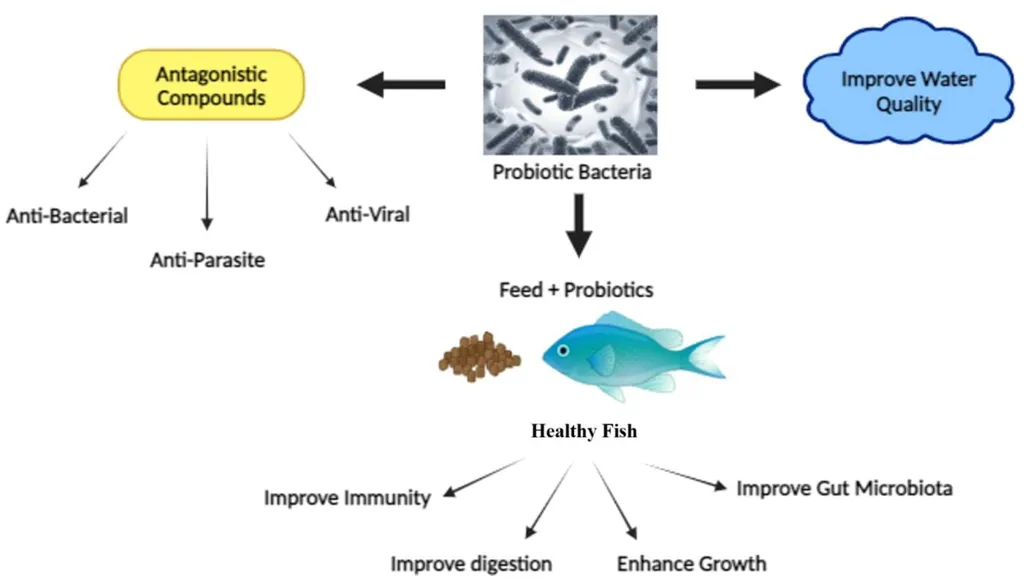
In the quest to combat antimicrobial resistance and reduce environmental impacts in aquaculture, researchers have made a significant stride with a novel probiotic formulation. A study published in the *International Journal of Microbiology* introduces a promising solution: co-encapsulated probiotic Bacillus aryabhattai CKNJH11 with algae-derived polysaccharides, which has shown remarkable potential in enhancing growth performance and immunity in Asian seabass (Lates calcarifer).
The research, led by Waraporn Appamano from the Department of Agricultural Science and Technology, isolated the Bacillus aryabhattai strain CKNJH11 from shrimp pond sediment. The strain demonstrated exceptional resilience, surviving extreme gastric and bile salt conditions with high viability. Notably, it inhibited biofilm formation by harmful bacteria such as Pseudomonas aeruginosa and Vibrio parahaemolyticus, which are common pathogens in aquaculture.
“Our findings suggest that this probiotic formulation could be a game-changer in aquaculture health management,” said Appamano. “The combination of alginate encapsulation and prebiotic polysaccharides not only enhances the stability and activity of the probiotic but also promotes a healthier gut microbiota in fish.”
The study involved 120 Asian seabass juveniles, which were divided into four groups: a control group with no probiotic, a group fed unformulated spores, a group fed alginate-encapsulated spores, and a group fed spores co-encapsulated with Gracilaria fisheri polysaccharides. After eight weeks, the co-encapsulated group showed the most significant improvements in weight gain, feed conversion ratio, and immune indices. The fish in this group gained an average of 60.7 grams, compared to just 38.6 grams in the control group.
The commercial implications of this research are substantial. As the aquaculture industry continues to grow, the need for sustainable and effective health management strategies becomes increasingly critical. This probiotic formulation offers a non-antibiotic approach that could reduce the reliance on antibiotics, thereby mitigating the risk of antimicrobial resistance and environmental contamination.
Moreover, the successful colonization of B. aryabhattai in the fish gut and the significant reduction in harmful Vibrio counts highlight the potential of this formulation as a biocontrol agent. This could lead to healthier fish populations, improved productivity, and ultimately, higher profits for aquaculture businesses.
As the industry looks to the future, this research could pave the way for further developments in probiotic formulations and their applications in aquaculture. The use of algae-derived polysaccharides as prebiotics, combined with the protective benefits of alginate encapsulation, offers a novel approach that could be adapted for other aquatic species and even terrestrial livestock.
In conclusion, this study not only underscores the importance of exploring non-antibiotic strategies in aquaculture but also demonstrates the potential of innovative probiotic formulations to revolutionize the industry. As Waraporn Appamano and her team continue to delve into this promising area of research, the future of aquaculture health management looks increasingly bright.