
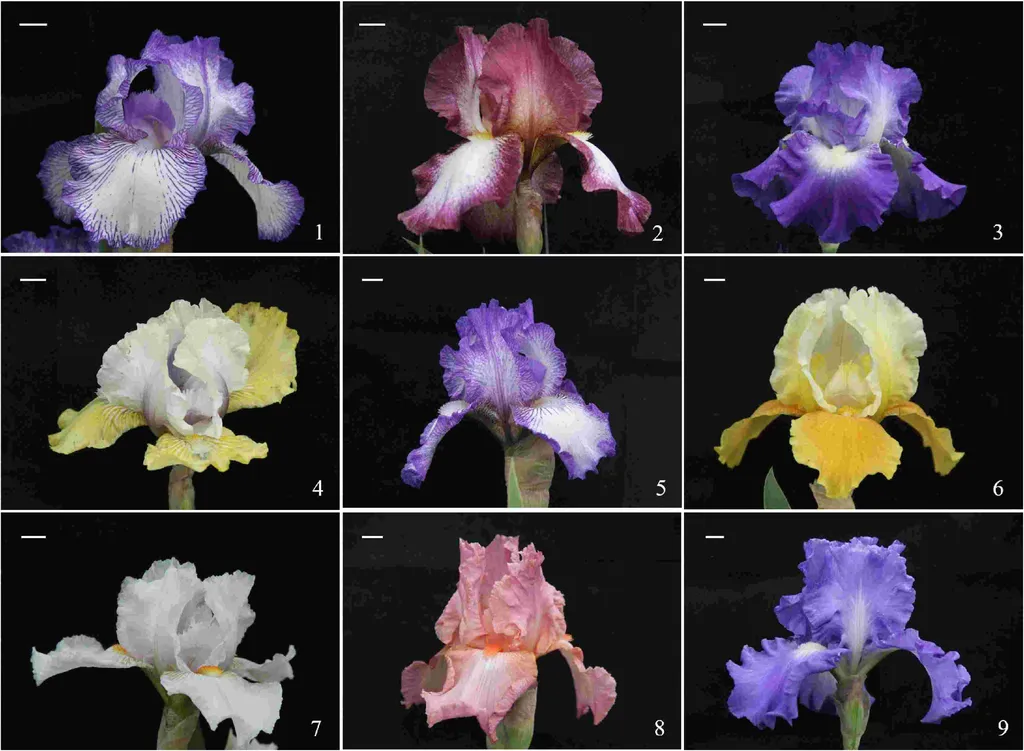
In the world of ornamental horticulture, the reblooming trait is akin to striking gold. It extends the flowering period, enhancing the aesthetic and commercial value of plants. A recent study published in *Technology in Horticulture* has shed new light on the genetic underpinnings of this coveted trait in bearded iris cultivars, offering promising avenues for breeders and growers alike.
The research, led by Lingmei Shao of the Shanghai Key Laboratory of Protected Horticultural Technology, delved into the genetic diversity and association analysis of the reblooming trait in 17 bearded iris cultivars. Using Simple Sequence Repeat (SSR) fluorescent markers, the team identified 29,800 SSR loci from a vast pool of unigenes, with dinucleotide and trinucleotide repeats being the most abundant. From these, eight highly polymorphic primers were selected, enabling the construction of molecular fingerprints and a cluster dendrogram for the cultivars.
One of the most significant findings was the identification of an SSR marker, P2S19, which was significantly correlated with the reblooming trait. This discovery could revolutionize the way breeders approach the development of new iris cultivars. “This marker could serve as a valuable tool for breeders to select and develop new reblooming iris cultivars more efficiently,” Shao explained.
The commercial implications of this research are substantial. Reblooming cultivars command a premium in the market due to their extended flowering period, which translates to a longer selling window for growers. By understanding the genetic basis of this trait, breeders can accelerate the development of new cultivars, meeting the growing demand for high-value ornamental plants.
Moreover, the study’s findings could extend beyond bearded irises. The SSR markers and the association analysis method developed in this research could be adapted for use in other ornamental plants, paving the way for broader applications in the horticulture industry.
As the global demand for ornamental plants continues to rise, driven by urbanization and a growing appreciation for green spaces, research like this is invaluable. It not only enhances our understanding of plant genetics but also provides practical tools for breeders and growers to meet market demands.
In the words of Shao, “This research is just the beginning. The insights gained here could shape the future of ornamental plant breeding, making it more efficient and targeted.” With such promising developments on the horizon, the future of horticulture looks brighter and more colorful than ever.