
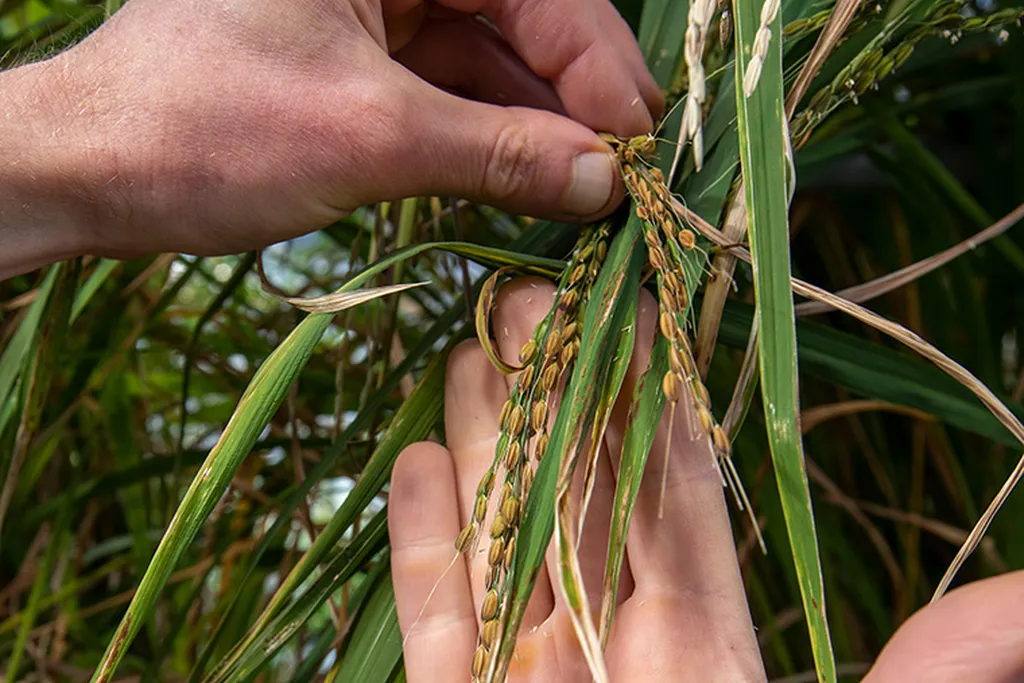
In the heart of global rice production, a silent threat lurks in the fields: weedy rice. This tenacious plant, a feral relative of cultivated rice, poses a significant challenge to farmers worldwide, threatening yields and profitability. Recent research published in *Genomics Communications* sheds new light on the evolutionary origins and genetic underpinnings of weedy rice, offering insights that could revolutionize weed management and rice improvement strategies.
Weedy rice, known for its high seed shattering, persistent soil seed dormancy, and strong competitiveness, has long been a bane for rice farmers. “Understanding the genomic basis of its weediness is crucial for developing effective control strategies,” says Yunqi Cong, lead author of the study and a researcher at the Shanghai Key Laboratory of Plant Molecular Sciences, College of Life Sciences, Shanghai Normal University.
The study reveals that weedy rice primarily originated from domesticated rice through a process called feralization or de-domestication. This finding establishes weedy rice as a key model for studying the genomic basis of crop feralization. Over the past decade, population genomic studies have uncovered the unique evolutionary trajectories of weedy rice, highlighting its adaptive traits and genetic introgression dynamics.
One of the critical challenges highlighted in the research is the need to translate genomic insights into practical field management strategies. “We need to bridge the gap between genetic research and on-the-ground agricultural practices,” Cong emphasizes. This involves understanding the genetic underpinnings of weedy traits and leveraging this knowledge to develop sustainable solutions.
The study also underscores the potential of weedy rice as a genetic resource. Despite its detrimental effects on rice production, weedy rice possesses adaptive traits that could be harnessed for rice improvement. Enhanced collaboration among geneticists, agronomists, and weed scientists is essential to fully exploit this potential.
The commercial impacts of this research are profound. Effective weed management strategies can significantly reduce crop losses, enhancing yields and profitability for farmers. Additionally, the genetic insights gained from studying weedy rice can inform breeding programs, leading to the development of more resilient and productive rice varieties.
As the agricultural sector grapples with the challenges posed by weedy rice, this research offers a beacon of hope. By deciphering the genomics of weedy rice, scientists are paving the way for innovative solutions that can safeguard global rice production and improve agricultural sustainability. The study, published in *Genomics Communications* and led by Yunqi Cong, represents a significant step forward in our understanding of crop feralization and its implications for the future of agriculture.