
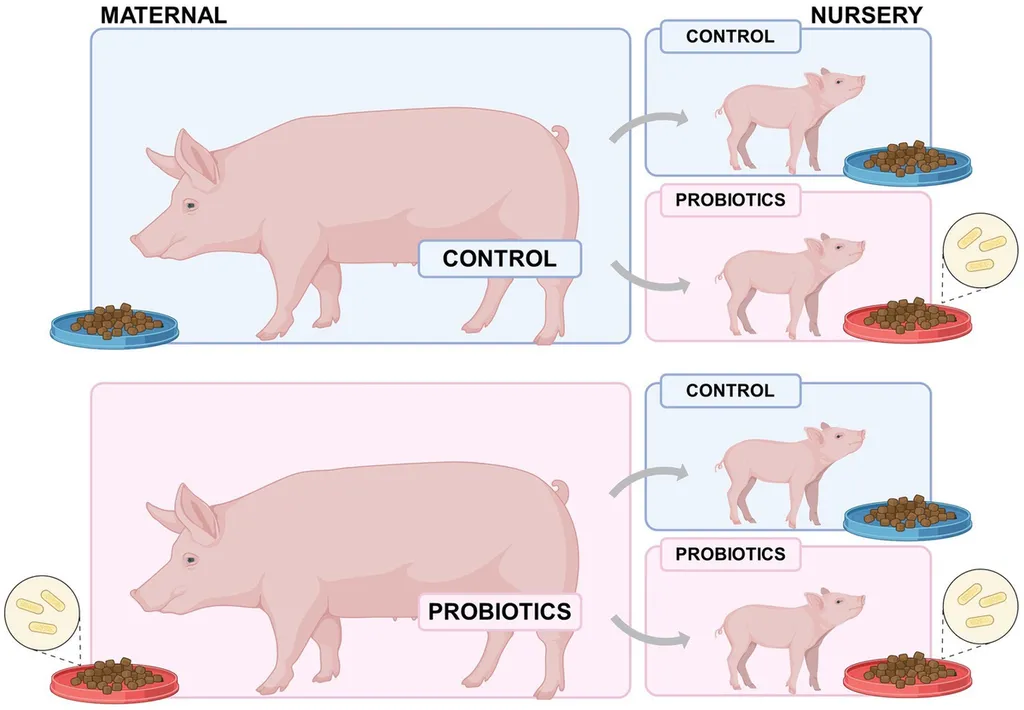
In the quest to bolster the health and growth of weaned piglets, a recent study published in the journal *Animals* has shed light on the potential benefits of *Bacillus* probiotics. The research, led by Xinhong Wang from the Key Laboratory of Feed Biotechnology of the Ministry of Agriculture and Rural Affairs in Beijing, China, explores how these probiotics can enhance growth performance, reduce diarrhea incidence, and improve intestinal health in young piglets.
Weaned piglets often face significant stress and health challenges due to their fragile gastrointestinal tracts and immature digestive functions. The study investigated the effects of *Bacillus subtilis*, *Bacillus pumilus*, and a combination of both on 128 weaned piglets over a 42-day period. The results were promising, with notable improvements in several key areas.
One of the most significant findings was the reduction in diarrhea incidence. “The combination of *Bacillus subtilis* and *Bacillus pumilus* significantly reduced the full-time diarrhea rate, and *Bacillus pumilus* alone showed a marked decrease in diarrhea incidence across various study periods,” said Wang. This is a critical finding for the agriculture sector, as diarrhea in weaned piglets can lead to substantial economic losses due to increased mortality rates, reduced growth performance, and higher veterinary costs.
The study also revealed that dietary supplementation with these probiotics improved growth performance. The combination of *Bacillus subtilis* and *Bacillus pumilus* significantly increased the average daily gain (ADG) of piglets in the initial 14 days, while *Bacillus pumilus* alone continued to show benefits over the entire 42-day period. “These findings suggest that *Bacillus* probiotics can be a valuable tool in promoting the growth and health of weaned piglets,” Wang noted.
In addition to these benefits, the research demonstrated that *Bacillus* probiotics can alleviate inflammation and enhance intestinal barrier function. The probiotics reduced the expression of inflammatory markers such as Interleukin-8 (IL-8) and tumor necrosis factor-α (TNF-α) in the intestines. They also increased the expression of genes related to intestinal barrier function, such as *Claudin-1* and *Occludin*, which are crucial for maintaining the integrity of the intestinal lining.
The commercial implications of this research are substantial. As the agriculture sector continues to seek sustainable and effective ways to improve animal health and productivity, probiotics like *Bacillus subtilis* and *Bacillus pumilus* offer a promising solution. By reducing the need for antibiotics and other medications, these probiotics can contribute to more sustainable farming practices and improved animal welfare.
Looking ahead, this research could pave the way for further studies on the use of probiotics in animal agriculture. Future developments might include the optimization of probiotic strains and dosages, as well as exploring their potential benefits in other livestock species. As Wang and her team continue to delve into the intricacies of *Bacillus* probiotics, the agriculture sector can look forward to innovative solutions that enhance animal health and productivity.
In the rapidly evolving field of agritech, this study serves as a reminder of the power of scientific research to drive meaningful change. By harnessing the potential of probiotics, farmers and agricultural professionals can work towards a more sustainable and prosperous future for all.