
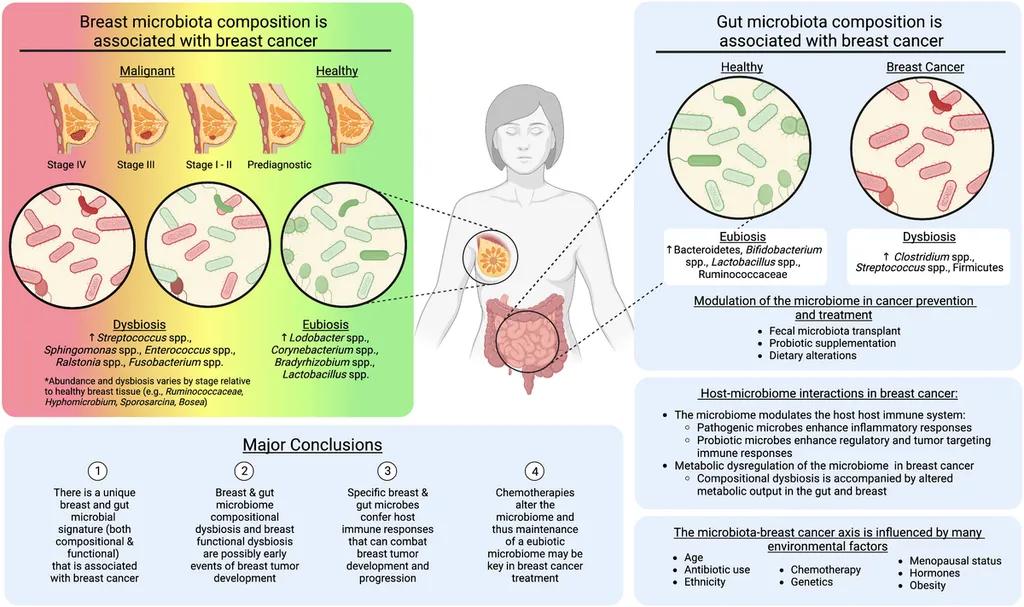
In the intricate dance of human health and disease, the gut microbiota has emerged as a key player, and its role in breast cancer is now under the microscope. A recent study published in *Applied Microbiology* sheds light on how the gut’s microbial ecosystem, particularly the estrobolome, influences breast cancer etiology and management. The research, led by Priyanka Mishra from the Department of Biotechnology at GITAM University in India, explores the complex interplay between gut health and breast cancer, offering promising avenues for prevention and treatment.
The gut microbiota, a bustling community of microorganisms, regulates digestion, immune responses, metabolism, and hormone signaling. Among its many functions, the estrobolome—a subset of bacterial genes involved in estrogen metabolism—has garnered attention for its role in systemic estrogen levels. “Through microbial β-glucuronidase activity, estrogens undergo deconjugation and reabsorption, influencing the pathogenesis of hormone-receptor-positive breast cancers,” explains Mishra. This process, disrupted by dysbiosis (an imbalance in gut microbial populations), can lead to chronic inflammation and endocrine disruption, contributing to breast cancer development.
Dysbiosis can result from various factors, including dietary changes, antibiotic use, environmental toxins, and psychosocial stress. These disruptions alter intestinal permeability, immune responses, and microbial metabolite profiles, creating a fertile ground for tumorigenesis. The study highlights mechanistic links between gut microbiota and breast cancer, including altered estrogen recirculation, immunomodulation, and shifts in microbial metabolites like short-chain fatty acids (SCFAs), bile acids, and tryptophan derivatives.
The research also underscores the potential of biotics—probiotics, prebiotics, synbiotics, and postbiotics—as tools for modulating the gut microbiota. Certain strains of *Lactobacillus* and *Bifidobacterium* exhibit anti-inflammatory and estrogen-modulating effects, while dietary fibers and microbial metabolites may enhance epithelial integrity and immunocompetence. “Biotics offer promising avenues for modulating the microbiota,” notes Mishra, suggesting a future where personalized microbiome-based interventions could revolutionize breast cancer care.
For the agriculture sector, this research opens doors to innovative opportunities. The development of functional foods enriched with specific biotics could cater to a growing market of health-conscious consumers. Additionally, the insights into microbial metabolites and their health benefits could drive demand for novel crops and ingredients, fostering a more diverse and resilient agricultural landscape.
As we delve deeper into the gut microbiota’s role in breast cancer, the potential for integrating microbiome modulation into personalized oncologic care becomes increasingly apparent. However, research gaps and safety considerations remain, underscoring the need for further investigation. The study by Mishra and her team not only advances our understanding of the gut-breast cancer axis but also paves the way for future developments in precision medicine and agricultural innovation.