
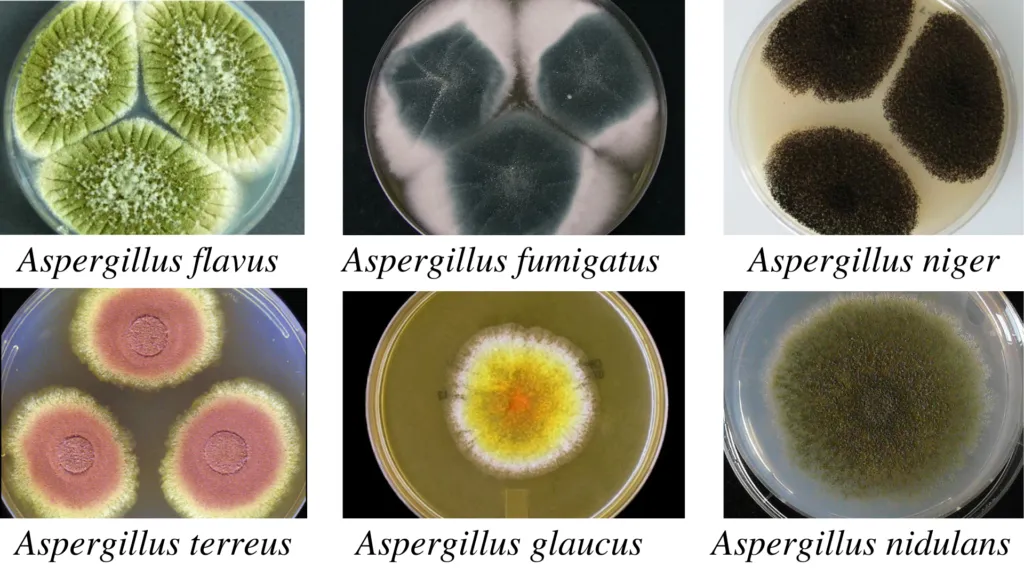
In a groundbreaking study published in *IMA Fungus*, researchers have unveiled the intricate evolutionary history and population structure of the Aspergillus flavus–oryzae complex, a group of fungi with significant implications for agriculture, food safety, and human health. Led by Walter P. Pfliegler from the University of Debrecen, the study analyzed 639 isolates of *A. flavus* and *A. oryzae* from clinical, environmental, and food-fermentation sources across multiple continents, shedding new light on their domestication and pathogenicity.
*A. flavus* is notorious for contaminating crops, particularly maize and peanuts, producing aflatoxins that pose severe health risks to humans and livestock. On the other hand, *A. oryzae*, its domesticated relative, is a cornerstone of food fermentation and biotechnology, used in the production of soy sauce, sake, and various enzymes. Despite their importance, the evolutionary relationship and domestication history of these fungi have remained a mystery—until now.
The study’s findings reveal a complex evolutionary landscape, with well-separated clades interspersed with highly admixed mosaic groups. This complexity suggests multiple independent domestication events leading to *A. oryzae*, challenging the current understanding of species boundaries within the *A. flavus–oryzae* complex.
“Our analysis indicates that clinical *A. flavus* isolates are distributed across several clades and mosaic groups, some of which overlap with fermentation strains,” Pfliegler explained. “This overlap highlights the role of domestication and admixture in shaping pathogen diversity, which has broad implications for food safety and biocontrol strategies.”
The commercial impacts of this research are profound. For the agriculture sector, understanding the genetic diversity and evolutionary history of *A. flavus* can lead to more effective biocontrol strategies, reducing crop contamination and aflatoxin production. Farmers and agribusinesses can leverage this knowledge to develop resistant crop varieties and improve food safety protocols.
Moreover, the study’s insights into the domestication of *A. oryzae* can enhance biotechnological applications. By identifying the genetic factors contributing to its beneficial traits, researchers can optimize fermentation processes and develop new strains for industrial use.
The research also underscores the importance of metagenomic surveillance. As Pfliegler noted, “The complex population structure of these fungi means that monitoring and managing their diversity is crucial for both agricultural and clinical settings.”
This study not only redefines the evolutionary landscape of the *A. flavus–oryzae* complex but also provides a framework for future research in pathogenicity, food safety, and biotechnology. As the global population continues to grow, the demand for safe and sustainable food sources will only increase, making this research a vital step toward securing our agricultural future.
With the findings published in *IMA Fungus* and led by Walter P. Pfliegler from the University of Debrecen, this study marks a significant milestone in our understanding of these fungi and their impact on human health and agriculture. The implications are far-reaching, offering new avenues for innovation and improvement in the fields of food safety, biocontrol, and biotechnology.