
In a groundbreaking study published in *Legume Science*, researchers have isolated and characterized protease inhibitors (PIs) from three common Egyptian legumes—soybean (Glycine max), cowpea (Vigna unguiculata), and chickpea (Cicer arietinum)—revealing their potent antimicrobial and cytotoxic properties. This research, led by Mona M. Ibrahim of the Department of Plant Biotechnology at the Biotechnology Research Institute, National Research Centre in Cairo, Egypt, could have significant implications for agriculture, food security, and even human health.
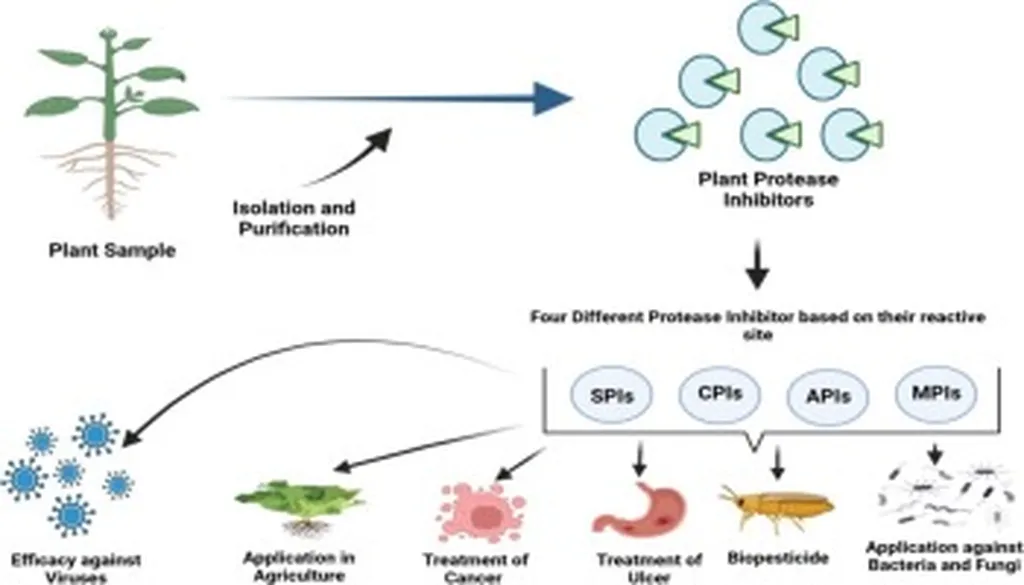
Protease inhibitors are naturally occurring proteins that regulate proteolytic activity, playing crucial roles in plant defense mechanisms. The study found that different extraction buffers yielded optimal results for each legume: 0.02 M HCl for soybean and cowpea, and 0.3 M NaCl for chickpea. Ammonium sulfate precipitation further refined the extraction process, with varying saturation levels depending on the legume. The purification process, involving DEAE-Sepharose and Sephadex G-50 chromatography, significantly enhanced the specific activity of the PIs.
The purified PIs exhibited distinct molecular weights: 25 kDa for soybean, 45 kDa for cowpea, and 35 kDa for chickpea. These inhibitors showed variable cytotoxic effects on different human cancer cell lines, with lyophilized soybean PIs significantly reducing the viability of human hepatocellular carcinoma (HepG2) cells after 48 hours. Non-lyophilized chickpea PIs also demonstrated notable cytotoxic activity against HepG2 cells. Cowpea PIs, on the other hand, induced cell death in human colorectal adenocarcinoma (HT-29) cells at higher concentrations, while human lung adenocarcinoma (A549) cells were generally less sensitive, except at high doses of cowpea PIs.
In terms of antimicrobial activity, all lyophilized PIs inhibited Bacillus subtilis but were inactive against Staphylococcus epidermidis and Pseudomonas stutzeri. This selective antimicrobial activity suggests potential applications in food preservation and agricultural pest management.
The commercial impacts of this research are substantial. Protease inhibitors from legumes could be developed into natural, sustainable alternatives to synthetic pesticides and preservatives, addressing growing concerns about chemical residues in food and the environment. “The potential for these legume-derived PIs to be integrated into agricultural practices is immense,” said Ibrahim. “They could revolutionize how we protect crops and ensure food safety, offering a greener, more sustainable approach.”
Moreover, the cytotoxic properties of these PIs open avenues for further research into their potential as therapeutic agents. The study highlights the need for continued exploration of plant-derived compounds, which could lead to innovative solutions in both agriculture and medicine.
This research not only advances our understanding of legume-derived protease inhibitors but also paves the way for future developments in sustainable agriculture and human health. As the global demand for safe, effective, and environmentally friendly solutions grows, the findings from this study could shape the future of agricultural and medical technologies.