
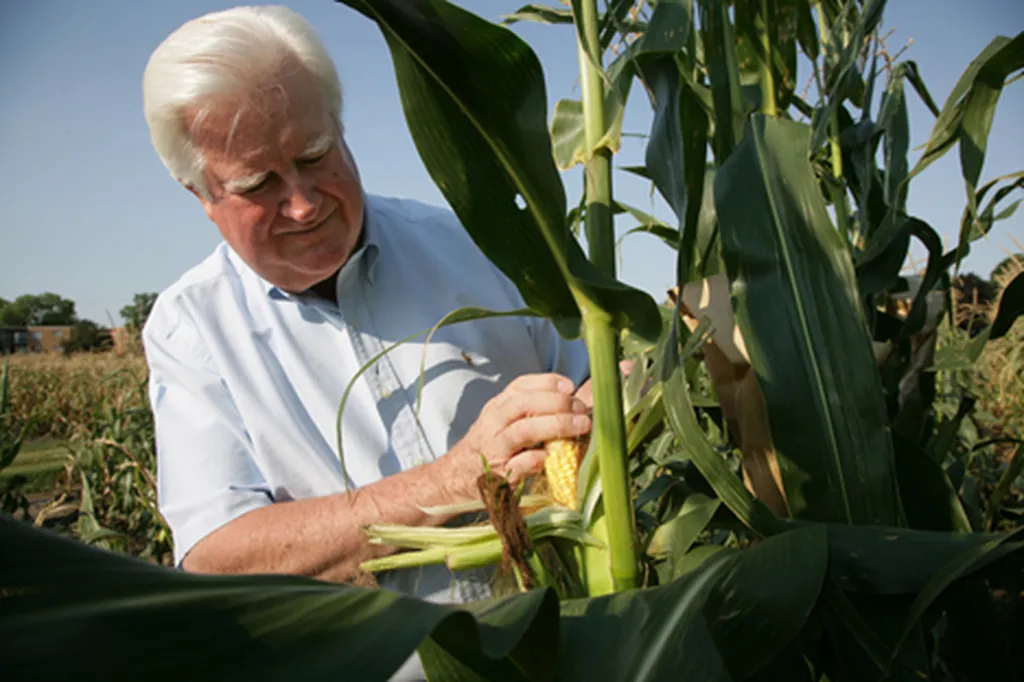
In the ever-evolving landscape of plant science, few individuals have left as indelible a mark as Ronald Phillips, a maize geneticist whose career spanned decades and transformed the way we understand and utilize plant genetics. His work, recently highlighted in an article published in ‘The Plant Genome’ and authored by Richard B. Flavell of the International Wheat Yield Partnership in Durham, North Carolina, offers a compelling narrative of scientific progress and its profound impact on agriculture.
Phillips’ journey began in the mid-1960s, a time when plant science was on the cusp of a molecular revolution. He was driven by a belief in the intrinsic value of science and its potential to address global food security. “His career was a testament to the idea that science, when pursued with dedication and a sense of service, can yield transformative results,” Flavell remarked.
Phillips’ early work focused on DNA isolation, a foundational step that paved the way for more advanced genetic research. As the field progressed, so did his contributions. He played a pivotal role in the revelation of whole genome sequences, a breakthrough that has had far-reaching implications for plant breeding and biotechnology.
One of the most significant aspects of Phillips’ legacy is his influence on the maize genetics community. His work not only advanced the scientific understanding of maize but also had tangible commercial impacts. By developing genetically improved maize varieties, Phillips contributed to increased crop yields and enhanced resistance to pests and diseases. These advancements have been instrumental in improving food security and economic stability for farmers worldwide.
Phillips’ influence extended beyond the laboratory. He was a prominent figure in national and international science, advocating for policies that supported agricultural research and innovation. His work at the highest levels of influence ensured that the benefits of plant science were widely recognized and utilized.
The article in ‘The Plant Genome’ underscores the importance of Phillips’ contributions and their relevance to contemporary plant science. As Flavell notes, “Phillips left plant science so much further advanced than when he joined it.” His legacy serves as a reminder of the potential of scientific research to drive agricultural progress and address global challenges.
Looking ahead, Phillips’ work continues to shape the future of plant science. The insights gained from his research are being applied to develop new crop varieties that are more resilient to climate change and better suited to diverse agricultural environments. This ongoing impact highlights the enduring value of Phillips’ contributions and the critical role of plant science in securing a sustainable future for agriculture.
In an era where food security and environmental sustainability are paramount, the lessons from Phillips’ career offer valuable insights. His dedication to science and service provides a blueprint for future generations of researchers, inspiring them to pursue innovative solutions that benefit both people and the planet. As we continue to explore the frontiers of plant science, Phillips’ legacy remains a guiding light, illuminating the path toward a more secure and sustainable agricultural future.