
In a significant stride for pepper cultivation and genetic research, scientists have unveiled three novel genomes within the Capsicum genus, broadening the scope of the Capsicum pangenome. This breakthrough, published in *Plant Direct*, offers a deeper understanding of the genetic diversity within pepper plants, with promising implications for agriculture and breeding programs.
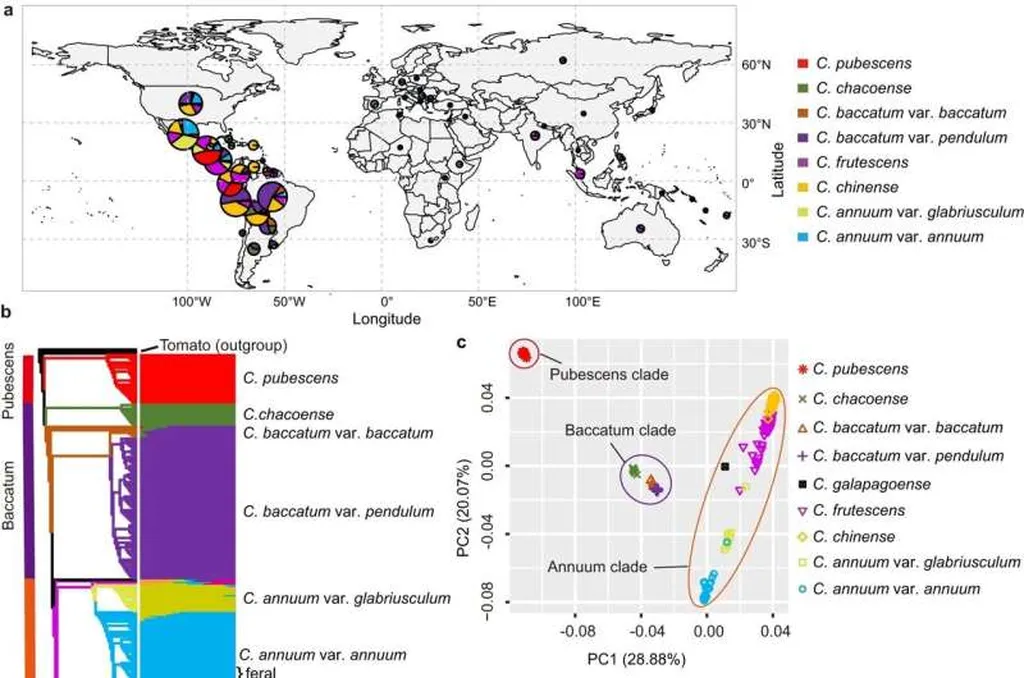
The study, led by Christina Papastolopoulou from the Bioinformatics Group at Wageningen University & Research in the Netherlands, presents highly continuous assemblies of the nuclear genomes and complete chloroplast assemblies for Capsicum annuum cv. ECW, Capsicum chacoense, and Capsicum galapagoense. These assemblies, including the first complete genomes for C. chacoense and C. galapagoense, provide a more detailed genomic landscape within the Capsicum genus.
“These new genomes allow us to explore the genetic diversity within the Capsicum genus more comprehensively than ever before,” Papastolopoulou explained. “This is crucial for understanding the genetic basis of important traits and for developing improved pepper varieties.”
The researchers identified 34,580 genes in nonpungent C. annuum cv. ECW, and 32,704 and 33,994 genes in pungent C. chacoense and C. galapagoense, respectively. By integrating these genomes into a pangenomic framework with 16 other Capsicum genomes, the team uncovered a wide spectrum of genetic diversity. They found that 13% of the 79,267 homology groups identified were core groups, present in all accessions, corresponding to approximately 30% of core genes per genome.
Comparative analyses revealed distinct species and genus-specific genomic characteristics, which could be pivotal for breeders aiming to enhance traits such as disease resistance, yield, and flavor. The study also examined the Pun1 locus, associated with capsaicinoid biosynthesis, identifying multiple Pun1-like genes and their genomic positions. This information could be instrumental in developing peppers with specific pungency levels tailored to market demands.
The integration of these new resources into a dynamic Capsicum pangenome framework provides a versatile platform for extracting genetic information relevant to both fundamental research and breeding applications. This research not only advances our understanding of pepper genetics but also paves the way for more targeted and efficient breeding programs.
As the agricultural sector continues to face challenges such as climate change and increasing demand for sustainable practices, the insights gained from this study could be invaluable. By leveraging the genetic diversity within the Capsicum genus, breeders can develop pepper varieties that are more resilient, productive, and adaptable to changing environmental conditions.
“This research is a testament to the power of pangenomics in unlocking the genetic potential of crop plants,” Papastolopoulou noted. “It opens up new avenues for innovation in pepper breeding and beyond.”
With the growing interest in plant genomics and the increasing need for sustainable agricultural practices, the findings from this study are poised to make a significant impact on the future of pepper cultivation and the broader agricultural sector.