
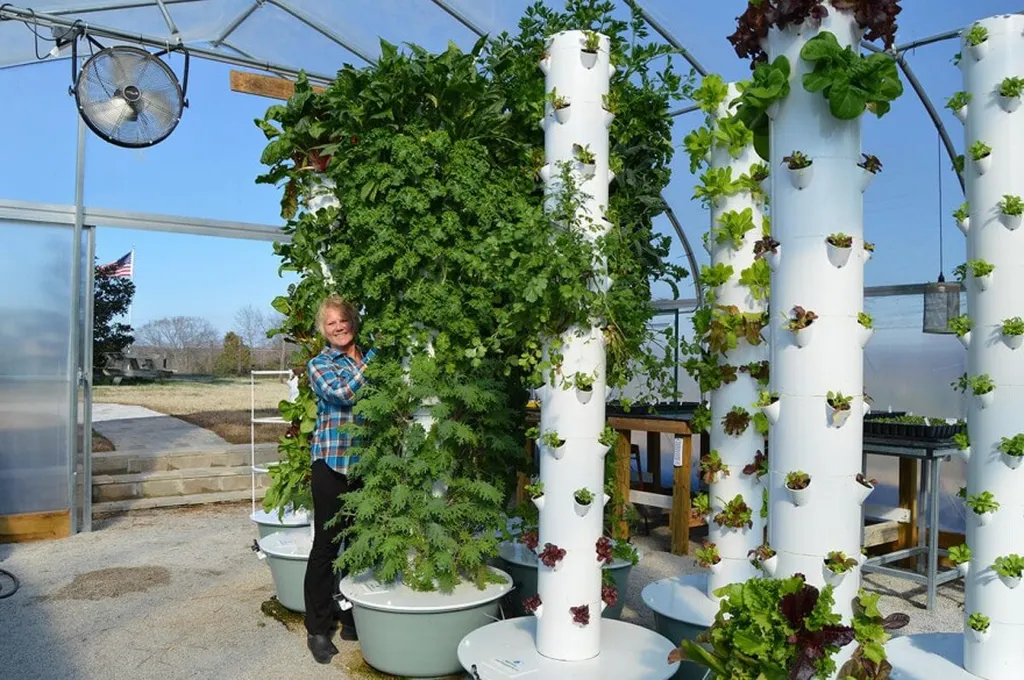
In the heart of Tennessee, a groundbreaking study is reshaping the future of urban vertical farming, offering a blueprint for sustainable and productive agriculture in cityscapes. Researchers at Tennessee State University have been exploring the impact of different organic soilless substrates on the growth of leafy greens, with promising results that could revolutionize the way we think about urban food production.
The study, led by Andrew Jones from the Department of Agricultural Sciences and Engineering at Tennessee State University, evaluated four organic substrate combinations for growing organic kale and Swiss chard in a vertical farming system. The substrates included pine bark mixed with compost, coffee chaff, peat moss, and a combination of peat moss and perlite. The findings, published in the journal ‘Urban Agriculture & Regional Food Systems’, reveal that the choice of substrate can significantly influence the productivity and quality of crops in vertical farming systems.
One of the most striking findings was the performance of the peat moss and perlite (PMPL) combination. This substrate showed the highest water holding capacity and porosity, making it an excellent choice for retaining moisture and promoting healthy plant growth. “The PMPL substrate demonstrated exceptional water retention properties, which is crucial for vertical farming systems where water management is often a challenge,” Jones explained.
However, the study also highlighted the benefits of other substrate combinations. For instance, the pine bark and coffee chaff (PBCC) mix showed the highest air space and bulk density, which can enhance root aeration and nutrient uptake. Interestingly, kale grown in PBCC exhibited the highest sugar accumulation, suggesting that this substrate could be particularly useful for enhancing the flavor and nutritional quality of certain crops.
The commercial implications of this research are substantial. As urban vertical farming continues to gain traction as a sustainable and efficient way to produce food in urban areas, the choice of substrate will play a pivotal role in optimizing productivity and profitability. The findings suggest that farmers and agritech companies can tailor their substrate choices based on the specific needs of their crops and the environmental conditions of their growing systems.
Moreover, the study underscores the importance of sustainable inputs in urban agriculture. By using organic and recycled materials like coffee chaff and pine bark, farmers can reduce their environmental footprint while still achieving high yields. This aligns with the growing consumer demand for sustainably produced, locally grown food.
Looking ahead, this research could pave the way for further innovations in urban vertical farming. As Jones noted, “Understanding the physical properties of substrates and their influence on plant growth is just the beginning. Future research could explore the integration of smart technologies, such as sensors and automated irrigation systems, to further optimize substrate performance and crop yields.”
In conclusion, the study by Jones and his team offers valuable insights into the world of urban vertical farming, highlighting the critical role of substrate choice in enhancing productivity and sustainability. As the agriculture sector continues to evolve, these findings will undoubtedly shape the development of more efficient and eco-friendly farming practices, bringing us one step closer to a future where fresh, locally grown produce is accessible to all.