
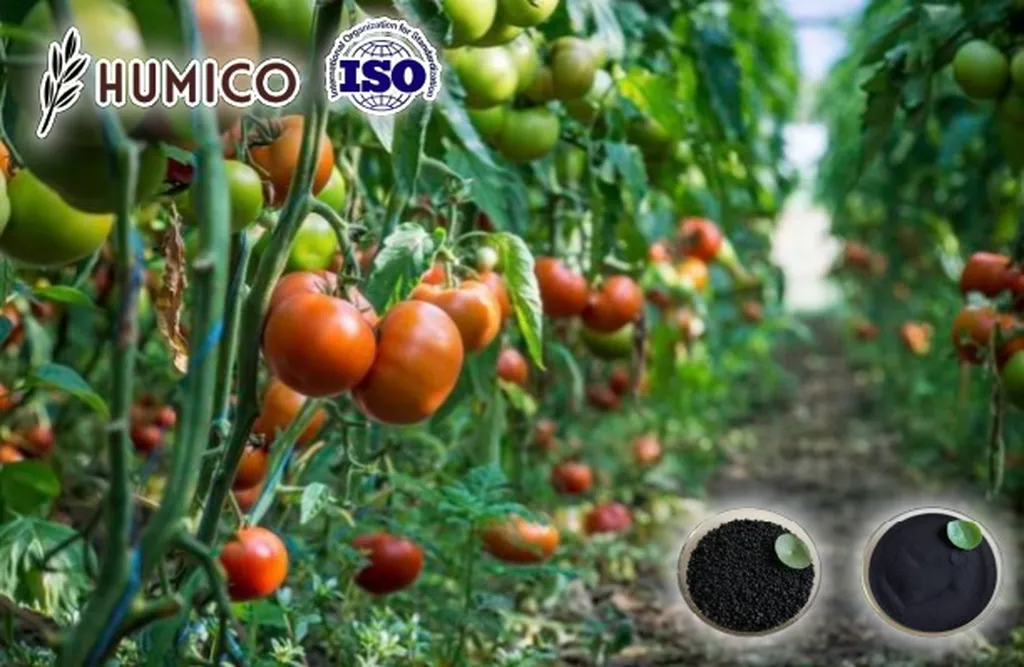
In the ever-evolving world of agriculture, the quest for enhancing crop quality and yield continues to drive innovation. A recent study published in *Notulae Botanicae Horti Agrobotanici Cluj-Napoca* sheds light on how foliar-applied humic acid can significantly modulate the antioxidant and mineral profiles of tomato fruit, particularly cherry tomatoes, across different maturity stages. This research, led by Md. Dulal SARKAR from Sher-e-Bangla Agricultural University and King Abdulaziz University, offers promising insights for farmers and agritech enthusiasts alike.
The study focused on the effects of humic acid (HA) applied at various concentrations—0, 25, 50, and 75 mg L⁻¹—during different growth phases: vegetative, flowering, and fruit-setting. Berries were harvested at four distinct maturity stages: mature green (MG), breaker (BK), pink (PK), and red (RD). The findings revealed that HA, particularly at the highest concentration (HA75), significantly enhanced berry quality when harvested at the red stage. “The application of humic acid, especially at 75 mg L⁻¹, led to a notable increase in antioxidant activity due to elevated levels of vitamin C, lycopene, and β-carotene,” explained lead author Md. Dulal SARKAR.
The study highlighted several key improvements in berry quality. For instance, the reducing sugar content increased from 0.84% in mature green berries to 1.39% in red berries with the application of HA0 and HA75, respectively. Additionally, the shelf-life of berries was extended from 13.28 days (HA0) to 15.58 days (HA75) at the green mature stage. Dry matter content peaked at 8.82% in HA75-treated mature green berries, while moisture content was highest (94.19%) in untreated (HA0) red berries.
One of the most intriguing findings was the improvement in mineral uptake. Mg (2.39%), P (0.71%), and Fe (213.54 ppm) levels were highest in HA75-treated red berries. This enhancement in mineral content not only boosts the nutritional value of the tomatoes but also opens up new avenues for farmers to produce high-quality, nutrient-rich produce.
The study also explored the visual aspects of the berries. At the red stage, HA50 and HA75 treatments resulted in the highest redness (a* values of 13.21 and 10.20, respectively), compared to 12.60 for the control (HA0). Lightness (L*) was highest in mature green berries treated with HA50 (61.43), indicating brighter fruit surfaces, whereas red berries showed lower L* values (49.80-52.70), consistent with ripening progression.
The commercial implications of these findings are substantial. Farmers can potentially increase the market value of their tomatoes by applying humic acid, thereby enhancing both the nutritional and visual appeal of their produce. “This research provides a practical tool for farmers to optimize their crop quality and yield, ultimately leading to better market opportunities,” added SARKAR.
As the agriculture sector continues to embrace innovative technologies and practices, the use of biostimulants like humic acid could become a game-changer. The study underscores the importance of tailoring agricultural practices to specific maturity stages, ensuring that farmers can maximize the benefits of these biostimulants. With further research and application, humic acid could become a staple in modern agricultural practices, driving the industry towards more sustainable and profitable outcomes.
The research, published in *Notulae Botanicae Horti Agrobotanici Cluj-Napoca*, was led by Md. Dulal SARKAR, affiliated with Sher-e-Bangla Agricultural University and King Abdulaziz University. This study not only advances our understanding of biostimulants but also paves the way for future developments in the field of agritech. As the industry continues to evolve, such innovative approaches will be crucial in meeting the growing demand for high-quality, nutrient-rich produce.