
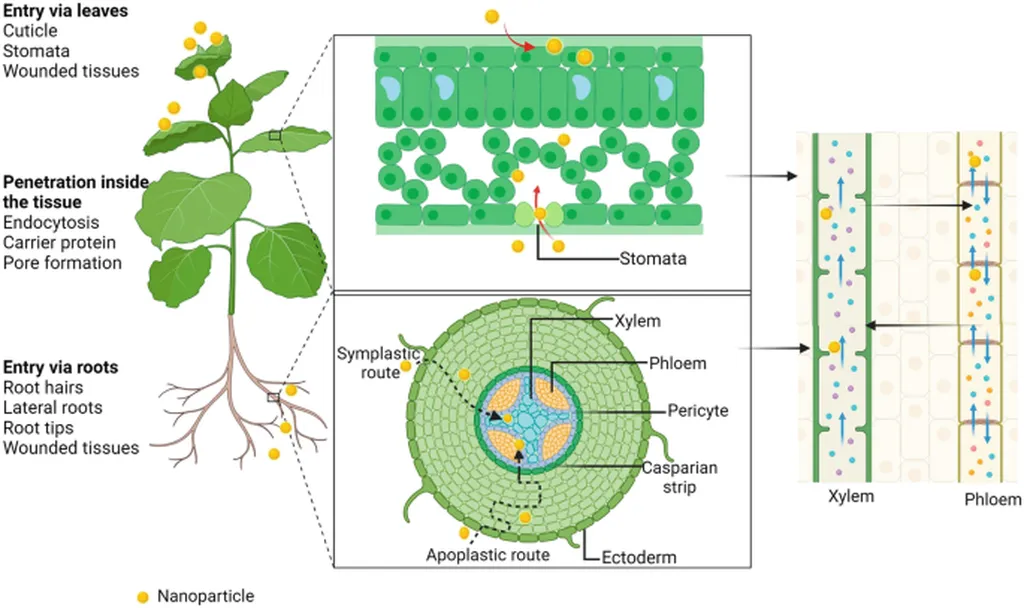
In a significant stride towards sustainable agriculture, researchers have discovered that micronutrient nanoparticles could offer a robust defense against peanut pod rots and aflatoxin contamination, a pressing concern for farmers and food safety worldwide. The study, published in *Notulae Botanicae Horti Agrobotanici Cluj-Napoca*, led by Emad Y. Mahmoud of the Plant Pathology Research Institute at the Agricultural Research Center in Giza, Egypt, explores the potential of iron oxide (Fe₃O₄), manganese oxide (MnO), and zinc oxide (ZnO) nanoparticles to bolster plant defenses without the ecological risks associated with conventional fungicides.
Climate change has intensified the challenge of plant diseases, altering host-pathogen dynamics and necessitating innovative solutions. Mahmoud and his team conducted rigorous greenhouse and field trials over two growing seasons, evaluating the impact of these nanoparticles on disease incidence, fungal contamination, and yield performance. The results were promising: all nanoparticle treatments significantly reduced pod rot and aflatoxin levels, with Fe₃O₄ nanoparticles at 100 mg L⁻¹ concentration emerging as the most effective. “Fe₃O₄ nanoparticles not only reduced disease severity but also enhanced the activity of antioxidant enzymes and increased phenolic compounds, sugars, free amino acids, and protein content in peanut plants,” Mahmoud explained. This dual action—boosting both biochemical and physiological defenses—could revolutionize how farmers protect their crops.
The commercial implications of this research are substantial. Aflatoxins, produced by fungi like *Aspergillus flavus* and *A. parasiticus*, are highly carcinogenic and pose severe health risks to humans and livestock. Contamination can lead to crop rejection, financial losses, and trade restrictions, making this discovery a potential game-changer for the agriculture sector. By adopting nanoparticle-based treatments, farmers could enhance crop yields while ensuring food safety, thereby improving market access and profitability.
However, the study also highlighted the importance of careful optimization. While Fe₃O₄ and MnO nanoparticles showed positive effects, high concentrations of ZnO nanoparticles were linked to increased fungal infection and aflatoxin levels. This underscores the need for precise application protocols to maximize benefits while minimizing risks.
The findings open new avenues for research into eco-friendly alternatives to conventional fungicides. As Mahmoud noted, “The potential of micronutrient nanoparticles as resistance inducers is vast, but further studies are needed to refine their application and explore their efficacy in other crops.” This research could pave the way for broader adoption of nanotechnology in agriculture, offering a sustainable solution to the growing challenges of plant diseases in a changing climate.
In an era where sustainability and food security are paramount, this study provides a beacon of hope for farmers and researchers alike. By harnessing the power of nanotechnology, the agriculture sector could achieve greater resilience, productivity, and safety, ensuring a healthier future for all.