
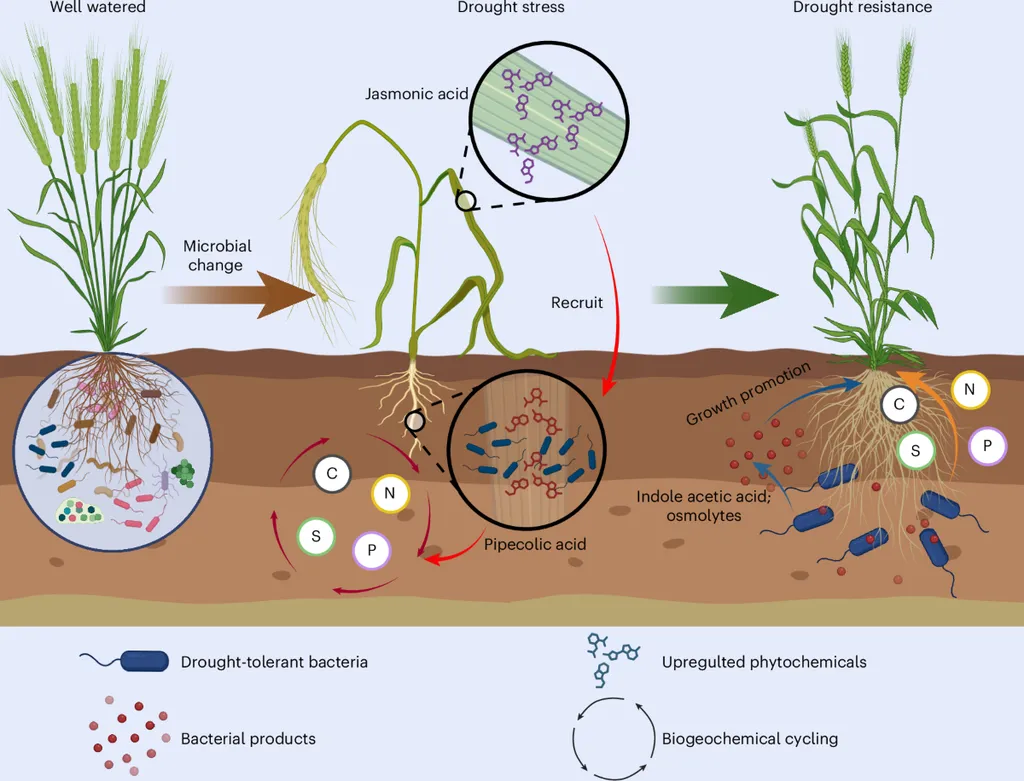
In the face of escalating climate challenges, understanding how crops respond to water deficit stress is crucial for agricultural resilience. A recent study published in *BMC Plant Biology* has shed light on the physiological and biochemical mechanisms that enable certain anise (Pimpinella anisum L.) genotypes to thrive under drought conditions, offering promising insights for the agriculture sector.
The research, led by Shaghayegh Mehravi of the Department of Plant Breeding and Biotechnology at Sari Agricultural Sciences and Natural Resources University, compared two anise genotypes—Kerman, a drought-tolerant variety, and Gilan, a drought-sensitive one. Under water deficit stress, Kerman demonstrated superior water retention, maintaining higher osmotic potential and relative water content compared to Gilan. “The Kerman genotype exhibited remarkable membrane stability, with significantly lower electrolyte leakage, which is a key indicator of drought tolerance,” Mehravi explained.
The study also revealed that drought stress triggered a significant accumulation of secondary metabolites, particularly polyphenols, in the Kerman genotype. Total phenolic content, total flavonoid content, and anthocyanin levels surged, with Kerman showing peak values that were substantially higher than those in Gilan. These compounds are not only vital for plant defense but also contribute to the antioxidant properties of the crop. “The elevated levels of rutin, caffeic acid, and apigenin in Kerman under water deficit stress suggest a strong correlation between polyphenolic biosynthesis and oxidative stress mitigation,” Mehravi noted.
The antioxidant capacity of Kerman was markedly higher, with significant increases in DPPH scavenging activity and reducing power. This finding underscores the functional role of polyphenols in enhancing drought tolerance. Gene expression analysis further revealed that key genes involved in the phenylpropanoid biosynthesis pathway, such as PAL, 4CL, F3H, CHI, and 3GT, were upregulated in Kerman, particularly under stress conditions. “The coordinated upregulation of these genes indicates a robust genetic mechanism that enhances polyphenolic biosynthesis and contributes to the superior drought tolerance of the Kerman genotype,” Mehravi added.
The commercial implications of this research are substantial. As water scarcity becomes an increasingly pressing issue, developing drought-tolerant crop varieties is essential for maintaining agricultural productivity. The insights gained from this study could guide breeders in selecting and developing anise varieties that are resilient to water deficit stress, thereby ensuring stable yields and economic viability for farmers.
Moreover, the enhanced polyphenolic content in drought-tolerant anise could open new avenues for the food and pharmaceutical industries. Polyphenols are known for their health benefits, including antioxidant, anti-inflammatory, and anti-cancer properties. By cultivating anise varieties that naturally produce higher levels of these beneficial compounds, farmers could tap into a lucrative market for functional foods and nutraceuticals.
This research not only advances our understanding of the physiological and molecular mechanisms underlying drought tolerance in anise but also paves the way for innovative agricultural practices. As climate change continues to pose challenges, the development of resilient crop varieties will be crucial for sustaining food security and agricultural economies. The findings published in *BMC Plant Biology* offer a promising step forward in this direction, highlighting the potential of genetic and biochemical approaches to enhance crop resilience and productivity.