
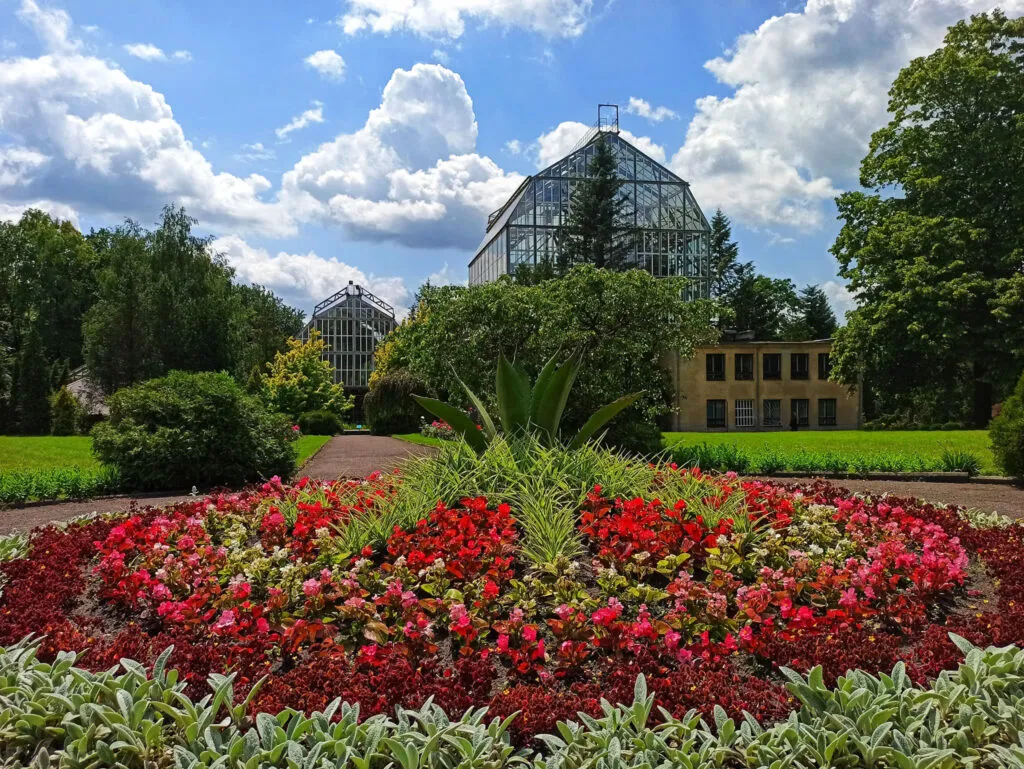
In the heart of Kyiv, a green oasis stands as a beacon of hope and resilience for Ukraine’s agricultural future. The M.M. Gryshko National Botanical Garden of the National Academy of Sciences of Ukraine (NBG) is not just a haven for plant lovers; it’s a powerhouse of scientific research and innovation, playing a pivotal role in the country’s sustainable development and post-war recovery.
The NBG, as outlined in a recent paper published in ‘Інтродукція Рослин’ and led by Nataliia Zaimenko from the M.M. Gryshko National Botanical Garden, National Academy of Sciences of Ukraine, is a treasure trove of phytogenetic resources. It’s a place where science meets nature, and where the future of Ukrainian agriculture is being shaped.
The garden’s historical significance lies in its contributions to botanical science, particularly in plant introduction, acclimatization, and breeding. But its modern-day importance is perhaps even more profound. The NBG is a hub for cutting-edge research in biotechnology, phytoenergetics, and biodiversity conservation, all of which are crucial for Ukraine’s agricultural sector.
“The NBG is not just about preserving plants; it’s about understanding them, utilizing them, and ensuring they contribute to our society and economy,” says Nataliia Zaimenko, the lead author of the paper.
The NBG’s scientific collections, which hold the status of National Heritage of Ukraine, are a testament to this mission. These collections, ranging from tropical and subtropical plants to energy and aromatic plants, serve as invaluable genetic resources for breeding and scientific research. They are a living library of plant diversity, offering solutions to some of the most pressing challenges facing Ukrainian agriculture.
One of the NBG’s key strengths is its focus on applied research. The garden is not just a place for theoretical exploration; it’s a center for developing practical solutions. This is evident in its work on increasing plant adaptability to climate change and stress factors, as well as its development of new models for resistance research and approaches to increasing plant productivity.
The commercial impacts of this research are substantial. By improving plant resilience and productivity, the NBG is helping to secure the future of Ukrainian agriculture. This is particularly important in the context of post-war recovery, where the agricultural sector will play a crucial role in the country’s economic revitalization.
Moreover, the NBG’s work in bioenergetics and bioindication is paving the way for a more sustainable and eco-friendly agricultural sector. By harnessing the power of plants for energy production and environmental monitoring, the NBG is contributing to the development of a greener, more sustainable Ukraine.
The NBG’s role as a center of science, education, and innovation cannot be overstated. It’s a place where fundamental research meets applied development, and where public outreach creates a more environmentally conscious society. This holistic approach is key to ensuring the long-term success of Ukraine’s agricultural sector.
As we look to the future, the NBG’s work will undoubtedly shape the development of the field. Its focus on innovation, sustainability, and practical application offers a blueprint for how botanical gardens can contribute to agricultural development and environmental conservation.
In the words of Nataliia Zaimenko, “The NBG is not just a garden; it’s a catalyst for change. It’s a place where the future of Ukrainian agriculture is being nurtured and cultivated.”
As Ukraine navigates the challenges of post-war recovery and sustainable development, the M.M. Gryshko National Botanical Garden stands as a beacon of hope and a testament to the power of scientific research and innovation. Its work is not just about preserving the past; it’s about shaping the future.