
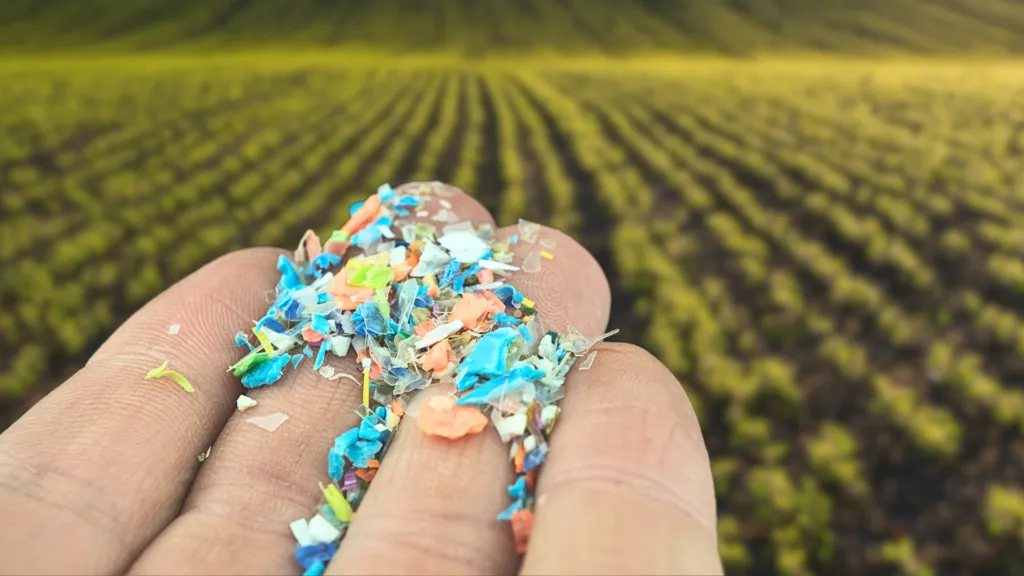
In the heart of North Carolina, a team of researchers led by Raza Ullah at the University of North Carolina Greensboro has uncovered alarming insights into the combined effects of microplastics and antimicrobials on agriculture. Their study, published in *Environmental Systems Research*, sheds light on the potential risks posed by reclaimed water used for irrigation, particularly in the context of lettuce cultivation and soil health.
The research team investigated the impact of polyamide microplastics (MPs) and three common antimicrobials—sulfamethoxazole, ciprofloxacin, and triclosan—on lettuce growth and soil bacterial communities. Their findings reveal a concerning picture: lettuce plants exhibited significant phytotoxicity when exposed to these contaminants, either alone or in combination. “We observed a notable decrease in shoot and root lengths, as well as their respective biomasses and photosynthetic pigments,” Ullah explained. This phytotoxicity could have serious implications for agricultural productivity, particularly in regions where reclaimed water is a primary irrigation source.
The study also delved into the effects on soil bacterial communities. While the overall diversity of bacterial communities remained relatively stable, the researchers noted significant changes in beta diversity, indicating shifts in the composition of bacterial populations. More alarmingly, the abundance of specific antibiotic resistance genes (ARGs), such as sul1 and sul2, increased under the co-treatment of these contaminants. “The presence of these ARGs in the soil is a red flag,” Ullah noted. “It suggests that the co-occurrence of MPs and antimicrobials could be fostering conditions that promote antibiotic resistance, which is a growing concern for public health.”
The implications of these findings for the agriculture sector are profound. As the use of reclaimed water for irrigation becomes more prevalent, understanding the potential risks associated with micropollutants is crucial. “Our study provides a critical insight into the ecological, agricultural, and public health risks of co-occurring contaminants in agroecosystems,” Ullah stated. “It underscores the need for further research and the development of strategies to mitigate these risks.”
The research conducted by Ullah and his team at the Laboratory of Plant Molecular Biology and Biotechnology highlights the urgent need for comprehensive studies on the impact of micropollutants in reclaimed water. As the agriculture sector continues to grapple with the challenges posed by water scarcity and the need for sustainable practices, this study serves as a wake-up call. It emphasizes the importance of integrating environmental health considerations into agricultural practices to ensure long-term productivity and public health safety.
In the broader context, this research could shape future developments in the field of agritech and environmental science. It calls for innovative solutions to monitor and manage micropollutants in reclaimed water, as well as the development of crops that are more resilient to these contaminants. As the world moves towards more sustainable agricultural practices, understanding and mitigating the risks posed by micropollutants will be essential for ensuring food security and public health.