
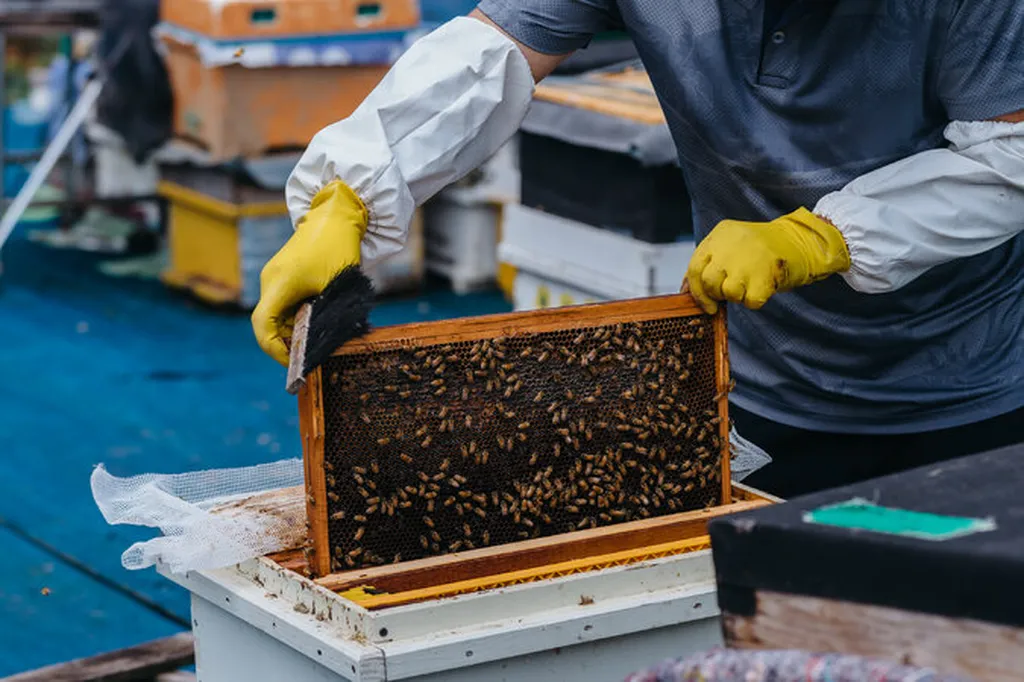
In the heart of Korea’s verdant landscapes, a tiny yet mighty workforce is under the microscope, and the findings could reshape our understanding of honey bee health and, by extension, the future of agriculture. A recent study published in the Polish Journal of Microbiology has uncovered distinctive gut microbiome compositions in honey bees, with significant implications for beekeeping and crop pollination.
The research, led by Shuvo Md Sarower Hossen from the Department of Microbiology and Immunology at Soonchunhyang University, delves into the gut microbiomes of worker bees, queen bees, and drones of Apis mellifera. Using 16S rRNA gene amplicon sequencing, the study found that while Lactobacillus dominated all groups, there were notable differences in microbial compositions. “We found that worker bees had a distinctly different gut microbiome compared to drones and queens,” Hossen explained. “This could reflect their unique roles and physiological demands within the colony.”
The study revealed that worker bees had a lower percentage of Lactobacillus (68.3%) compared to drones (98.6%) and queens (95.4%). Instead, workers were enriched with Gilliamella (23%) and Frischella (4.7%), while Bombella was more prominent in queens (4%). These findings suggest that the gut microbiota plays a crucial role in the health and resilience of honey bees, which is vital for the agriculture sector.
Honey bees are indispensable pollinators, contributing to the reproduction of numerous plant species and the production of many crops. The decline in honey bee populations due to environmental stressors and health challenges has raised concerns about food security and agricultural sustainability. Understanding the gut microbiomes of honey bees could provide new insights into enhancing their health and resilience.
“The variation in gut microbiota composition across honey bee castes underscores the potential functional roles of these microbes,” Hossen noted. “Future research should investigate these roles and their contributions to environmental resilience, paving the way for microbiome-based strategies to promote honey bee health.”
The commercial impacts of this research are substantial. By identifying microbial signatures associated with honey bee health, beekeepers and agriculturalists can develop targeted interventions to support bee populations. This could include probiotics or other microbiome-based treatments to bolster bee immunity and resilience against environmental stressors.
Moreover, the study lays a crucial scientific foundation for conserving the honey bee ecosystem and promoting sustainable agriculture. As the global population grows and agricultural demands increase, the health of honey bees becomes ever more critical. This research offers a promising avenue for safeguarding these essential pollinators and ensuring the stability of our food supply.
In the quest to understand and protect honey bees, the gut microbiome emerges as a key player. As Hossen and his team continue to explore the physiological roles of these microbes, the agricultural sector can look forward to innovative strategies for supporting bee health and, by extension, the future of farming.