
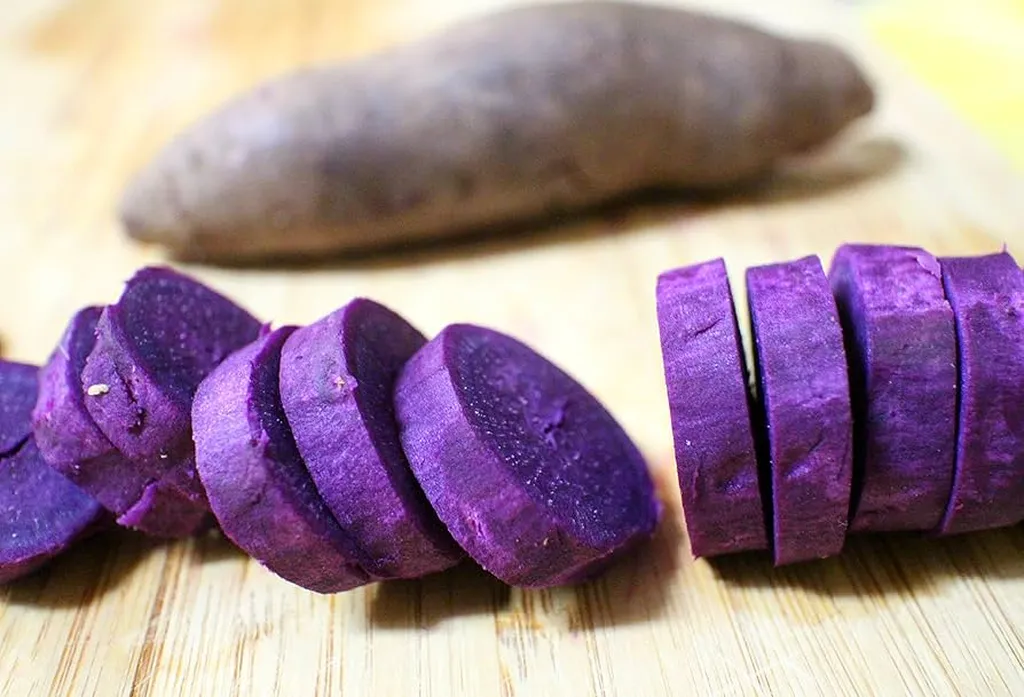
In the quest to enhance the quality and variety of preserved fruit products, a recent study published in *Shipin gongye ke-ji* has uncovered promising results using Lactobacillus plantarum, a common probiotic bacterium, to ferment purple sweet potato preserves. Led by Tian Xiong from the Key Laboratory of Agricultural Products Cold Chain Logistics at the Hubei Academy of Agricultural Sciences, the research not only optimizes the fermentation process but also highlights significant improvements in the texture, taste, and overall quality of the preserved fruit.
The study began by developing an optimized fermentation process for fermented purple sweet potato preserved fruit (FPSF) through single-factor and orthogonal experiments. The ideal conditions were found to be fermenting with 2% L. plantarum for 24 hours, maintaining a solid-liquid ratio of 1:8 (g/g), and using microwave sugar-soaking at 560 W for 25 minutes in a 40% (g/g) sugar solution. Following this, the fruit was soaked in sugar at room temperature for 8 hours and dried at 60 ℃ for 140 minutes.
The results were striking. Compared to unfermented purple sweet potato preserved fruit (UPSF), FPSF exhibited a brighter color, a balanced sweet and sour taste, and a crispier texture. “The total acid content in FPSF increased by 1.13 times, and texture indexes such as hardness and chewiness nearly doubled,” noted Xiong. This enhancement in texture was further supported by low-field nuclear magnetic resonance (LF-NMR) analysis, which showed that the water mobility in FPSF was lower than in UPSF. The proportion of the peak area of T22 (immobile water) increased to 91.17%, indicating a more compact and complete tissue structure.
The sensory evaluation confirmed these findings, with FPSF receiving an overall sensory comprehensive score approximately 16.77% higher than UPSF. This improvement in quality and texture opens up new possibilities for the agricultural sector, particularly in the development of diversified preserved fruit products.
The commercial implications of this research are substantial. As consumer demand for healthier, more flavorful, and texturally appealing preserved fruits grows, the use of L. plantarum fermentation could become a standard practice in the industry. This method not only enhances the sensory qualities of the product but also potentially extends its shelf life, reducing waste and increasing profitability for producers.
Moreover, the study’s findings provide a theoretical basis for modifying the tissue structure of fruits and vegetables, which could lead to innovations in food processing technologies. “This research offers a blueprint for developing new preserved fruit products that meet consumer preferences while maintaining nutritional value,” Xiong explained.
As the agricultural sector continues to evolve, the integration of biotechnology and food science will play a crucial role in meeting the demands of a discerning market. The work of Xiong and his team represents a significant step forward in this direction, offering a glimpse into the future of preserved fruit products and the broader implications for the food industry.
Published in *Shipin gongye ke-ji*, the study was led by Tian Xiong from the Key Laboratory of Agricultural Products Cold Chain Logistics at the Hubei Academy of Agricultural Sciences, Wuhan, China. This research not only advances our understanding of fermentation processes but also paves the way for innovative developments in the agricultural and food processing sectors.