
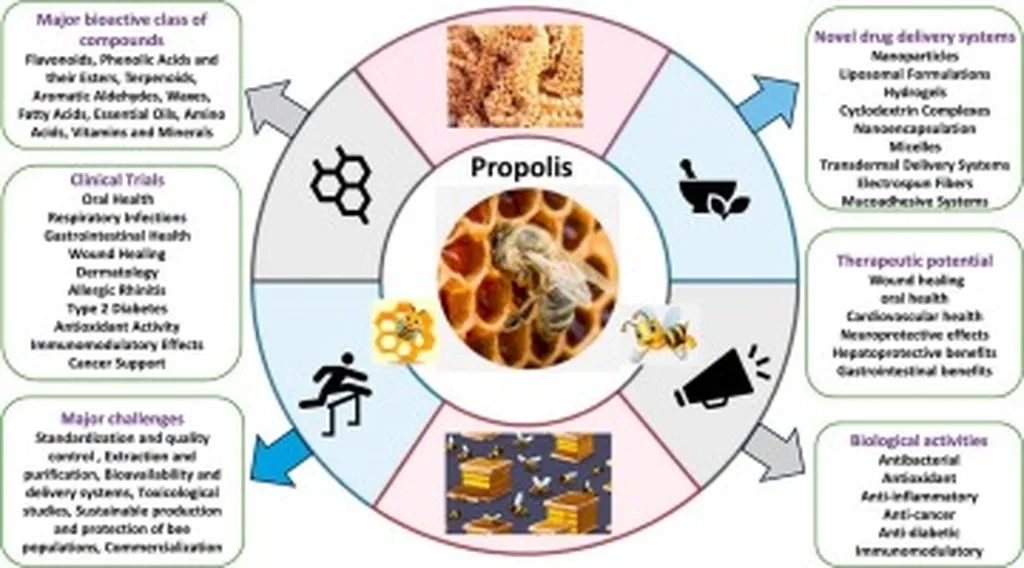
In the quest for effective and low-side-effect treatments for leukemia, researchers are turning to nature’s bounty, and a recent study published in *Analytical Cellular Pathology* has shed light on the potential of propolis, a resinous mixture produced by honey bees. The study, led by Hamide Dogan from the Department of Translational Medicine, explores the antileukemic properties of olive oil extracted propolis (OEP) and its synergistic effects with methylprednisolone (MP) on HL-60 acute myeloid leukemia cells.
The research team employed a combination of WST-8 assays and flow cytometry to investigate the cytotoxic, proliferative, apoptotic, cell cycle, and differentiation effects of OEP. They found that OEP alone demonstrated significant efficacy in inducing apoptosis and arresting the cell cycle at the G2/M phase after 24 hours. The IC50 concentration of OEP in HL-60 cells was determined to be 0.5 μL/mL, indicating a potent effect at relatively low concentrations.
“What we found is that OEP not only induces apoptosis but also enhances the effects of MP, a commonly used steroid in leukemia treatment,” Dogan explained. The combination of OEP and MP led to a significant increase in the number of cells arrested in the G0/G1 phase after 48 hours, suggesting a potential for improved therapeutic outcomes.
The study also revealed that OEP performed efficiently at CD11 levels for the first 24 hours, indicating its role in cell differentiation. This multifaceted approach—targeting apoptosis, cell cycle arrest, and differentiation—positions OEP as a promising natural product for further preclinical investigation in leukemia models.
The commercial implications for the agriculture sector are substantial. Propolis, a byproduct of beekeeping, has long been valued for its antimicrobial and anti-inflammatory properties. This research highlights its potential as a valuable therapeutic agent, opening up new markets and revenue streams for beekeepers and agricultural producers. As Dogan noted, “This study not only advances our understanding of propolis’s therapeutic potential but also underscores the importance of sustainable agricultural practices that support beekeeping.”
The findings suggest that OEP, either alone or in combination with MP, could offer a novel and effective strategy for leukemia treatment. The synergistic effects observed in this study provide a strong rationale for further exploration of combination therapies involving natural products and conventional drugs.
As the agricultural sector continues to innovate, the integration of natural products like propolis into medical research could pave the way for new therapeutic approaches. This study not only highlights the potential of OEP in leukemia treatment but also underscores the broader implications for agriculture, where sustainable practices and value-added products can drive economic growth and improve public health outcomes.