
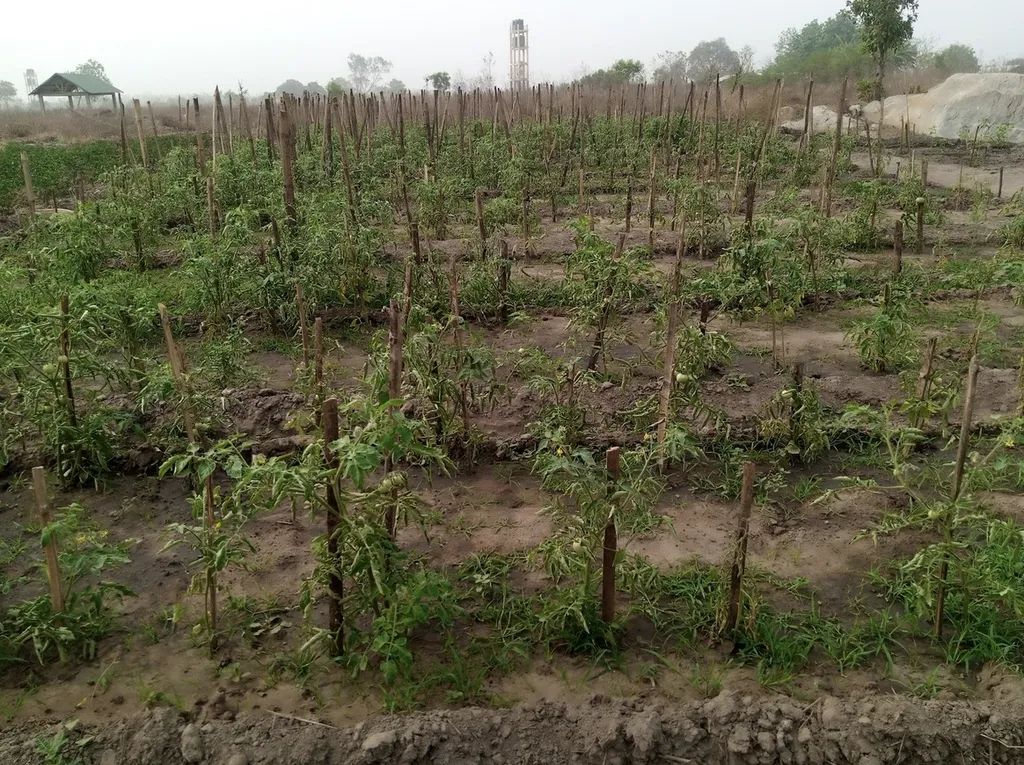
In the heart of Benin, a groundbreaking study is shedding light on how onion varieties respond to drought, offering a beacon of hope for farmers in water-scarce regions. Led by Oladé Charles Sansan from the Department of Crop Production at the University of Abomey-Calavi, this research delves into the morphophysiological and agronomic parameters of onion genotypes under drought stress, providing critical insights for the agriculture sector.
Onions, a staple crop worldwide, are particularly sensitive to dry conditions, which can significantly impact yield and productivity. Sansan’s study, published in ‘Plant-Environment Interactions,’ evaluated 14 onion genotypes at different growth stages, subjecting them to controlled drought conditions in a greenhouse. The findings reveal that the impact of drought on onions is highly dependent on the growth stage and the intensity of the stress.
“Our research showed that the longer the drought stress and the more advanced the growth stage, the more severe the impact on the onion plants,” Sansan explained. The study found that drought during the bulb development stage significantly reduced yield by 33.85%, highlighting the critical need for drought-tolerant varieties.
The study identified several key findings that could revolutionize onion farming in drought-prone areas. Notably, the proline content in onions increased in response to drought, indicating a potential biomarker for drought tolerance. Additionally, the research categorized the onion genotypes into three groups: drought-tolerant (Goudami, Prema, and Red_Jewel F1), sensitive (Red_Creole, AVON_1074, and Safari), and intermediate (Local, AVON_1317, and Dayo).
These findings have profound implications for the agriculture sector. By identifying drought-tolerant genotypes, farmers can select varieties that are more resilient to water deficit stress, ensuring stable yields even in challenging conditions. This is particularly crucial for regions vulnerable to climate change, where water scarcity is becoming an increasingly pressing issue.
The commercial impact of this research is substantial. Farmers can now make informed decisions about which onion varieties to plant, reducing the risk of crop failure and improving overall productivity. Moreover, breeders can use this information to develop new, more resilient onion varieties, further enhancing the crop’s adaptability to changing environmental conditions.
Sansan’s research not only provides immediate practical applications but also opens the door for future developments in the field. By understanding the specific mechanisms by which onions respond to drought, scientists can explore innovative strategies to enhance drought tolerance, such as genetic modification or advanced breeding techniques.
As climate change continues to pose significant challenges to global agriculture, studies like this are invaluable. They offer a glimpse into a future where crops are not just resilient but thrive in the face of adversity, ensuring food security for generations to come. Sansan’s work is a testament to the power of scientific research in driving agricultural innovation and shaping a more sustainable future.