
In the relentless battle against drug-resistant infections, scientists are turning to innovative solutions that blend traditional medicine with cutting-edge nanotechnology. A recent study published in *Notulae Scientia Biologicae* offers a compelling glimpse into this fusion, comparing the antibacterial prowess of a synthetic diclofenac-copper complex with green-synthesized nanocomposites derived from the African sausage tree, *Kigelia pinnata*. The research, led by Ömer F. Duran of Patnos State Hospital in Ağrı, Turkey, not only highlights the potential of these novel agents but also underscores their commercial viability for the agriculture sector.
At the heart of the study lies a diclofenac-based copper(II) complex, meticulously synthesized and characterized using advanced spectroscopic techniques. The complex, tetrakis{µ-2-[2-(2,6-dichloroanilino)phenyl]acetato-κ²O:O’}bis(methanol-κO)copper(II), showed promising interactions with bacterial nutrient-sensing proteins, as revealed by in silico molecular docking. “The diclofenac complex demonstrated strong predicted interactions with key bacterial proteins, suggesting its potential as an antimicrobial agent,” Duran noted.
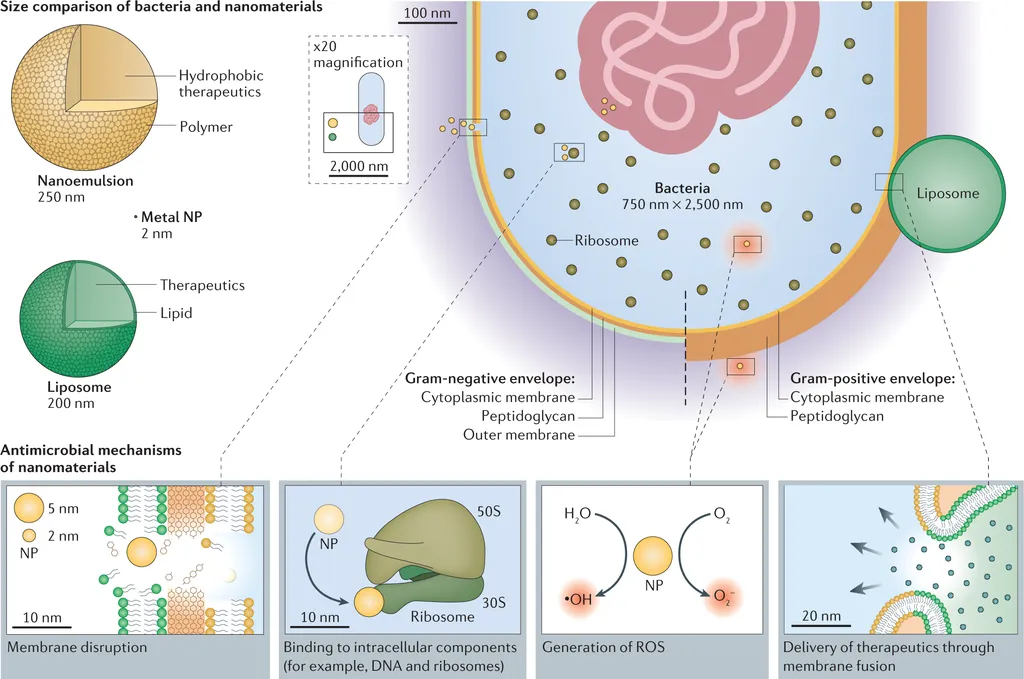
Parallel to this, the researchers turned to nature for inspiration, utilizing extracts from *Kigelia pinnata* to synthesize silver (AgNC) and manganese (MnNC) nanocomposites. The green synthesis process, facilitated by abundant naphthoquinones and flavonoids in the plant extracts, yielded nanocomposites with unique nanoscale morphologies. Scanning electron microscopy (SEM) and energy-dispersive X-ray spectroscopy (EDX) confirmed the composition and structure of these nanocomposites, with AgNCs composed of elemental silver and MnNCs containing Mn-oxide phases.
The real test, however, came in the form of antimicrobial activity assays against *E. coli* and *Staphylococcus vitulinus*. The results were striking. AgNCs emerged as the most potent antibacterial agents, with minimum inhibitory concentrations (MIC) as low as 15.63 µg/mL for *S. vitulinus* and 62.5 µg/mL for *E. coli*. This performance outshone both MnNCs and the diclofenac-Cu(II) complex, which showed activity only against Gram-positive strains at higher concentrations.
The implications for the agriculture sector are profound. With the rise of antibiotic-resistant pathogens posing a significant threat to livestock and crop health, the development of effective and eco-friendly antimicrobial agents is more critical than ever. The green-synthesized nanocomposites, particularly the silver-based ones, offer a promising alternative to conventional antibiotics. Their superior antibacterial activity, coupled with the sustainability of their synthesis, makes them ideal candidates for integration into agricultural practices.
Moreover, the selective activity of the diclofenac-Cu(II) complex against Gram-positive pathogens opens avenues for targeted treatments, reducing the risk of resistance development. “This selectivity could be harnessed to develop specialized antimicrobial agents tailored to specific pathogens, enhancing their efficacy and reducing the environmental impact,” Duran suggested.
As the world grapples with the challenges of antimicrobial resistance, studies like this one provide a beacon of hope. By bridging the gap between traditional medicine and advanced nanotechnology, researchers are paving the way for innovative solutions that could revolutionize the agriculture sector. The journey towards sustainable and effective antimicrobial agents is far from over, but with each discovery, we inch closer to a future where the battle against drug-resistant infections is won.