
In a significant stride towards enhancing agricultural waste valorization, researchers have engineered a broad-spectrum glucose oxidase (GOD) that could revolutionize the bioconversion of lignocellulosic biomass. This breakthrough, published in *Synthetic and Systems Biotechnology*, opens new avenues for sustainable bioprocessing and agricultural biotechnology.
The study, led by Yong Feng from the School of Life Sciences at Jiangsu University, focuses on expanding the substrate specificity of GOD, an enzyme widely used in biotechnology. Traditionally, GOD’s narrow substrate specificity has limited its application in complex bioconversion processes. However, Feng and his team have successfully addressed this limitation through synthetic biology and protein engineering strategies.
The researchers initially employed site-directed mutagenesis at position N82, a key gatekeeper at the dimer interface of the enzyme. This modification altered the substrate channel geometry, significantly enhancing the enzyme’s catalytic activity towards various sugars, including stachyose and xylose. “By tweaking the enzyme’s structure, we were able to make it more versatile, allowing it to act on a broader range of substrates,” Feng explained.
Furthermore, the team systematically engineered the linker region between the spore anchor protein CotG and the glucose oxidase from Aureobasidium sp. (AreGOD). They discovered that flexible linkers, particularly the (GGGGS)5 repeat (LK3), dramatically expanded the enzyme’s substrate spectrum to include mono-, di-, and oligosaccharides. The optimized spore-displayed AreGOD (CotG-LK3-AreGOD) exhibited strong synergistic effects with cellulase in wheat straw degradation, significantly enhancing the hydrolysis of cellulose, hemicellulose, and lignin.
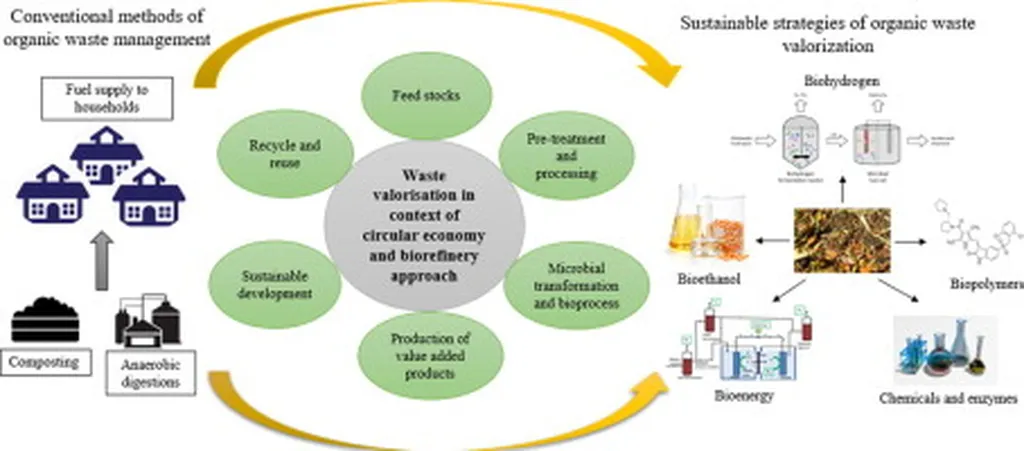
The implications of this research for the agriculture sector are profound. Lignocellulosic biomass, such as agricultural waste, is a abundant and underutilized resource. The engineered glucose oxidase could facilitate more efficient conversion of this biomass into valuable products, contributing to a circular economy and reducing waste. “This enzyme could be a game-changer for the agriculture industry, enabling more sustainable and efficient use of resources,” Feng noted.
The study also highlights the potential of integrative enzyme design for sustainable bioprocessing. By combining synthetic biology and protein engineering, researchers can create enzymes with enhanced properties, tailored to specific industrial needs. This approach could pave the way for developing a new generation of biocatalysts, driving innovation in various sectors, from agriculture to bioenergy.
In conclusion, this research demonstrates an effective and generalizable strategy for engineering substrate-promiscuous oxidases. The findings could shape future developments in the field, fostering advancements in sustainable bioprocessing and agricultural biotechnology. As the world grapples with the challenges of climate change and resource depletion, such innovations are crucial for building a more sustainable future.