
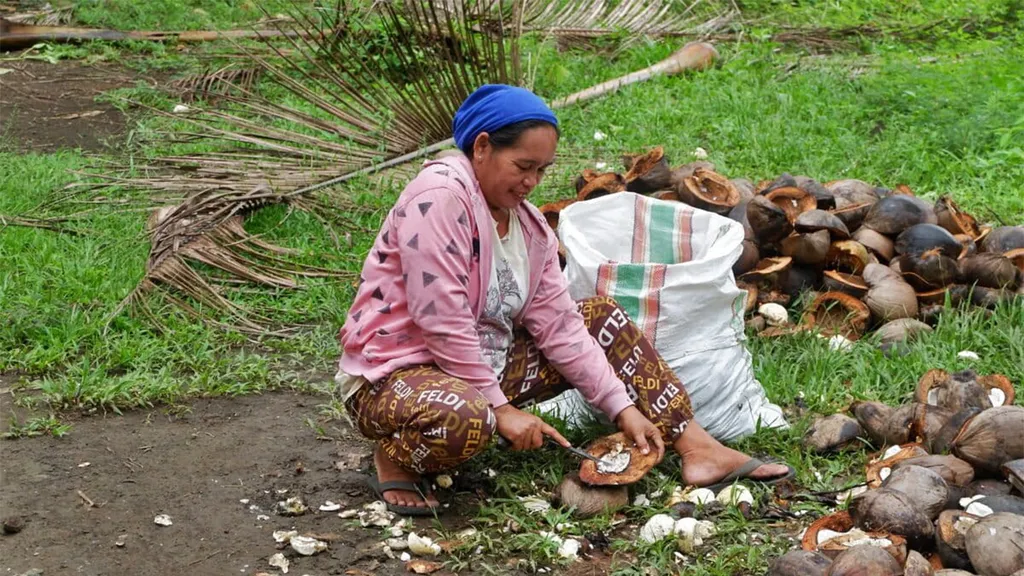
In the heart of Nigeria’s coconut groves, a silent enemy is wreaking havoc, causing over 60% yield loss due to fruit rot and premature nut fall. The culprit? A fungus called Botryodiplodia theobromae. But a recent study published in ‘Open Research Europe’ is shedding light on this pathogen, offering hope for better management and control.
The study, led by Quirico Migheli from the Department of Agricultural Sciences and Desertification Research Centre at the University of Sassari in Italy, delves into the cultural, morphological, and molecular characteristics of B. theobromae. The research is a significant step towards understanding and combating this fungus that’s causing substantial economic losses in coconut production.
The team collected eight isolates of B. theobromae from diseased coconut fruits in two major coconut-producing areas in Nigeria. They examined the cultural and morphological characteristics of these isolates using culture medium and microscopy. But the real breakthrough came from the molecular analysis. DNA was extracted from each isolate and amplified using polymerase chain reaction (PCR) with specific primers. The PCR amplicons obtained from the ITS1F/4R primers were sequenced and analyzed using bioinformatics and phylogenetic methods.
The results were revealing. The colony texture and color, along with the ITS1/4 gene sequence information and phylogenetic analysis, clustered the eight isolates into five categories. This categorization is crucial for early diagnosis and management of the pathogen.
“Understanding the genetic diversity of B. theobromae is the first step in developing targeted control strategies,” Migheli explained. “This study provides a guide for proper categorization of the fungus, which is a prerequisite for effective management in coconut-producing areas.”
The commercial impacts of this research are substantial. Coconut is a vital cash crop in many tropical regions, and yield losses due to B. theobromae can be devastating for farmers. By providing a clearer understanding of the pathogen, this research paves the way for developing more effective control measures, ultimately boosting coconut yields and securing farmers’ livelihoods.
Moreover, the study’s findings could extend beyond coconut. B. theobromae is known to infect a wide range of plants, making this research relevant to other agricultural sectors as well. The methods used in this study could serve as a model for similar investigations into other plant pathogens.
As we look to the future, this research could shape developments in plant pathology, quarantine processes, and even biotechnology. By understanding the genetic makeup of B. theobromae, scientists may be able to develop resistant coconut varieties or even bio-control agents that specifically target this fungus.
In the ongoing battle against plant pathogens, knowledge is power. And with this study, we’ve gained a powerful new ally in the fight to protect our crops and secure our food supply. The research, led by Quirico Migheli from the University of Sassari, Italy, and published in ‘Open Research Europe’, is a testament to the power of scientific inquiry in addressing real-world agricultural challenges.