
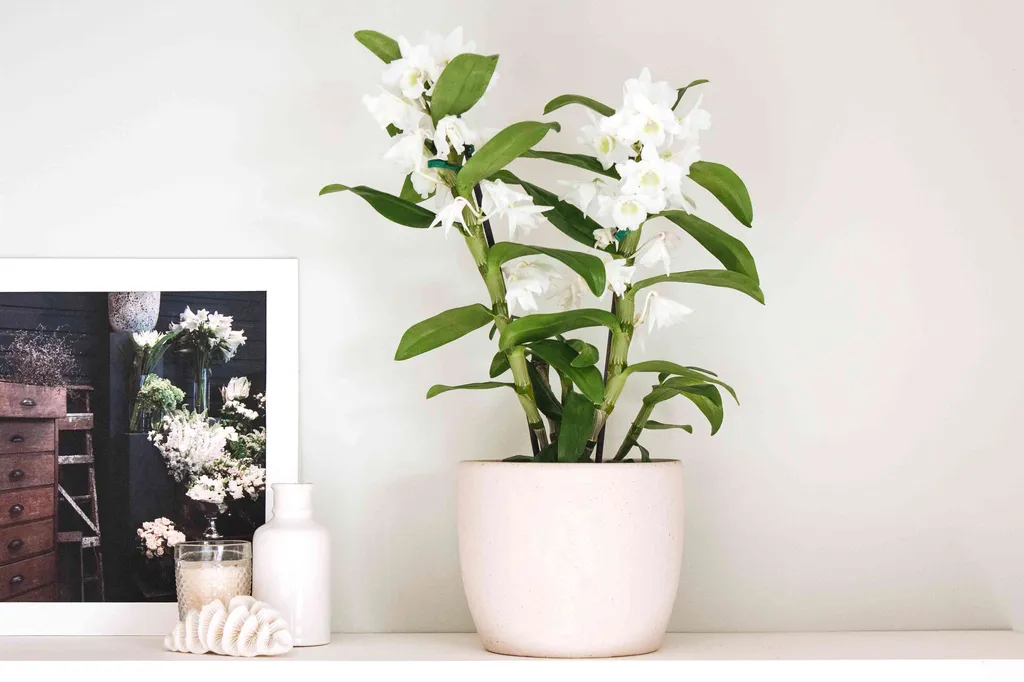
In a groundbreaking study published in the *Journal of Horticultural Sciences*, researchers have unveiled insights that could revolutionize the way we cultivate high-value crops like Dendrobium orchids. The study, led by S Chandana, explores the influence of potting medium, pot type, and growing structure on the growth and flowering of Dendrobium cv. Emma White, offering promising avenues for vertical farming.
Vertical farming has long been touted as a sustainable and innovative approach to agriculture, and this research provides concrete evidence of its potential. The study found that plants cultivated on vertical frames with a potting medium comprising coconut husk, charcoal, and tile bits (1:1:1 v/v) in netted pots exhibited the highest pseudo bulb count, pseudo bulb length, and internodal length. “This combination of materials not only supports robust growth but also enhances the overall productivity of the orchids,” said lead author S Chandana.
However, the most significant findings came from plants grown in charcoal medium in netted pots on vertical frames. These plants recorded the maximum number, length, width, and area of leaves, as well as enhanced flowering attributes. “The charcoal medium, in particular, showed a remarkable improvement in flowering, including earlier spike initiation, more spikes per plant, and longer spike longevity,” Chandana explained. The study also highlighted a positive correlation between incident PAR (photosynthetically active radiation) and spike production, underscoring the importance of optimal light conditions in vertical farming.
The commercial implications of this research are substantial. Vertical farming of Dendrobium orchids can ensure higher productivity and enhanced income from a unit area compared to conventional horizontal farming. The study reported a favorable cost-benefit ratio of 3.77 for orchid cultivation in charcoal medium in netted pots on vertical frames. This could translate to significant economic gains for farmers and the agriculture sector as a whole.
The findings also suggest that vertical farming could be a game-changer for high-value crops. “By optimizing the growing conditions, we can achieve higher yields and better quality produce, which is crucial for meeting the demands of a growing market,” Chandana noted. The study’s results could pave the way for future developments in vertical farming, encouraging more farmers to adopt this innovative approach.
As the agriculture sector continues to evolve, research like this is instrumental in shaping the future of farming. The study published in the *Journal of Horticultural Sciences* not only provides valuable insights into the cultivation of Dendrobium orchids but also offers a glimpse into the potential of vertical farming for other high-value crops. With further exploration and implementation, vertical farming could become a cornerstone of sustainable and profitable agriculture.