
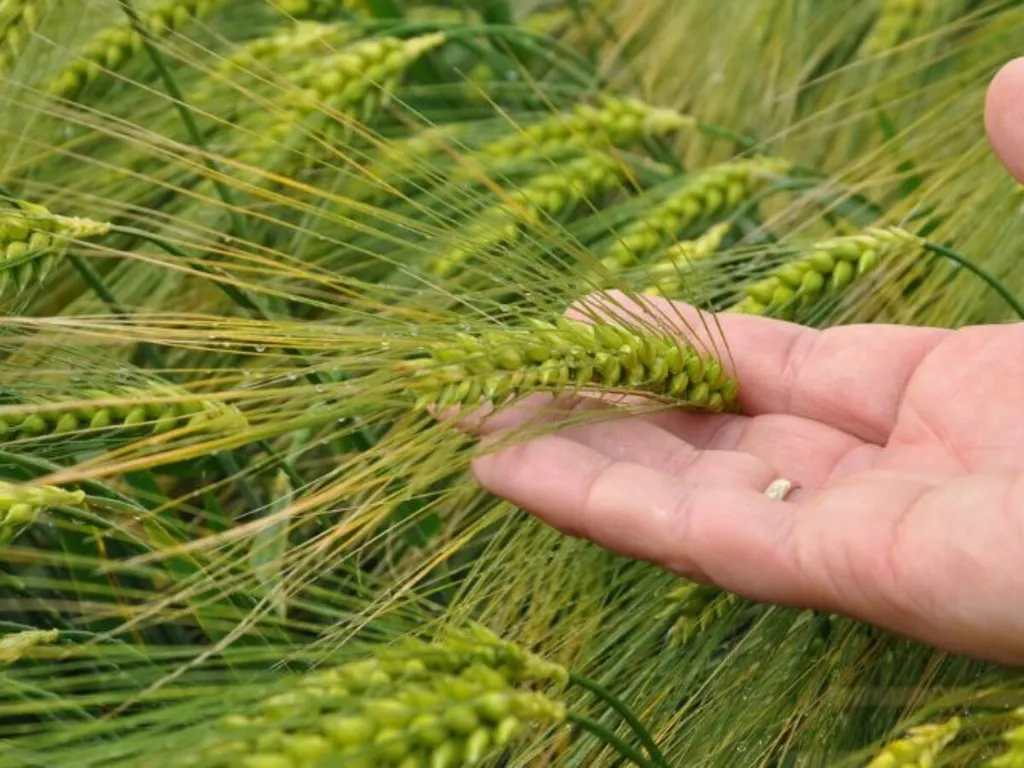
In the quest to boost barley yields and improve agricultural productivity, a recent study published in *Scientific Reports* has shed light on the genetic secrets behind high-performing barley cultivars. Led by Hüseyin Güngör from the Department of Field Crops at Duzce University, the research delves into the genetic structure and inheritance of key yield components in barley (Hordeum vulgare L.), offering promising insights for breeders and farmers alike.
The study, which spanned five years (2019–2023), employed a comprehensive approach to analyze the genetic potential of barley populations across four generations (F1–F4). By using a randomized complete block design with three replications, the researchers investigated the general combining ability (GCA) and specific combining ability (SCA) of various barley cultivars and their hybrid combinations.
One of the standout findings was the strong general combining ability of the Arcanda cultivar. “Arcanda showed remarkable genetic stability and consistently high performance across generations,” Güngör noted. This stability is crucial for breeders seeking reliable parents for high-yielding hybrids.
The study also highlighted the significant specific combining ability of the Arcanda/Asparuh and Alena/Asparuh hybrid combinations. These hybrids not only exhibited high yields but also demonstrated substantial heterosis and heterobeltiosis values, indicating their potential for genetic improvement. The Arcanda × Asparuh combination, in particular, achieved the highest yields, with an impressive 30.43 g per plant and 9151.0 kg per hectare in the F4 generation. This combination also showed mean heterosis and heterobeltiosis values of 37.32% and 23.07%, respectively.
The Alena × Asparuh hybrid also performed strongly, especially in the F3 generation, with a yield of 8459.0 kg per hectare. “The high heterosis values observed in these hybrids suggest a substantial potential for genetic improvement,” Güngör explained. This is particularly encouraging for breeders aiming to develop high-performing barley cultivars.
The researchers also assessed the kinship of the parental lines using iPBS-retrotransposon primers. They found that the Alena and Arcanda cultivars shared 78% similarity, while the Asparuh cultivar showed 71% similarity to the other parents. This genetic diversity is essential for breeding programs, as it provides a broader genetic base for selecting superior hybrids.
The study’s findings have significant commercial implications for the agriculture sector. By identifying high-performing hybrid combinations and understanding their genetic stability, breeders can develop cultivars that are not only high-yielding but also resilient to various environmental conditions. This can lead to increased agricultural productivity and economic benefits for farmers.
Moreover, the research underscores the importance of delaying selection to the later F3–F4 generations. This approach increases the accuracy of identifying and stabilizing superior hybrids, thereby maximizing genetic potential and enhancing agricultural productivity.
As the global demand for food continues to rise, the insights from this study could shape future developments in barley breeding and agriculture. By leveraging the genetic potential of high-performing hybrids, breeders can develop cultivars that meet the challenges of climate change and food security, ultimately contributing to a more sustainable and productive agricultural sector.