
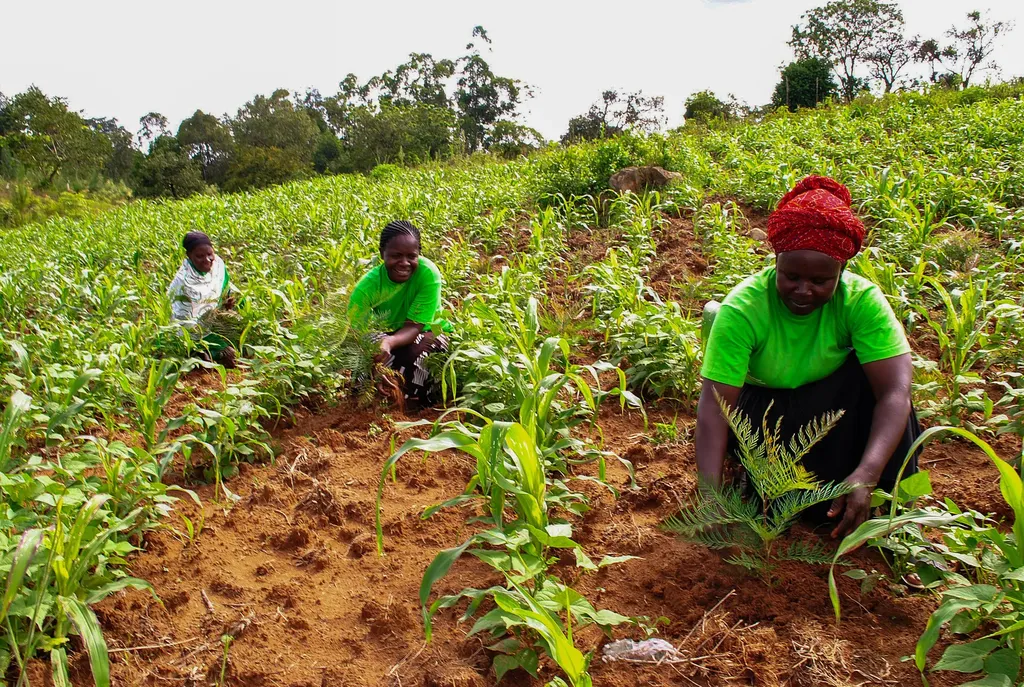
In the heart of Kenya’s Kirinyaga County, a humble tree is making waves in the world of sustainable agriculture. The Cordia africana, often overlooked, is proving to be a game-changer for smallholder farmers, according to a recent study published in the *Journal of Science, Innovation and Creativity*. Led by Miriam Kamau from Karatina University, the research highlights the tree’s potential to significantly improve soil fertility, offering a promising solution to food insecurity.
The study, which involved soil sampling at varying distances from mature Cordia africana trees and at two different depths, revealed that the tree’s presence leads to higher concentrations of essential nutrients like nitrogen, phosphorus, potassium, calcium, magnesium, and organic carbon in the topsoil. This is a significant finding for farmers, as these nutrients are crucial for crop growth and yield.
“Our results show that Cordia africana has a positive effect on soil quality,” Kamau explained. “The nutrients within the Cordia africana system were higher than those under cultivated land, indicating that this tree could be a valuable addition to agroforestry practices.”
The commercial implications of this research are substantial. For smallholder farmers, who often struggle with poor soil fertility and food insecurity, integrating Cordia africana trees into their farms could lead to improved crop yields and increased income. Moreover, the tree’s ability to enhance soil fertility could reduce the need for synthetic fertilizers, lowering production costs and promoting more sustainable farming practices.
The study also sheds light on the horizontal and vertical distribution of nutrients in the soil. While the tree’s influence on nitrogen, organic carbon, and phosphorus is more pronounced vertically (across depth), its effect on other nutrients is more evenly distributed horizontally. This understanding could help farmers optimize their soil management practices, further enhancing the benefits of integrating Cordia africana trees into their farms.
Looking ahead, this research could shape future developments in agroforestry and sustainable farming. As Kamau noted, “There is a need for the formulation of appropriate measures of soil management based on the characteristics of the sites.” This could involve developing specific planting strategies, soil management techniques, or even breeding programs to enhance the tree’s beneficial effects.
In conclusion, the Cordia africana tree is more than just a shade provider. It’s a potential lifeline for smallholder farmers, offering a sustainable and cost-effective solution to soil fertility challenges. As we strive for more sustainable and productive farming practices, this humble tree could play a significant role in shaping the future of agriculture.