
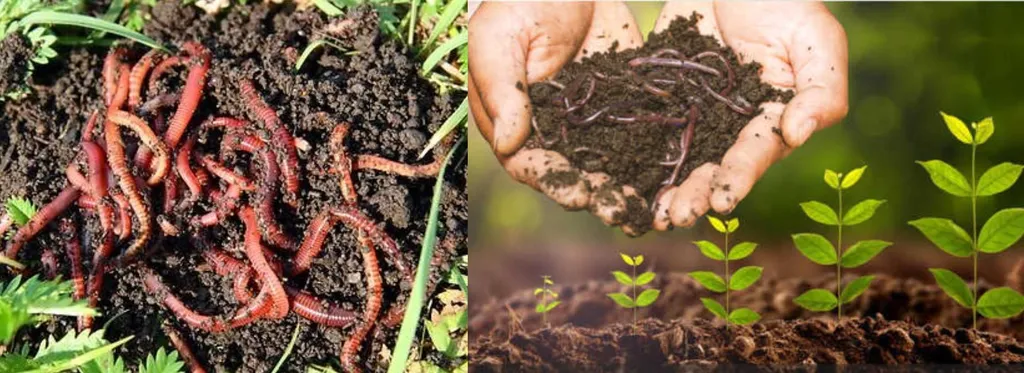
In the heart of Punjab, India, a humble earthworm is being hailed as a potential game-changer for sustainable agriculture and climate change mitigation. Rajan Bhatt, a researcher at the Krishi Vigyan Kendra, Punjab Agricultural University, has been delving into the world of vermicomposting, a process that uses earthworms to convert organic waste into nutrient-rich compost. His recent study, published in the journal ‘Sains Tanah: Journal of Soil Science and Agroclimatology’, sheds light on the multifaceted benefits of this eco-friendly practice.
The study underscores the critical role of vermicompost in recycling crop nutrients, particularly nitrogen, with an impressive recovery rate of 76%. “Vermicomposting is not just about waste management; it’s about creating a sustainable cycle of nutrient reuse,” Bhatt explains. This process, he argues, is a win-win for both the environment and the agriculture sector.
The commercial implications for agriculture are substantial. Vermicompost enhances soil properties, leading to increased land productivity. By reducing the need for chemical fertilizers, it also cuts down on greenhouse gas emissions, addressing two pressing global concerns. “The application of vermicompost can significantly improve nitrogen use efficiency,” Bhatt notes. “This means farmers can achieve soil fertility with fewer inputs, which is not only cost-effective but also environmentally friendly.”
The study suggests that vermicomposting technology could play a pivotal role in agroecosystems. By reducing pollution, improving waste management, and lowering health hazards, it offers a holistic approach to sustainable farming. The carbon-to-nitrogen ratios of 10-23 in vermicompost make it an ideal organic amendment, reducing emissions of reactive nitrogen gases and promoting sustainable soil health.
The research also highlights the potential of vermicompost to mitigate the adverse effects of global warming. As the world grapples with climate change, such innovative and sustainable practices could be key to building resilient agricultural systems.
The findings of this study could shape future developments in the field of sustainable agriculture. By emphasizing the importance of vermicomposting, it paves the way for more eco-friendly practices that benefit both farmers and the environment. As Bhatt puts it, “Vermicompost is a win-win technology for sustaining today’s agricultural system. It enhances soil properties, increases land productivity, and reduces greenhouse gas emissions.”
In an era where sustainability and efficiency are paramount, vermicomposting stands out as a promising solution. It’s a testament to the power of nature’s own mechanisms in addressing some of our most pressing challenges. As we look to the future, the humble earthworm might just be one of our most valuable allies in the quest for sustainable agriculture.