
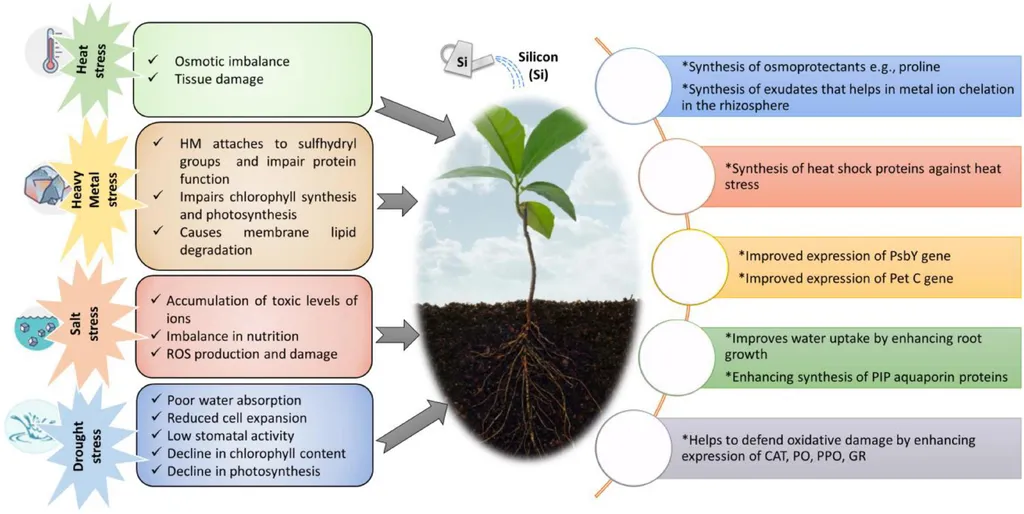
In the quest to enhance crop productivity and sustainability, researchers have discovered a promising combination of silicon (Si) and gibberellic acid (GA₃) that could revolutionize sugarcane cultivation. A recent study published in *Scientific Reports* reveals that the interactive application of these two compounds significantly boosts the growth and metabolic regulation of sugarcane plants, offering a sustainable alternative to conventional chemical inputs.
The study, led by Ye-geng Fan from the Key Laboratory of Sugarcane Biotechnology and Genetic Improvement at the Guangxi Academy of Agricultural Sciences, explored the effects of different concentrations of GA₃ (0, 10, 20, 50, 75, and 100 ppm) combined with Si (50 ppm) on sugarcane plants. The treatments were applied through foliar sprays and soil irrigation at specific intervals, and the results were striking.
“Our findings indicate that the combined application of GA₃ and Si not only enhances enzymatic and non-enzymatic activities but also stabilizes various physiological traits in sugarcane plants,” said Fan. The study observed notable improvements in soluble protein, catalase, peroxidase, ascorbate peroxidase, superoxide dismutase, and glutathione reductase activities, among other metrics. Additionally, the levels of plant hormones such as indole-3-acetic acid, abscisic acid, and gibberellic acid were positively influenced.
The commercial implications of this research are substantial. Sugarcane is a critical crop for the production of sugar, biofuels, and other industrial products. Enhancing its productivity through sustainable methods can significantly impact the agricultural sector, particularly in regions where sugarcane is a staple crop. The use of Si and GA₃ as biostimulants offers a cost-effective and environmentally friendly approach to improving crop yields.
“By integrating these compounds into existing agricultural practices, farmers can achieve higher yields without relying on harmful chemicals,” Fan explained. This innovative strategy aligns with global food security goals and promotes sustainable agriculture, which is crucial for meeting the demands of a growing population.
The study also highlights the potential for similar applications in other crops. The mechanisms underlying the synergistic effects of Si and GA₃ could be explored in various plant species, paving the way for broader agricultural advancements. As researchers continue to unravel the complexities of plant biochemistry, the integration of biostimulants like Si and GA₃ may become a cornerstone of modern farming practices.
In conclusion, the research published in *Scientific Reports* by Ye-geng Fan and colleagues presents a groundbreaking approach to enhancing sugarcane productivity. By leveraging the synergistic effects of silicon and gibberellic acid, farmers can achieve sustainable and economically viable improvements in crop yields, contributing to global food security and the advancement of agricultural technology.