
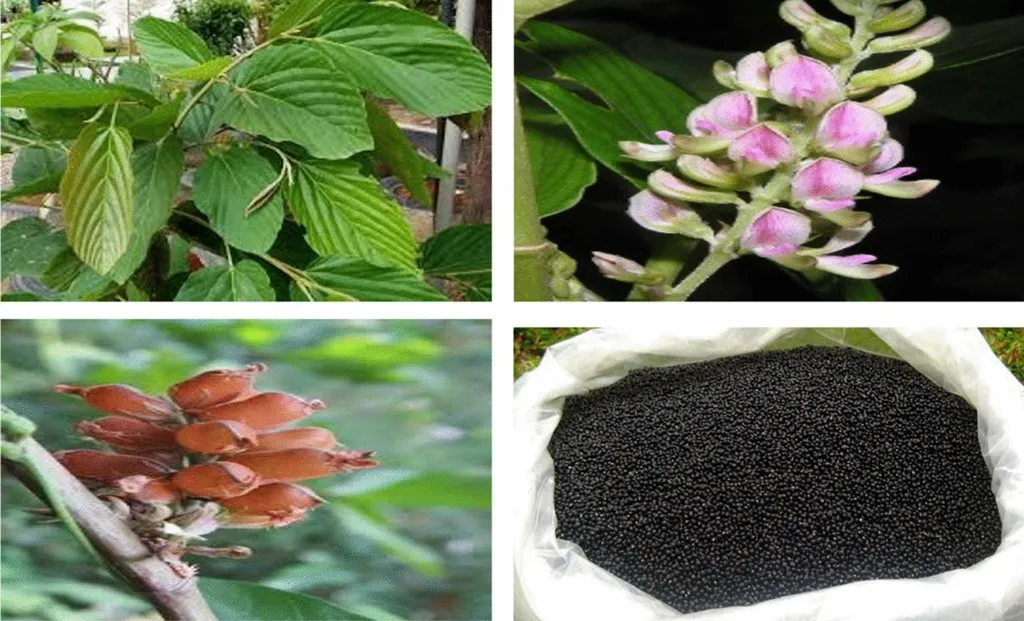
In the relentless pursuit of combating Alzheimer’s disease, a beacon of hope emerges from an unexpected source: the leaves of Cratoxylum formosum (L.), a plant native to Southeast Asia. A recent study published in *Scientific Reports* reveals that an extract from these leaves exhibits promising neuroprotective effects against β-amyloid-induced injury in human neuroblastoma SH-SY5Y cells. This research, led by Nut Palachai from the Biomedical Research Unit at Mahasarakham University, could open new avenues for both medical and agricultural sectors.
Alzheimer’s disease, a debilitating condition characterized by the accumulation of β-amyloid peptides, triggers oxidative stress and neuronal cell death. The study aimed to explore how Cratoxylum formosum (L.) leaf extract could mitigate these effects. The researchers treated SH-SY5Y cells with the extract, both with and without β-amyloid peptides, and observed significant improvements in cell viability and reduced oxidative stress.
“Our findings suggest that the Cratoxylum formosum (L.) extract has a concentration-dependent protective effect against β-amyloid-induced neurotoxicity,” Palachai explained. “This is evident from the enhanced cell survival, reduced lactate dehydrogenase (LDH) release, and decreased reactive oxygen species (ROS) production.”
The extract also suppressed caspase-3/7 activity, which is crucial in the apoptotic process, and increased the phosphorylation of key proteins like Akt, ERK1/2, and CREB. Additionally, it upregulated the expression of Bcl-2 proteins and enhanced the activity of antioxidant enzymes such as catalase (CAT) and superoxide dismutase (SOD).
High-performance liquid chromatography (HPLC) analysis identified chlorogenic acid, 1,5-dicaffeoylquinic acid, and ferulic acid as the major phenolic constituents of the extract. These compounds are known for their antioxidant properties, which could contribute to the observed neuroprotective effects.
The implications of this research extend beyond the laboratory. For the agricultural sector, the identification of Cratoxylin formosum (L.) as a potential source of neuroprotective compounds could drive demand for its cultivation. Farmers in regions where this plant is native could benefit from new economic opportunities, particularly if the extract is developed into a commercial product.
Moreover, the study highlights the importance of exploring natural sources for medicinal compounds. As the global population ages, the prevalence of Alzheimer’s disease is expected to rise, creating a pressing need for effective treatments. Natural extracts like those from Cratoxylin formosum (L.) could offer a sustainable and cost-effective solution.
While the results are promising, further studies are needed to fully understand the mechanisms and potential therapeutic applications of the extract. Nonetheless, this research represents a significant step forward in the fight against Alzheimer’s disease and underscores the value of integrating traditional knowledge with modern science.
As Nut Palachai noted, “This research is just the beginning. We hope our findings will pave the way for more extensive studies and ultimately contribute to the development of new treatments for Alzheimer’s disease.”
For the agricultural sector, the potential commercialization of Cratoxylin formosum (L.) extract could not only boost local economies but also promote sustainable farming practices. As the world continues to seek innovative solutions to pressing health challenges, the intersection of agriculture and medicine offers a fertile ground for discovery and development.