
In the ever-evolving landscape of food safety, a recent study published in *Scientific Reports* has shed new light on the pathogenicity of *Arcobacter butzleri*, a foodborne pathogen known for its association with gastrointestinal disorders in humans. The research, led by Elisabetta Chiarini from the Department of Agricultural, Forest and Food Sciences at the University of Turin, delves into the intricate dynamics between *A. butzleri* and the gut microbiota of mice, offering insights that could have significant implications for the agriculture sector.
*A. butzleri* is no stranger to the agricultural and food processing industries, where its presence can pose substantial risks. The study aimed to evaluate the pathogen’s infectivity and pathogenicity using a murine model, focusing on its invasion mechanisms and impact on the intestinal microbiota. Fifteen Mus musculus C57BL/6J mice were orally infected with high concentrations of two strains of *A. butzleri*, and their faecal samples were collected and analyzed over a 14-day period.
The results were revealing. Molecular analyses confirmed the presence of *A. butzleri* in faecal samples until day 4 post-infection, indicating the pathogen’s ability to persist under gastrointestinal conditions—a critical feature for foodborne pathogens. “This persistence is a key factor in understanding how *A. butzleri* can colonize and invade the host, potentially leading to gastrointestinal disorders,” Chiarini explained.
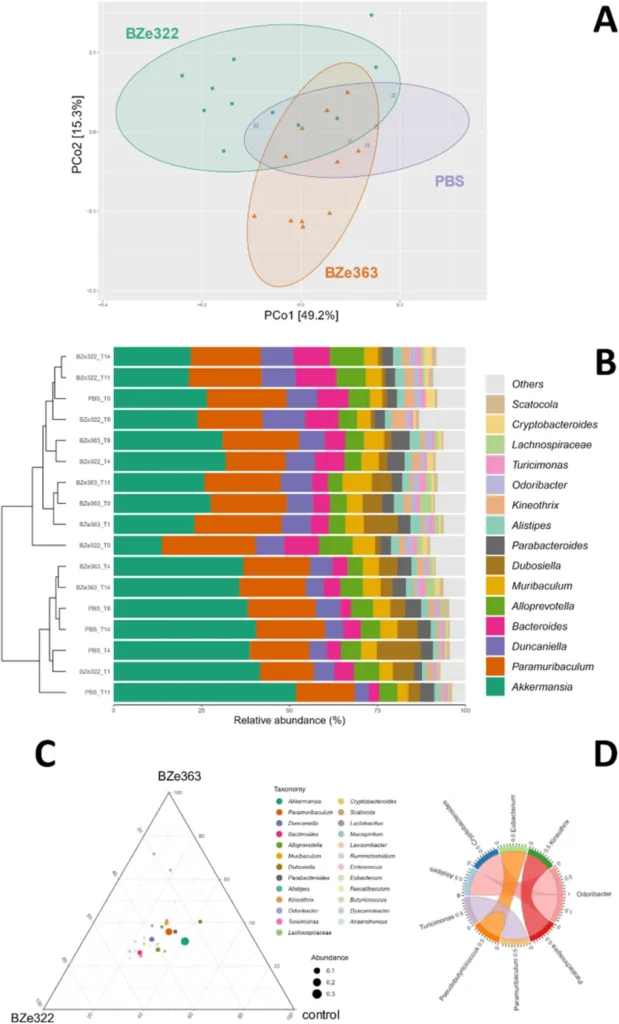
The study also highlighted significant alterations in the gut microbiota of the infected mice. Beta-diversity analyses revealed notable differences in the colonic microbiota between mice infected with the two different strains. The duodenal microbiota was dominated by genera such as Paramuribaculum, Duncaniella, Dubosiella, and Muribaculum, while Akkermansia, Duncaniella, and Paramuribaculum were most prevalent in colonic and faecal samples.
These findings underscore the complex interplay between pathogens and the gut microbiota, a dynamic that is increasingly recognized as crucial in understanding the pathogenesis of foodborne illnesses. “The alterations in host microbiota were strongly associated with infection, emphasizing the critical role of microbial dynamics in *A. butzleri* pathogenesis,” Chiarini noted.
The implications for the agriculture sector are profound. Understanding the pathogenicity and infectivity of *A. butzleri* can inform better food safety protocols and interventions in food processing plants. By identifying the specific strains and their impact on the gut microbiota, researchers and industry professionals can develop targeted strategies to mitigate the risks associated with this pathogen.
Moreover, the study’s focus on murine models provides a valuable framework for future research. As Chiarini points out, “Murine models are essential for integrating host immune responses and gut microbiota dynamics in infection studies.” This approach can be instrumental in advancing our knowledge of foodborne pathogens and their interactions with the host, ultimately leading to more effective food safety measures.
The research published in *Scientific Reports* by Elisabetta Chiarini and her team represents a significant step forward in the field of food safety. By elucidating the complex dynamics between *A. butzleri* and the gut microbiota, the study offers valuable insights that could shape future developments in the agriculture sector. As the industry continues to grapple with the challenges posed by foodborne pathogens, such research is invaluable in the quest for safer and more sustainable food production practices.