
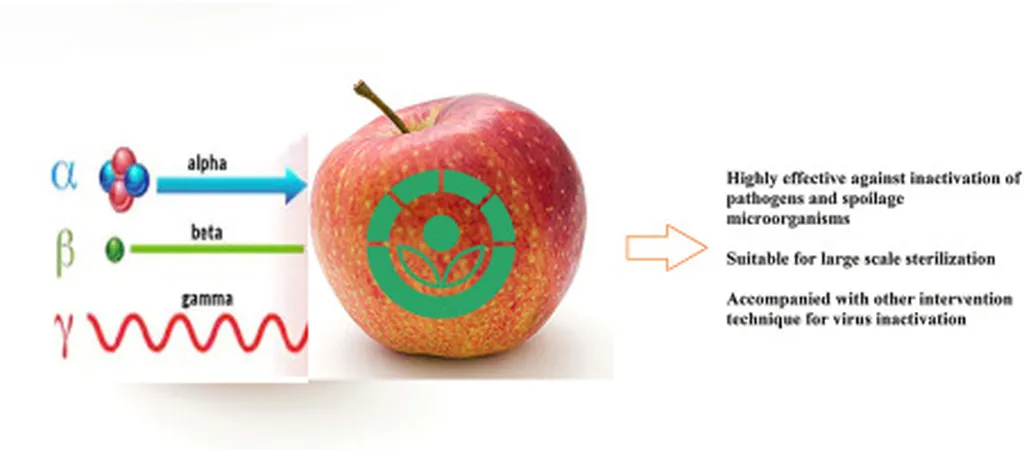
In the heart of India, where the litchi orchards of Muzaffarpur flourish, a groundbreaking study is challenging the boundaries of traditional breeding methods. Researchers at the ICAR–National Research Centre on Litchi have harnessed the power of gamma irradiation to induce genetic variability in litchi (Litchi chinensis Sonn.), potentially revolutionizing the future of this commercially valuable fruit crop.
The study, led by Nanneboyina Srikanth from the ICAR-Indian Agricultural Research Institute, and published in *Cogent Food & Agriculture*, explores the use of gamma irradiation to accelerate crop improvement in litchi, a sector where conventional breeding methods face significant hurdles due to the plant’s long juvenility and narrow genetic base. “Mutation breeding offers a powerful alternative,” Srikanth explains, “allowing us to induce genetic variability and potentially develop new traits that could enhance yield, disease resistance, and adaptability.”
The research team conducted a two-phase experiment, irradiating fresh litchi seeds with varying doses of gamma radiation. The first phase, with doses ranging from 5 to 50 Gy, resulted in higher survival percentages but limited phenotypic variation. The second phase, with doses ranging from 55 to 100 Gy, aimed to increase mutation frequency. The median lethal dose (LD50) was calculated at 46 Gy, providing a crucial benchmark for future studies.
The results were striking. As irradiation doses increased, plant survival, height, canopy volume, and chlorophyll content decreased, while significant morpho-physiological alterations emerged. “We identified several novel phenotypes,” Srikanth reveals, “including a climbing-type growth habit, dwarfism, compact canopies, and altered leaf morphology. These traits could have profound implications for commercial litchi cultivation.”
The potential commercial impacts are substantial. By broadening the genetic base of litchi, this research could lead to the development of new cultivars with improved traits, such as higher yield, better disease resistance, and enhanced adaptability to different environmental conditions. This could significantly boost the agricultural sector, particularly in regions where litchi is a major cash crop.
The study also opens up new avenues for research and development in the field of mutation breeding. As Srikanth notes, “Our findings demonstrate the potential of gamma irradiation as an effective tool for creating selectable genetic variability. This could pave the way for similar studies in other perennial fruit crops, further accelerating crop improvement efforts.”
In the ever-evolving landscape of agritech, this research stands as a testament to the power of innovation. By pushing the boundaries of traditional breeding methods, scientists are not only shaping the future of litchi cultivation but also inspiring a new wave of agricultural advancements. As the world grapples with the challenges of climate change and food security, such breakthroughs offer a glimmer of hope, a reminder that the seeds of change are often sown in the most unexpected of places.