
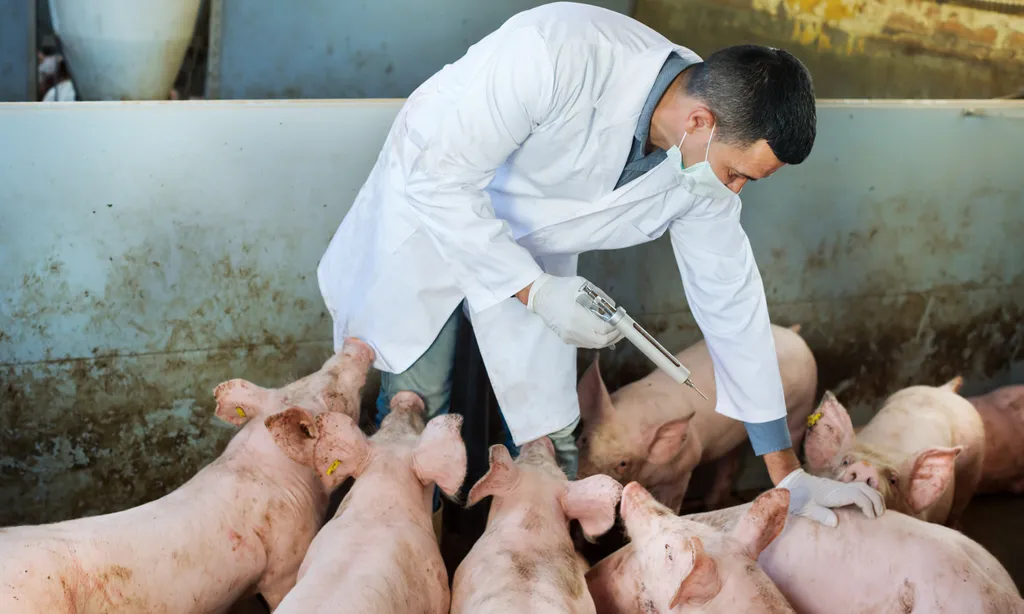
In a significant stride towards combating the atypical porcine pestivirus (APPV), researchers have developed a promising subunit vaccine candidate that could potentially safeguard the global pig industry from substantial financial losses. The study, led by Yufeng Huang from the College of Veterinary Medicine at Qingdao Agricultural University in China, was recently published in *Frontiers in Cellular and Infection Microbiology*.
APPV has been a persistent threat to piglets, causing congenital tremor (CT) type A-II and leading to considerable economic setbacks for farmers worldwide. The newly developed vaccine targets the E2 protein of the virus, which was expressed in Escherichia coli, a common bacterial host used for producing recombinant proteins. The research team evaluated the immunogenicity of the E2 subunit vaccine formulated with three different adjuvants—ISA 201VG, IMS 1313VG, and Gel 02—in piglets.
The results were promising. Vaccinated piglets developed virus-specific IgG responses, with the E2 protein emulsified with ISA 201VG and Gel 02 adjuvants inducing significantly higher antibody levels compared to the IMS 1313VG adjuvant. Notably, the vaccine with ISA 201VG adjuvant provided the highest antibody levels and offered protection against APPV infection. Histopathological examinations further confirmed the efficacy of the vaccine, showing normal organ morphology in vaccinated pigs, in stark contrast to the significant pathological alterations observed in the control group.
“This study provides a foundation for further APPV vaccine research,” Huang emphasized, highlighting the potential of the E2 subunit vaccine in preventing APPV infection. The findings suggest that ISA 201VG and Gel 02 adjuvants are suitable candidates for vaccine preparation, paving the way for more effective and targeted immunizations in the future.
The commercial implications of this research are substantial. APPV has been a persistent challenge for the pig industry, causing not only health issues in piglets but also significant financial losses due to reduced productivity and increased mortality rates. An effective vaccine could mitigate these impacts, providing a much-needed tool for farmers to protect their herds and ensure the sustainability of their operations.
As the global demand for pork continues to rise, the need for innovative solutions to combat diseases like APPV becomes increasingly critical. This research not only offers a potential solution but also opens up new avenues for further exploration in the field of veterinary vaccines. The development of the E2 subunit vaccine represents a significant step forward in the fight against APPV, offering hope for a future where the pig industry can thrive without the constant threat of this devastating virus.