
In a groundbreaking development that could revolutionize the microalgae cultivation industry, researchers have introduced a novel nano-based culture medium that significantly boosts biomass productivity. Published in the journal *Applied Phycology*, the study led by Judah Jacob from the Department of Microbiology at Madras Christian College, showcases a promising advancement in the field of algal biotechnology.
Microalgae are renowned for their ability to produce a wide array of biochemicals, making them a valuable feedstock for applications ranging from medicines and nutraceuticals to food, feed, and bioenergy. However, the challenge of developing economical and efficient cultivation media has long been a bottleneck in the industry. Traditional chemical fertilisers, while effective, often fall short in terms of efficiency and environmental sustainability.
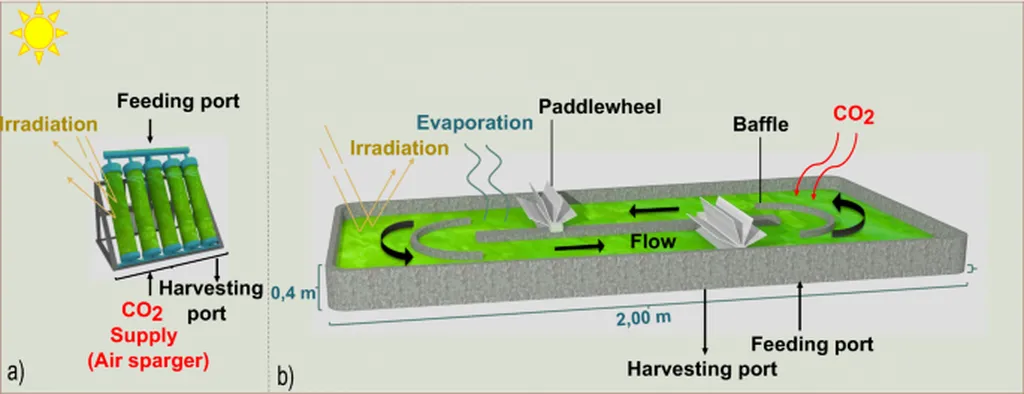
Enter the nano-JAPH medium, a novel nano-based cultivation medium that has demonstrated remarkable efficacy in laboratory and pilot-scale trials. The study tested the medium with various microalgae species, including Chlorella vulgaris, Chlorococcum humicola, Oocystis crassa, Scenedesmus quadricauda, and Synechococcus aeruginosus. The results were striking: the nano-JAPH medium resulted in significantly higher areal biomass productivity compared to conventional media.
“Our findings indicate that the nano-JAPH medium can increase biomass productivity by up to 42.3% in suspended systems and 13.2% in attached systems,” said Judah Jacob, the lead author of the study. This enhancement in productivity could have profound implications for the commercial cultivation of microalgae, making the process more efficient and cost-effective.
The potential commercial impacts of this research are vast. For the agriculture sector, the development of nano-based fertilisers represents a significant step forward in sustainable farming practices. Nano-fertilisers offer greater efficacy compared to conventional chemical fertilisers, reducing the need for frequent applications and minimizing environmental impact. This innovation could pave the way for more sustainable and productive agricultural practices, benefiting both farmers and consumers.
Moreover, the use of nano-based media in microalgal cultivation could facilitate the mass production of microalgae, ensuring a continuous supply of biomass for various industrial applications. This could lead to the development of new products and technologies, further expanding the scope of microalgal biotechnology.
The study’s findings open up new avenues for research and development in the field of algal biotechnology. Future studies could explore the use of nano-based media with other microalgae species and in different cultivation systems. Additionally, the environmental impact of nano-based fertilisers and their long-term sustainability should be thoroughly investigated.
As the world continues to seek sustainable solutions for food, feed, and energy production, the development of innovative technologies like the nano-JAPH medium offers a glimmer of hope. By harnessing the power of nanotechnology, researchers are paving the way for a more sustainable and productive future in agriculture and biotechnology.