
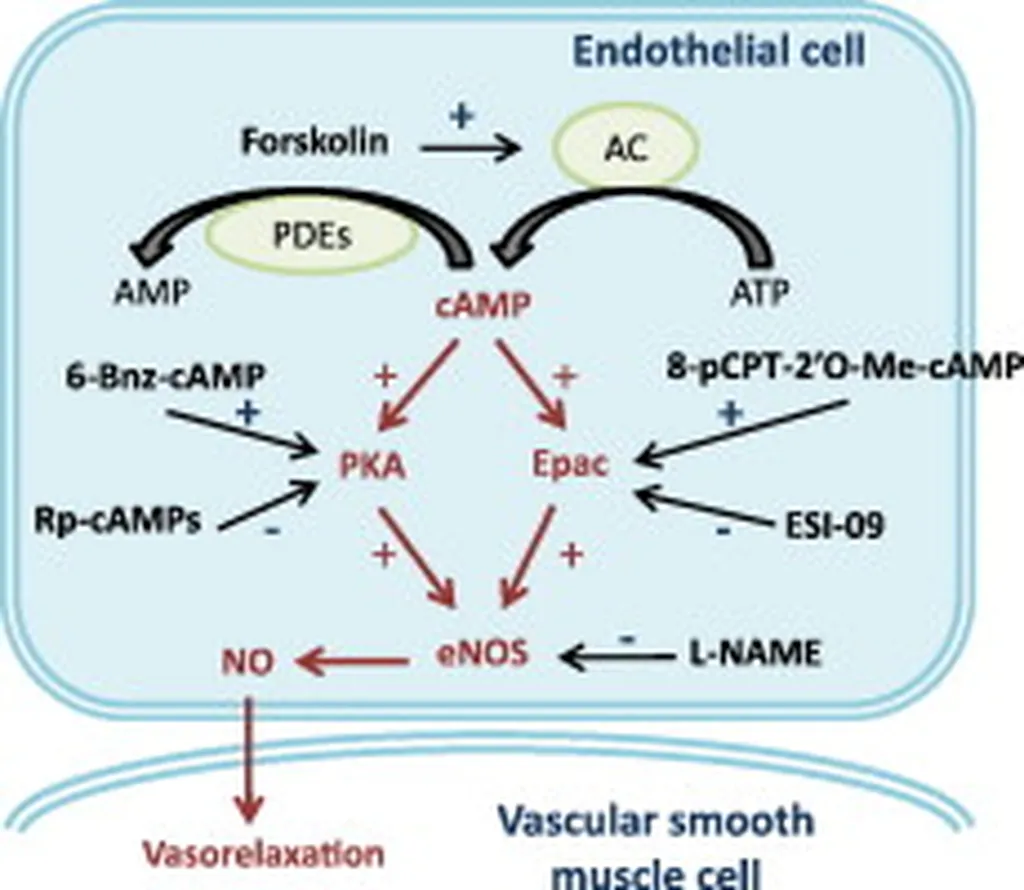
In the intricate world of lipid metabolism, a new review published in *Adipocyte* is shedding light on the crucial roles of cAMP–PKA/EPAC signaling pathways, offering promising avenues for tackling metabolic disorders and potentially revolutionizing agricultural practices. Led by Caixia Chen from the College of Life Sciences at Inner Mongolia Agricultural University, this comprehensive synthesis bridges gaps in our understanding of how these signaling pathways interact with the adipose tissue microenvironment, particularly in pathological conditions like obesity.
The study delves into the well-characterized cAMP-PKA pathway, known for its role in lipid metabolism through the phosphorylation of transcription factors and lipolytic enzymes. However, it also explores the less understood collaboration between this pathway and elements of the adipose tissue microenvironment, such as immune cells and the vascular endothelium. “Understanding these interactions is pivotal, especially in pathological situations like obesity, where the delicate balance of lipid homeostasis is disrupted,” Chen explains.
Adding a layer of complexity, the review introduces EPAC, a newly discovered cAMP effector that has shown promising signaling pathways in the immune and cardiovascular systems by activating small G proteins. However, its roles in adipose metabolism, particularly in adipocyte development and interaction with the microenvironment, remain largely unexplored. By integrating disparate studies on PKA and EPAC, Chen’s review provides the first comprehensive synthesis of the cAMP-PKA/EPAC dual signaling network, filling critical knowledge gaps.
The implications of this research extend beyond human health into the agricultural sector. Understanding and modulating these signaling pathways could lead to innovative strategies for managing lipid metabolism in livestock, improving animal health, and enhancing productivity. “Pharmacological modulation of the PKA/EPAC signaling pathways may represent a viable therapeutic approach for restoring adipose tissue homeostasis,” Chen suggests, hinting at potential applications in both human and veterinary medicine.
Moreover, the review establishes a novel ‘signaling-microenvironment-systemic metabolism’ framework for understanding metabolic disorders, including obesity, diabetes, and hepatic steatosis. This holistic approach could pave the way for developing targeted therapies and interventions, benefiting both human health and agricultural practices.
As we grapple with the global challenges of obesity and metabolic diseases, this research offers a beacon of hope. By unraveling the complexities of the cAMP-PKA/EPAC signaling network and its interactions with the adipose microenvironment, we inch closer to restoring lipid homeostasis and improving overall health. The agricultural sector, in particular, stands to gain from these insights, potentially revolutionizing livestock management and productivity.
In the words of Caixia Chen, “This review is just the beginning. The future holds immense potential for translating these findings into practical applications, benefiting both human health and the agricultural industry.” As we look ahead, the cAMP-PKA/EPAC signaling pathways may very well hold the key to unlocking a healthier future for all.