
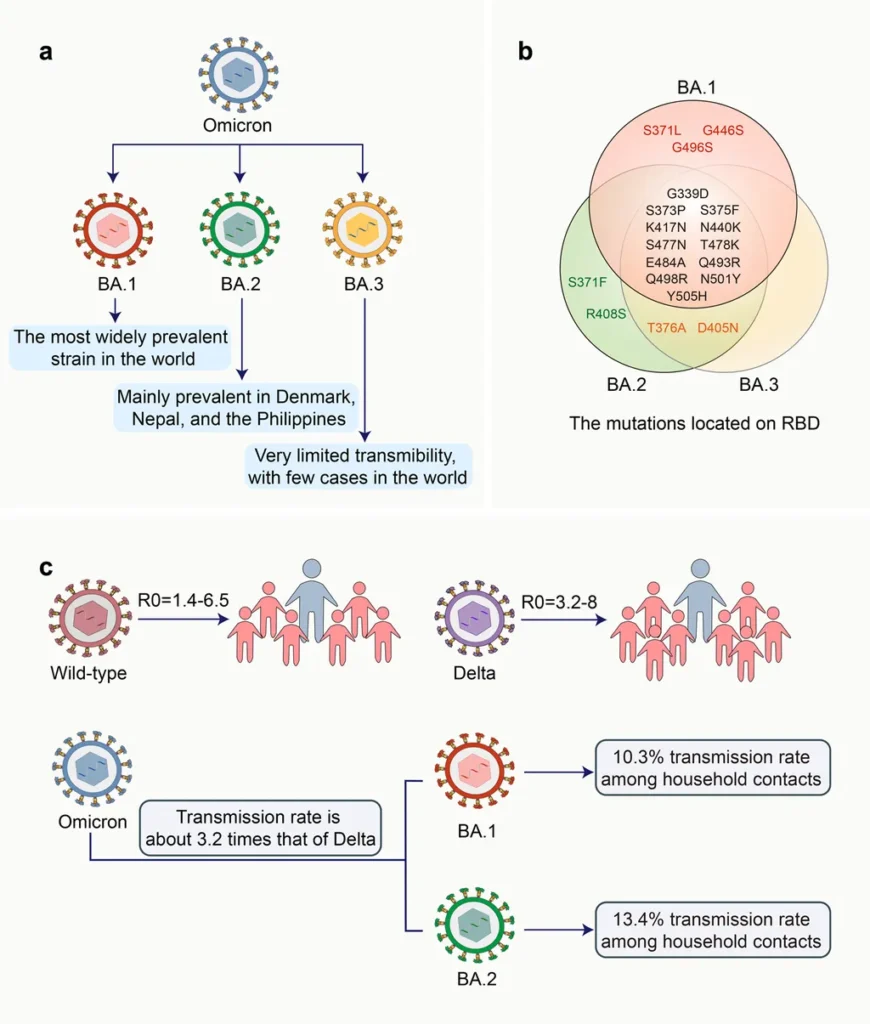
In the ever-evolving saga of the COVID-19 pandemic, the emergence of the Omicron variant has once again shifted the global focus onto the virus’s transmissibility and pathogenicity. A recent study published in the *Journal of Current Biomedical Reports* delves into the intricacies of the Omicron variant, comparing it with other SARS-CoV-2 variants and evaluating the impact of vaccination on its spread and severity.
The Omicron variant, initially identified in South Africa and later renamed by the World Health Organization, has raised concerns due to its high transmissibility and immune evasion capabilities. According to the study led by Neda Sinaei from the Department of Biotechnology at the Iranian Research Organization for Science and Technology, Omicron’s transmissibility surpasses that of previous variants, including the Delta variant. However, there is a silver lining: the symptoms associated with Omicron are generally less severe.
“The Omicron variant has a very high transmission power, but luckily, its symptoms are less serious,” Sinaei noted. This duality presents a complex challenge for healthcare systems and policymakers, who must balance the need for stringent public health measures with the economic and social impacts of prolonged restrictions.
The study highlights that Omicron contains at least 32 mutations in the spike protein, which is double the number found in the Delta variant. Half of these mutations occur in the region of the virus responsible for binding to human cells, facilitating infection. The variant likely evolved in an immunocompromised individual, possibly someone with untreated HIV/AIDS, undergoing chronic infection.
One of the most significant findings of the study is the potential for reinfection among those who have previously contracted other variants of SARS-CoV-2. This underscores the importance of booster doses of existing vaccines to enhance antibody levels and provide adequate protection against Omicron.
The commercial impacts for the agriculture sector are profound. The pandemic has already disrupted global supply chains, affecting the distribution of agricultural products and inputs. The emergence of new variants like Omicron adds another layer of uncertainty, potentially leading to further disruptions and economic instability.
As the world grapples with the ongoing pandemic, research like this is crucial for shaping future developments in public health and agriculture. The findings emphasize the need for continued vigilance, innovation, and collaboration to mitigate the impacts of COVID-19 and its variants on both human health and the global economy.
In the words of Sinaei, “Injecting a booster dose of existing vaccines and subsequently increasing antibody levels will provide adequate protection and an appropriate barrier against Omicron.” This research not only sheds light on the current challenges posed by the Omicron variant but also paves the way for more effective strategies to combat future variants and their potential impacts on the agriculture sector.