
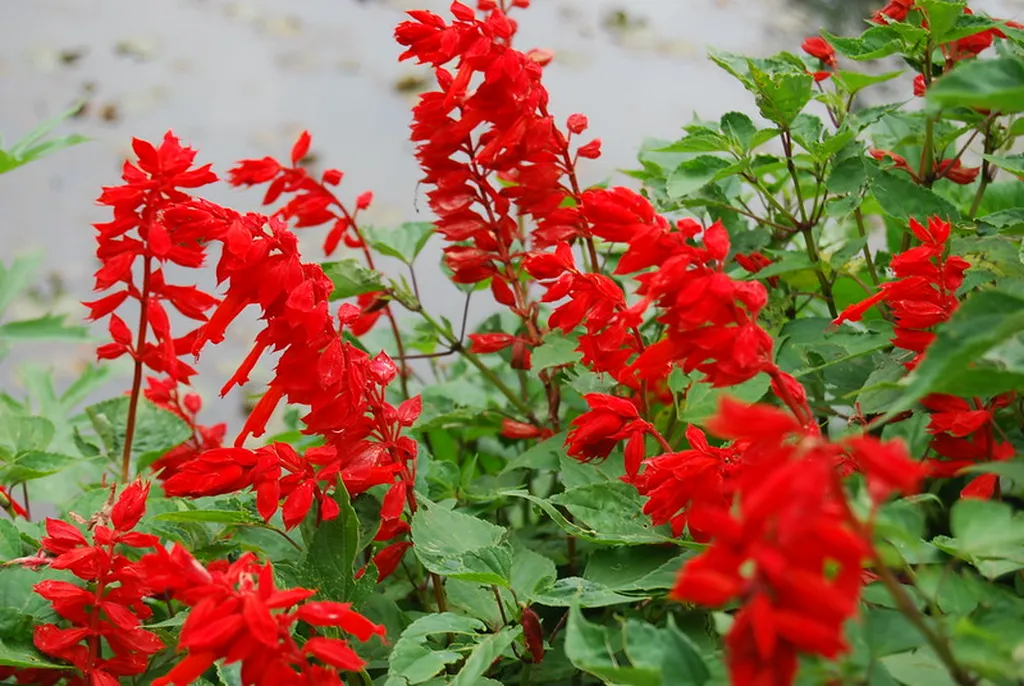
In the world of medicinal plants, Salvia miltiorrhiza Bunge, commonly known as red sage, has long been revered for its bioactive compounds, salvianolic acids, and tanshinones, which are highly sought after for their therapeutic properties. Now, a groundbreaking study published in *Industrial Crops and Products* has shed light on a key transcription factor that could revolutionize the production of these valuable compounds, offering significant commercial opportunities for the agriculture sector.
Researchers, led by Qi Li from the College of Life Science at Sichuan Agricultural University and the College of Tobacco Science at Yunnan Agricultural University, have identified a jasmonate-responsive transcription factor, SmbHLH22, which plays a pivotal role in regulating the biosynthesis of salvianolic acids and tanshinones. This discovery opens new avenues for metabolic engineering, potentially enhancing the yield of these medicinal compounds while optimizing plant growth.
The study revealed that overexpressing SmbHLH22 in transgenic hairy roots significantly boosted the accumulation of salvianolic acid B, rosmarinic acid, and tanshinones. However, this enhancement came at the cost of reduced root biomass. Conversely, suppressing SmbHLH22 led to a decrease in these metabolites but promoted plant growth. This dual effect underscores the complex interplay between metabolite production and plant development.
“Our findings provide a deeper understanding of how SmbHLH22 integrates into the jasmonate regulatory network, which is crucial for the biosynthesis of these valuable compounds,” said Qi Li. “By manipulating this transcription factor, we can potentially enhance the production of salvianolic acids and tanshinones, making the cultivation of Salvia miltiorrhiza more efficient and economically viable.”
The researchers employed transcriptomic profiling to identify 10,817 differentially expressed genes (DEGs), including key enzymes involved in the biosynthesis of medicinal compounds and regulators associated with multiple hormone signaling pathways. They also demonstrated that SmbHLH22 binds to G-box elements in the promoters of SmRAS1, SmDXS2, and SmGGPPS1, activating their expression. Additionally, SmbHLH22 interacts with the jasmonate repressor SmJAZ4, which suppresses its transcriptional activity, further integrating it into the jasmonate regulatory network.
This research not only provides new insights into the transcriptional regulation of secondary metabolism in Salvia miltiorrhiza but also suggests SmbHLH22 as a potential target for metabolic engineering. By optimizing the expression of this transcription factor, farmers and agricultural biotechnologists could enhance the production of medicinal compounds, making the cultivation of Salvia miltiorrhiza more profitable and sustainable.
The implications of this study extend beyond Salvia miltiorrhiza, offering a blueprint for similar approaches in other medicinal plants. As the demand for natural bioactive compounds continues to grow, the ability to manipulate key transcription factors like SmbHLH22 could pave the way for more efficient and sustainable agricultural practices.
In the rapidly evolving field of agritech, this research represents a significant step forward, bridging the gap between fundamental science and practical applications. By harnessing the power of genetic engineering, the agriculture sector can look forward to a future where the production of valuable medicinal compounds is not only enhanced but also optimized for commercial success.
Published in *Industrial Crops and Products*, the study led by Qi Li from the College of Life Science at Sichuan Agricultural University and the College of Tobacco Science at Yunnan Agricultural University, offers a promising glimpse into the future of medicinal plant cultivation and the broader implications for the agriculture industry.