
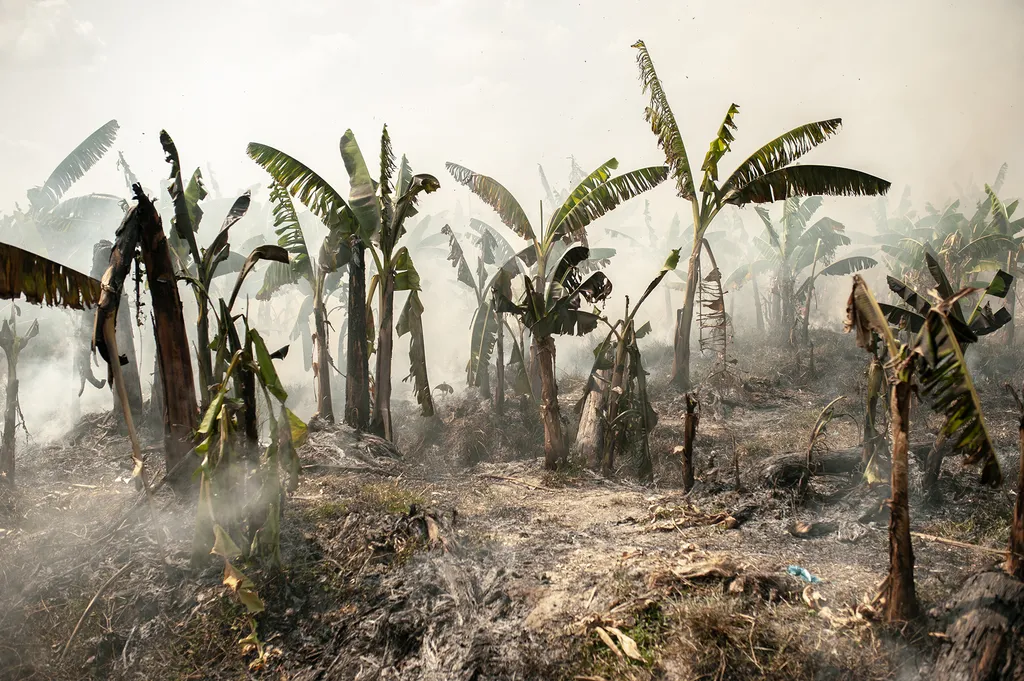
In the heart of China’s tropical agriculture, a groundbreaking discovery has emerged, offering a glimmer of hope for banana farmers worldwide. Researchers have identified a novel species of Streptomyces, a type of soil bacterium, that exhibits remarkable dual activity against both soil-borne and postharvest fungal diseases in bananas. This finding, published in the journal *Biological Control*, could revolutionize disease management strategies and boost agricultural productivity.
The newly discovered Streptomyces strain, named *Streptomyces yinggelingensis* sp. nov. YGL11-2, was isolated and characterized through advanced polyphasic taxonomy. What sets this strain apart is its ability to combat two of the most devastating banana diseases: Fusarium wilt, caused by *Fusarium oxysporum* f. sp. cubense tropical race 4 (Foc TR4), and anthracnose, caused by *Colletotrichum musae*. These diseases have long plagued banana production, leading to significant economic losses.
“Our study is the first to discover a novel Streptomyces species capable of cross-type control of both soil-borne and postharvest diseases,” said Chunting Li, lead author of the study from the School of Tropical Agriculture and Forestry at Hainan University and the National Key Laboratory for Tropical Crop Breeding. This dual activity is a game-changer, as it offers a comprehensive solution to manage both types of diseases simultaneously.
The strain YGL11-2 demonstrated impressive antifungal activity, with half-maximal effective concentrations (EC50) values of 12.01 mg/L against Foc TR4 and 25.31 mg/L against *C. musae*. Genomic analysis revealed that the strain possesses 48 secondary metabolite gene clusters, including compounds like Ectoine and Anantin C, which exhibit potential antifungal properties. The antifungal mechanisms of YGL11-2 extracts include disrupting fungal cell membrane structures, causing hyphal and spore wrinkling and breakage, and inhibiting spore germination.
The practical implications of this research are substantial. In pot experiments, banana seedlings treated with YGL11-2 extracts showed a reduced Foc TR4 disease index, achieving a control efficacy of 41.94%. Additionally, the treatment promoted root growth by 10.55 cm and increased biomass accumulation by 46.40%. For fruit experiments, bananas treated with YGL11-2 exhibited an anthracnose inhibition rate of up to 72.96%, along with improved quality and delayed ripening.
The commercial impact of this discovery cannot be overstated. Banana is a vital cash crop for many tropical regions, and the economic losses due to fungal diseases are staggering. The use of biocontrol agents like *Streptomyces yinggelingensis* YGL11-2 offers an eco-friendly and sustainable alternative to chemical fungicides, which can have harmful environmental effects and contribute to resistance development in pathogens.
“This research opens up new avenues for developing integrated disease management strategies that are both effective and environmentally friendly,” said Li. The dual activity of YGL11-2 against both soil-borne and postharvest diseases makes it a valuable tool for farmers, potentially increasing crop yields and reducing economic losses.
The discovery of *Streptomyces yinggelingensis* YGL11-2 is a significant step forward in the field of agricultural biotechnology. It highlights the potential of microbial biocontrol agents in managing plant diseases and promoting sustainable agriculture. As researchers continue to explore the genetic and biochemical mechanisms underlying the antifungal activity of YGL11-2, we can expect further advancements in the development of novel biocontrol strategies.
In the quest for sustainable and efficient agricultural practices, this novel Streptomyces species offers a promising solution. Its dual activity against banana diseases not only enhances disease management but also contributes to the overall health and productivity of banana crops. As the agricultural sector continues to evolve, the integration of such biocontrol agents into farming practices could pave the way for a more resilient and sustainable future.
The research, led by Chunting Li from the School of Tropical Agriculture and Forestry at Hainan University and the National Key Laboratory for Tropical Crop Breeding, was published in the journal *Biological Control*. This study represents a significant milestone in the ongoing efforts to combat banana diseases and improve agricultural productivity through innovative biotechnological approaches.