
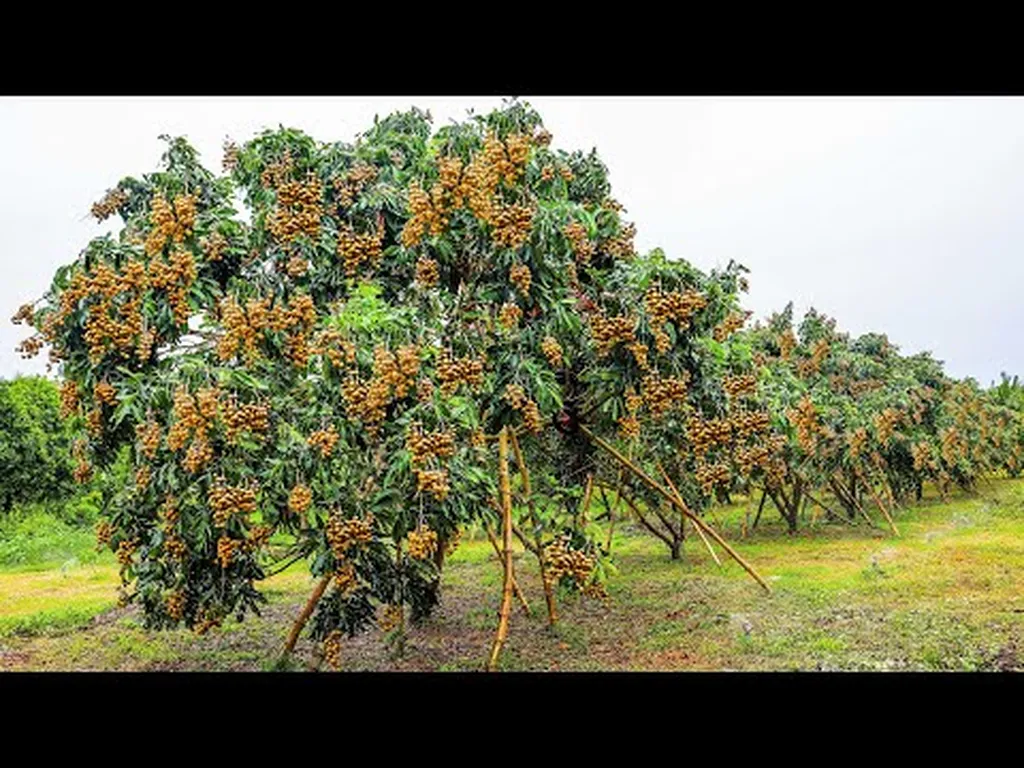
In the heart of tropical fruit cultivation, a groundbreaking study has unveiled a critical interaction that could revolutionize our understanding of flowering regulation in longan, a commercially valuable fruit crop. Researchers, led by Yuru Tang from the Fujian Provincial Key Laboratory of Haixia Applied Plant Systems Biology, have identified a novel regulatory node that challenges the classical model of flowering, offering new avenues for agricultural innovation.
Longan, known for its sweet, juicy flesh, is a significant crop in tropical regions. However, its flowering patterns have long been a mystery, particularly the role of its antagonistic FLOWERING LOCUS T (FT) homologs. The study, published in the journal ‘Plants’, sheds light on this enigma by isolating and characterizing four key flowering-related genes: DlFT1, DlFT2, DlAP1, and DlFD.
The researchers found that all four genes are expressed in leaves and buds across different stages of natural and induced floral bud differentiation. This finding alone is a significant step forward, as it provides a clearer picture of the genetic activity underlying longan’s flowering process.
But the real breakthrough came when the team conducted functional characterization through heterologous overexpression in Arabidopsis thaliana. They discovered that DlAP1 significantly promotes early flowering under long-day conditions and induces morphological changes in floral organs and leaves. This is a game-changer for the agriculture sector, as it opens up possibilities for manipulating flowering time to optimize fruit yield and quality.
“We were surprised to find that DlAP1 had such a profound effect on flowering time and morphology,” said lead author Yuru Tang. “This suggests that we may be able to use this gene to fine-tune the flowering process in longan and other perennial woody species.”
The study also revealed that DlFT1 promotes flowering not only via the conserved FD-dependent pathway but also through direct association with AP1. This expands the classical FT-FD-AP1 flowering model and provides a new target for genetic manipulation.
The commercial implications of this research are vast. By understanding and controlling the flowering process, farmers could potentially increase their yields, improve fruit quality, and extend the harvesting season. This could lead to significant economic benefits for the agriculture sector, particularly in tropical regions where longan is a major crop.
Moreover, the findings could have broader applications beyond longan. As Yuru Tang explained, “Our results provide valuable insights into the flowering pathways of perennial woody species. This could pave the way for similar studies in other commercially important crops.”
In the ever-evolving world of agritech, this research is a testament to the power of scientific inquiry. It not only advances our understanding of flowering regulation but also offers practical solutions for the agriculture sector. As we look to the future, studies like this will be crucial in shaping the next generation of agricultural innovations.