
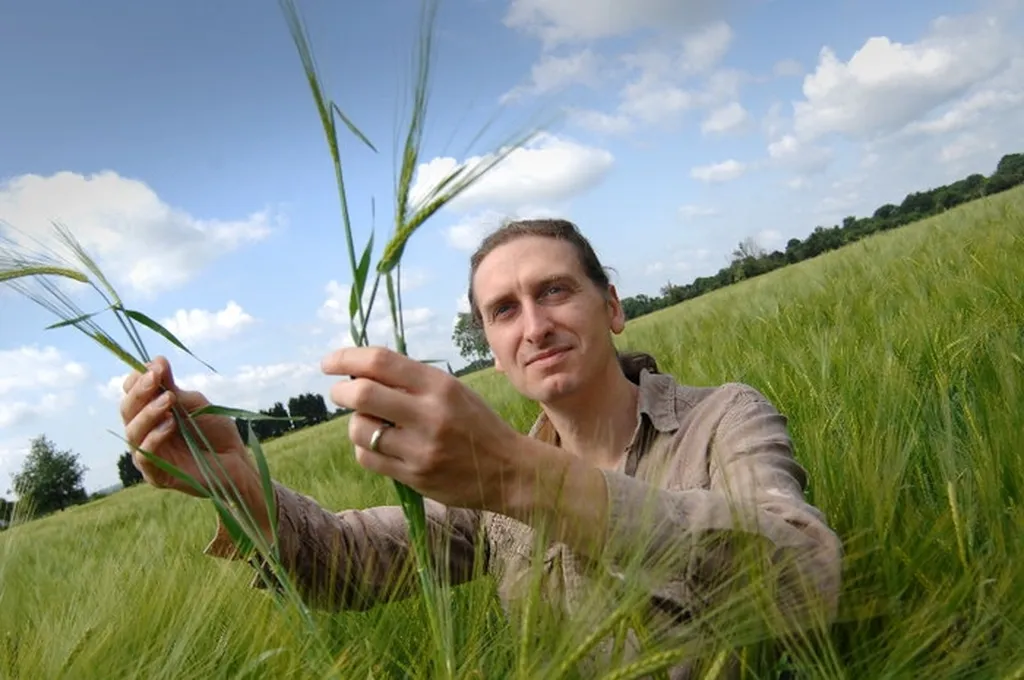
In the ever-evolving world of agriculture, scientists are continually uncovering the genetic secrets that have shaped our crops over millennia. A recent study published in the *Journal of Integrative Agriculture* has shed light on an ancient genetic mutation that has significantly influenced modern barley cultivation. Led by Jingye Cheng of the Beijing Key Laboratory of Agricultural Genetic Resources and Biochemistry and the Western Crop Genetics Alliance at Murdoch University, the research delves into the genetic underpinnings of the deficiens form of barley, a variety that has become a global agricultural powerhouse.
Barley, one of the world’s oldest cultivated crops, has seen a dramatic shift in its cultivation over the past few decades. The deficiens form, characterized by its suppressed lateral spikelets, has surged in popularity, outpacing its two-rowed ancestors. This shift is not merely a matter of preference but a testament to the superior yield potential of the deficiens variety. “The deficiens form has gained dominance because it optimizes spike architecture, leading to increased grain number and size,” Cheng explains. This optimization has made deficiens barley a staple in barley-growing regions worldwide, with varieties like RGT Planet leading the charge.
The study utilized two F2 populations derived from crossing RGT Planet with two canonical two-rowed barley types. Through fine mapping, the researchers identified the functional allele Vrs1.t1, which is associated with the deficiens morphology. This allele contributes to high yield potential by enhancing spikelet length, grain number, and grain size. “The Vrs1.t1 allele is a critical driver for the recent success of modern barley improvement,” Cheng notes. The research suggests that this ancient mutation has been present since the early stages of barley cultivation in the Fertile Crescent and spread with agricultural expansion.
The implications of this research are profound for the agriculture sector. Understanding the genetic basis of the deficiens form’s success could pave the way for further improvements in barley cultivation. “By optimizing spike architecture, we can potentially increase yield potential even further,” Cheng says. This could lead to more efficient use of agricultural resources and higher productivity, addressing the growing demand for food globally.
Moreover, the study highlights the importance of preserving and studying ancient genetic diversity. The deficiens mutation, which has been around for thousands of years, offers a blueprint for future crop improvement. “Ancient alleles like Vrs1.t1 hold valuable insights for modern breeding programs,” Cheng explains. By leveraging these genetic resources, scientists can develop new varieties that are more resilient, productive, and adaptable to changing environmental conditions.
The research also underscores the role of genetic diversity in crop improvement. The deficiens form’s success is a testament to the power of genetic variation in driving agricultural innovation. “Understanding the genetic basis of different row types can help us tailor breeding programs to specific needs,” Cheng says. This could lead to the development of new barley varieties that are better suited to different climates, soils, and growing conditions.
In conclusion, the study by Cheng and colleagues offers a fascinating glimpse into the genetic history of barley and its impact on modern agriculture. By unraveling the secrets of the Vrs1.t1 allele, researchers have opened new avenues for crop improvement. The findings not only highlight the importance of ancient genetic diversity but also offer a roadmap for future agricultural innovation. As the world grapples with the challenges of feeding a growing population, such research is more crucial than ever. The insights gained from this study could shape the future of barley cultivation and contribute to a more sustainable and productive agricultural sector.