
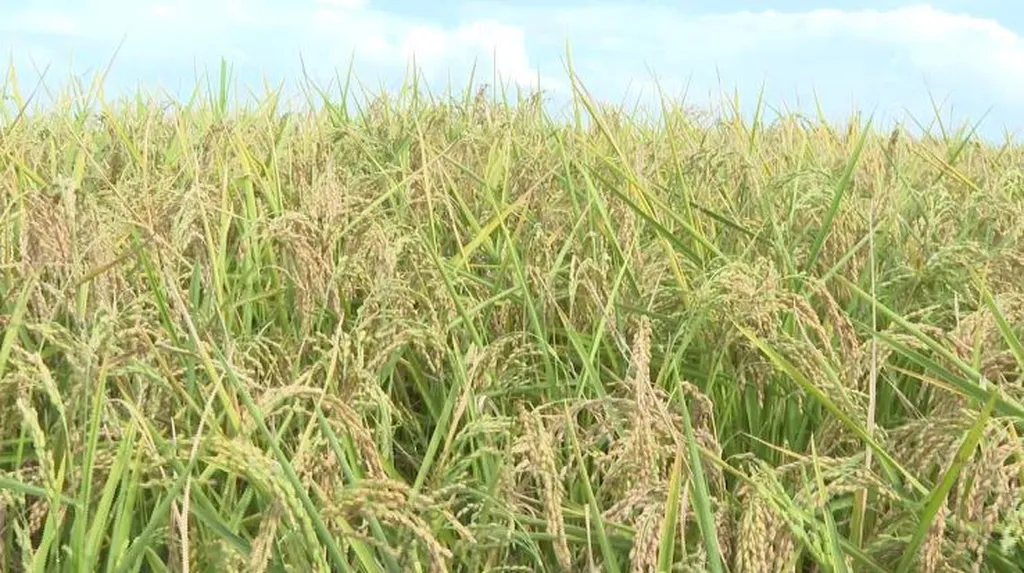
In the heart of Ethiopia’s Fogera district, a groundbreaking study is set to revolutionize the way farmers approach upland rice cultivation. The research, led by Yilikal Melak Assaye of the Fogera National Rice Research and Training Center, explores the synergistic effects of seed priming and advanced storage techniques on the field performance of NERICA-4 upland rice. Published in the esteemed journal ‘Advances in Agriculture’, this study could significantly impact the agricultural sector, particularly in regions where poor germination and field performance have long been bottlenecks.
The study delves into the use of calcium chloride priming and Purdue Improved Crop Storage (PICS) bags, a combination that has shown remarkable promise. “Priming using CaCl2 and storage material uses significantly improved performance of upland rice in the research area,” Assaye explains. The results are striking: seeds primed with 2% calcium chloride and stored without packaging exhibited the highest biomass, filled kernels, panicle length, and grain yield. This is a game-changer for farmers who have long struggled with suboptimal yields.
The commercial implications of this research are vast. By enhancing seed longevity and yield-related characteristics, farmers can look forward to more reliable and productive harvests. This could lead to increased food security and economic benefits for rural communities. Moreover, the study highlights the potential for seed producers to adopt these techniques, thereby improving the quality of seeds available to farmers.
The synergy between priming and storage techniques is particularly noteworthy. The combination of 2% calcium chloride priming and PICS bags resulted in significantly improved agronomic traits across all storage durations. This suggests that the integration of these methods could become a standard practice in upland rice cultivation.
Looking ahead, this research opens up new avenues for further exploration. Future studies could investigate the optimal concentrations of calcium chloride and other priming agents, as well as the long-term effects of PICS bags on seed viability. Additionally, the potential for scaling up these techniques to other crops and regions could be a fruitful area of research.
In the words of Assaye, “This study highlights the effectiveness of synergistic effects of NERICA-4 priming treatments in enhancing seed longevity and yield-related characteristics that would benefit farmers and/or seed producers.” As the agricultural sector continues to evolve, this research provides a beacon of hope for more sustainable and productive farming practices.