
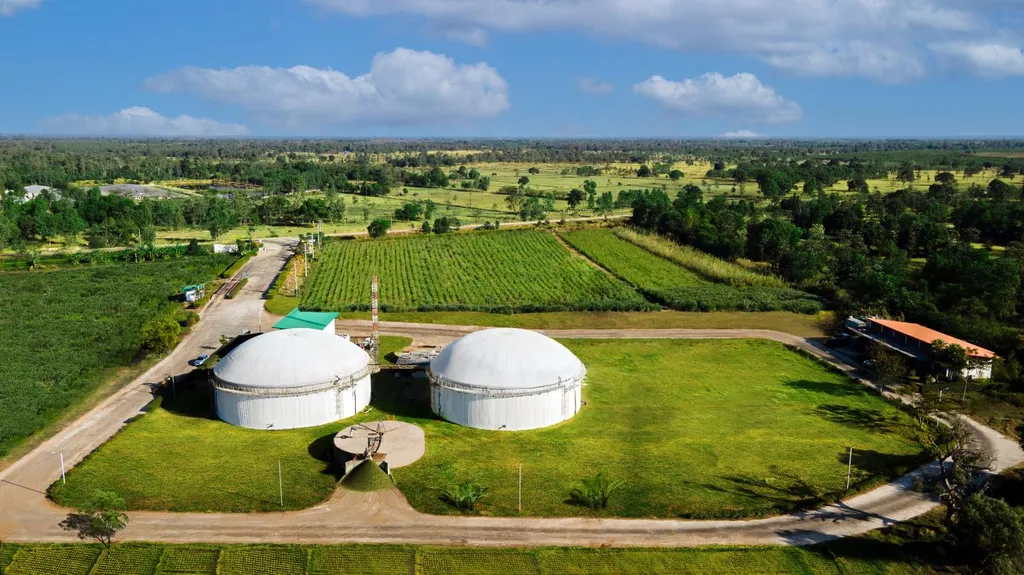
In a significant stride towards sustainable energy solutions, researchers have developed a prototype process for hydrogen production using Napier grass (NG) and oil palm frond (OPF), two abundant agricultural residues. This innovative approach, detailed in a study published in *Carbon Resources Conversion*, not only advances the field of biohydrogen production but also offers promising economic benefits for the agriculture sector.
The research, led by Khaliyah Sani from the Faculty of Environment and Resource Studies at Mahidol University in Thailand, explored the potential of dark fermentation processes to convert agricultural waste into valuable biohydrogen. The study compared two processes: simultaneous saccharification and fermentation (SSF) and pre-hydrolysis and fermentation (pre-HF), using different ratios of NG to OPF.
“Our findings indicate that the pre-HF process outperformed the SSF process in terms of hydrogen production,” Sani explained. “The optimal ratio of NG to OPF was found to be 1:1, yielding the highest hydrogen production in both processes. However, the pre-HF process at this ratio produced significantly more hydrogen, reaching up to 993 ± 64 mL-H2/L.”
The study further investigated the impact of trace metal supplementation and hydraulic retention times (HRTs) on hydrogen production in a semi-continuous experiment using a 100 L continuous stirred tank reactor (CSTR). The results were promising, with the highest hydrogen yield of 50.1 ± 3.4 mL-H2/g-VS achieved at an HRT of 3 days with trace metal supplementation.
The addition of trace elements not only enhanced hydrogen production but also significantly altered the abundance of key microbes and essential enzymes involved in the process. “The supplementation of trace elements led to an increase in the abundance of microbes such as Lactococcus sp., Bacteroides sp., Dysgonomonas sp., and Enterobacter sp., which are crucial for improving hydrogen production,” Sani noted.
From an economic perspective, the study revealed that the pre-HF process with trace elements resulted in a 16.6% improvement in overall hydrogen production compared to the pre-HF process without trace elements. This enhancement translates to a higher economic yield, making the process more viable for commercial applications.
The implications of this research are far-reaching for the agriculture sector. By converting agricultural residues into biohydrogen, farmers can generate additional revenue streams while contributing to sustainable energy solutions. The zero-waste concept employed in this study aligns with the growing global emphasis on circular economies and environmental sustainability.
As the world seeks to reduce its reliance on fossil fuels, the development of efficient and cost-effective biohydrogen production processes becomes increasingly important. This research not only advances the field of biohydrogen production but also highlights the potential of agricultural residues as valuable resources for sustainable energy.
The study’s findings pave the way for future developments in the field, offering a glimpse into a future where agricultural waste is transformed into clean, renewable energy. With further optimization and scaling up, this prototype process could play a significant role in shaping the future of sustainable energy production.
As the lead author, Khaliyah Sani, from the Faculty of Environment and Resource Studies at Mahidol University in Thailand, noted, the research published in *Carbon Resources Conversion* marks a significant step forward in the quest for sustainable energy solutions.