
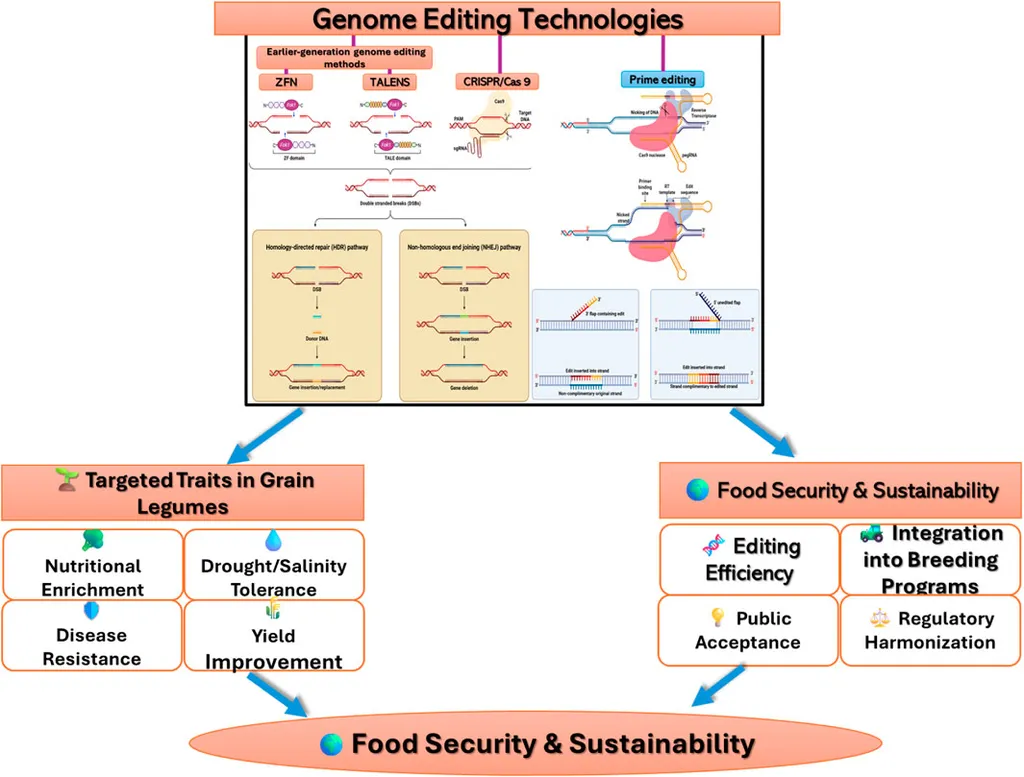
In the ever-evolving landscape of agricultural technology, a groundbreaking study has emerged that promises to revolutionize the way we approach soybean genome editing. Published in the *Journal of Integrative Agriculture*, the research introduces an innovative visual marker system designed to enhance selection efficiency in soybean breeding programs. This development could have significant implications for the agriculture sector, streamlining the breeding process and potentially leading to more robust and productive soybean varieties.
The study, led by Tingwei Yan from the Institute of Agricultural Biotechnology at the Jilin Academy of Agricultural Sciences in China, focuses on the creation of a visual marker system that allows researchers to easily identify edited plants. Traditional methods of genome editing often involve labor-intensive and time-consuming processes to select the desired traits. This new system aims to simplify that process, making it faster and more efficient.
“Our goal was to develop a tool that would make the selection process more straightforward,” said Yan. “By introducing a visual marker, we can quickly identify plants that have successfully incorporated the desired genetic modifications, significantly speeding up the breeding process.”
The implications for the agriculture sector are substantial. Soybeans are a critical crop, used extensively in food production, animal feed, and industrial applications. Enhancing the efficiency of soybean breeding programs can lead to the development of new varieties that are more resistant to pests, diseases, and environmental stresses. This, in turn, can improve crop yields and contribute to food security on a global scale.
The visual marker system developed by Yan and his team works by introducing a gene that produces a visible marker, such as a change in leaf color, in plants that have successfully undergone genome editing. This allows breeders to visually select the edited plants without the need for complex and costly genetic testing.
“This technology has the potential to transform the way we approach soybean breeding,” said Yan. “By making the selection process more efficient, we can accelerate the development of new and improved soybean varieties, benefiting farmers and consumers alike.”
The research published in the *Journal of Integrative Agriculture* represents a significant step forward in the field of agricultural biotechnology. As the global demand for food continues to grow, innovations like this visual marker system will be crucial in meeting the challenges of the future. By enhancing the efficiency of soybean breeding programs, this technology could play a key role in ensuring food security and sustainability for generations to come.
The study’s findings not only highlight the potential for improved selection efficiency but also open the door for further advancements in the field of genome editing. As researchers continue to explore the possibilities of this technology, we can expect to see even more innovative solutions that will shape the future of agriculture.