
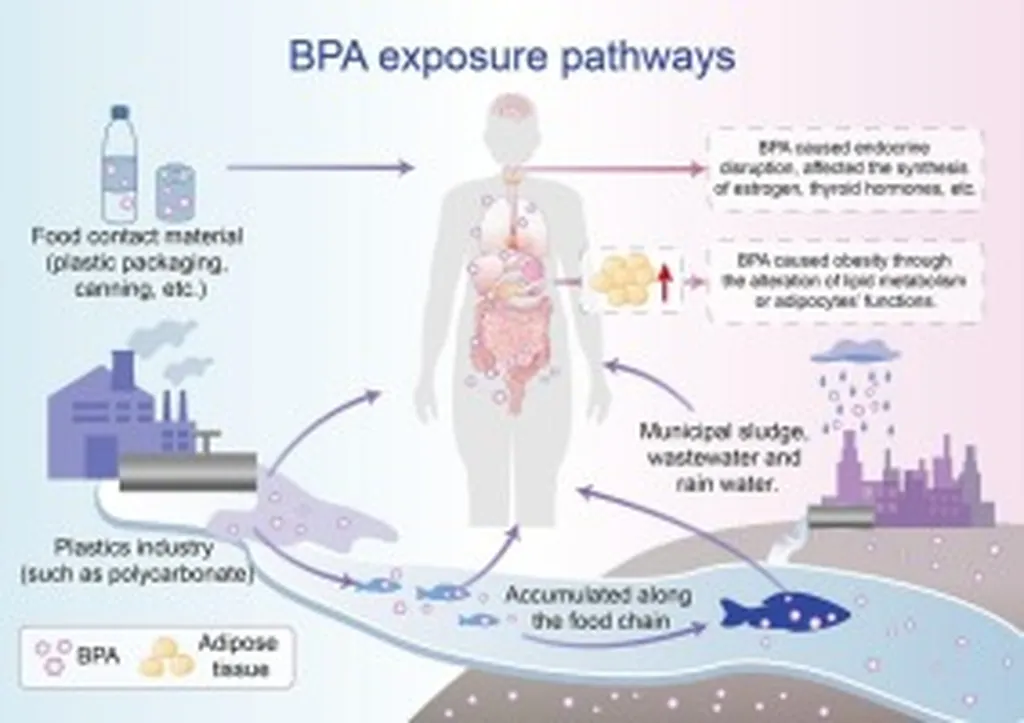
In the realm of environmental health and molecular biology, a recent study has shed light on the intricate dance between bisphenol A (BPA), its analogs, and the constitutive androstane receptor (CAR), offering insights that could reshape our understanding of endocrine disruptors and their impacts on human health and agriculture.
Bisphenol A, a ubiquitous chemical found in plastics and resins, has long been a topic of concern due to its potential to disrupt endocrine functions. This new research, published in *Scientific Reports*, delves into the binding mechanisms of BPA and its analogs with CAR, a nuclear hormone receptor crucial for xenobiotic metabolism. The study, led by Manikandan Jayaraman from the Structural Biology and Bio-Computing Lab at Alagappa University, employs molecular docking and dynamics simulations to unravel the interaction patterns of these compounds with CAR.
The findings reveal that BPA and its analogs exhibit strong binding affinities for CAR, with binding energies ranging from -94.13 to -141.2 kJ/mol. Notably, BPA itself showed a lower binding energy (-86.4 kJ/mol) compared to its analogs. The study identifies key residues in the CAR binding pocket, such as Phe161, Asn165, Leu206, Phe217, Tyr224, Thr225, L246, I334, and I337, which play significant roles in the binding energy.
“This study provides crucial information on the key residues of the CAR responsible for bisphenol binding,” Jayaraman explains. “Understanding these interactions can help design better therapeutics for CAR and bisphenol-associated diseases.”
The implications of this research extend beyond human health into the agricultural sector. Endocrine disruptors like BPA can have profound effects on livestock and crops, potentially altering growth patterns and reproductive health. By understanding the molecular interactions of these compounds, researchers can develop strategies to mitigate their impacts on agricultural productivity.
Moreover, the study’s findings could pave the way for the development of novel therapeutics targeting CAR. As Jayaraman notes, “The binding modes and interaction patterns identified in this study offer a foundation for designing more effective treatments for conditions influenced by endocrine disruptors.”
The agricultural industry, in particular, stands to benefit from these advancements. With a deeper understanding of how bisphenols interact with CAR, farmers and agricultural scientists can better manage the risks associated with these chemicals, ensuring healthier livestock and more robust crop yields.
In the broader context, this research highlights the importance of interdisciplinary approaches in tackling environmental health challenges. By combining molecular biology, computational modeling, and agricultural science, researchers can develop comprehensive strategies to address the multifaceted impacts of endocrine disruptors.
As the scientific community continues to unravel the complexities of these interactions, the potential for innovative solutions in both human health and agriculture becomes increasingly apparent. This study not only advances our knowledge of bisphenol-CAR interactions but also sets the stage for future developments in therapeutic design and agricultural management.