
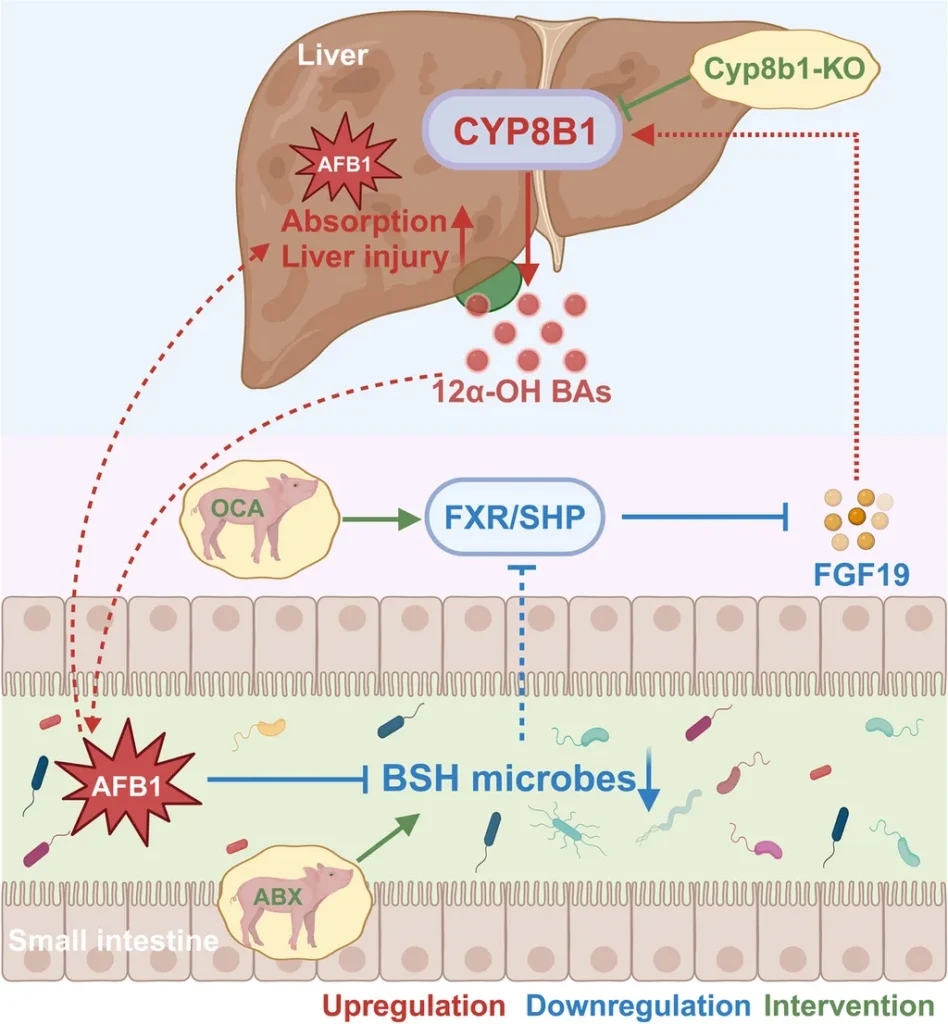
In the heart of China’s Sichuan province, a groundbreaking study is unraveling the intricate dance between a notorious mycotoxin and the rumen microbiome of Saanen goats. Aflatoxin B1 (AFB1), a highly carcinogenic and hepatotoxic compound frequently contaminating animal feed, has long been known for its detrimental effects on livestock health. However, the precise mechanisms by which AFB1 influences ruminal microbiota dynamics and functional activities have remained shrouded in mystery—until now.
A recent study published in *Microbiome* and led by Fucan Li from the Key Laboratory of Qinghai-Tibetan Plateau Animal Genetic Resource Reservation and Utilization at Southwest Minzu University, sheds light on this complex interplay. The research team randomly divided Saanen goats into three groups: a control group (CON) receiving a standard ration, and two experimental groups (LD and HD) fed diets fortified with 50 or 500 μg/kg AFB1, respectively. Throughout the study, the team meticulously analyzed alterations in ruminal fermentation parameters, microbiome, and metabolome profiles.
The findings are striking. As AFB1 levels increased, ruminal pH and the concentration of total volatile fatty acids (VFA), acetate, and propionate decreased quadratically, while butyrate levels dropped linearly. “These changes suggest that AFB1 exposure significantly disrupts ruminal fermentation processes,” Li explains. Metagenomic profiling revealed that AFB1 exposure suppressed populations of beneficial bacteria such as Pelagibacter and Flavobacterium, while promoting the growth of potentially harmful Cryptobacteroides. Additionally, seven carbohydrate-active enzymes (CAZymes) were found to be more prevalent in the rumen of the control group, indicating that AFB1 may impair carbohydrate degradation.
The study also uncovered a significant increase in viral loads in the HD group compared to the control group, suggesting that AFB1 exposure may induce prophage activation. Metabolomics analysis identified 1197 differential metabolites among the groups, including cytochalasin Ppho and chrysophanol, both known for their teratogenic properties and ability to induce cell death.
The implications of these findings for the agriculture sector are profound. AFB1 contamination in animal feed not only poses serious health risks to livestock but also has substantial economic consequences. Reduced nutrient digestibility and impaired animal performance can lead to significant productivity losses, affecting everything from dairy production to meat yields. “Understanding the underlying mechanisms of AFB1’s impact on rumen health is crucial for developing effective mitigation strategies,” Li emphasizes.
This research opens new avenues for precision interventions to mitigate AFB1-induced rumen dysfunction and productivity losses. By elucidating the complex interactions between AFB1, the rumen microbiome, and metabolomic profiles, scientists can develop targeted strategies to enhance rumen health and improve animal performance. Future studies may focus on identifying specific microbial and metabolic biomarkers that can serve as early indicators of AFB1 exposure, enabling proactive management strategies.
As the global agriculture sector continues to grapple with the challenges posed by mycotoxin contamination, this research provides a beacon of hope. By unraveling the intricate web of interactions within the rumen, scientists are paving the way for innovative solutions that can safeguard livestock health and enhance agricultural productivity. The journey to mitigate the impacts of AFB1 is far from over, but with each new discovery, we move one step closer to a future where the rumen microbiome and metabolome work in harmony, ensuring the well-being of our livestock and the sustainability of our food systems.