
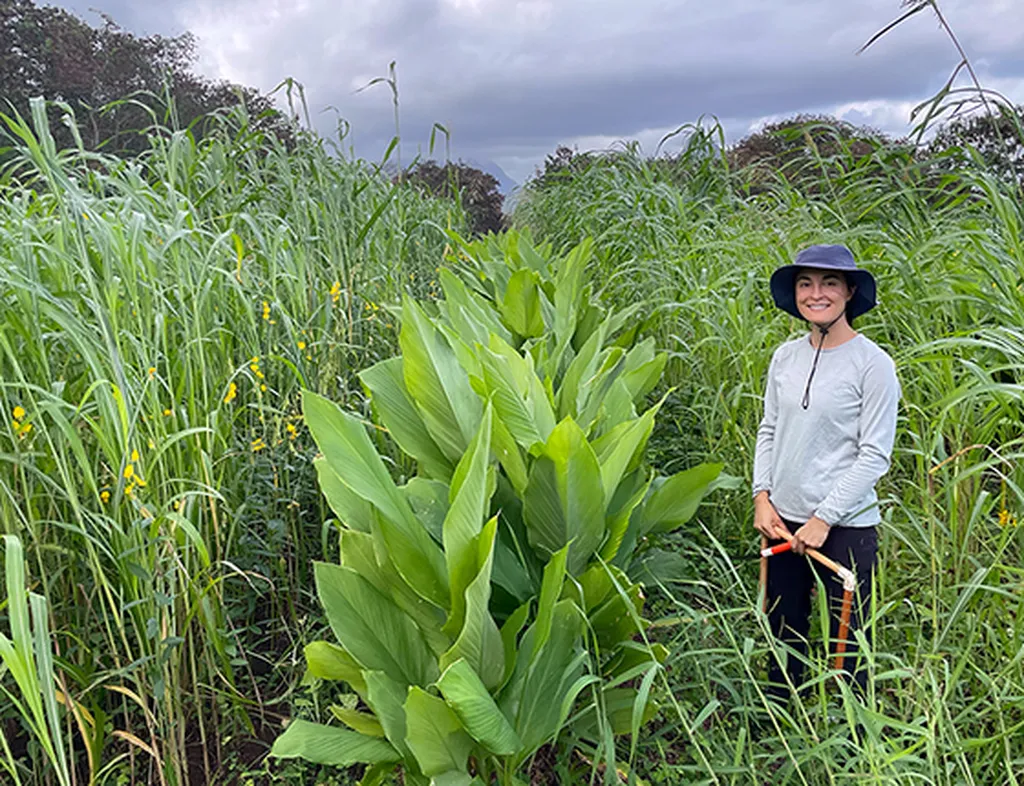
In the heart of sustainable agriculture, a groundbreaking study has shed light on the transformative power of natural farming systems (NFS) on turmeric cultivation. Published in *BMC Plant Biology*, the research led by Kartik Gajjar from the Gujarat Biotechnology Research Centre (GBRC) offers a comprehensive analysis of how NFS compares to conventional farming methods, revealing significant benefits for soil health, microbial diversity, and crop yield.
The study, which evaluated nine NFS treatments against conventional chemical farming systems (CFS), found that NFS treatments with substantial mulching and Ghanjeevamrit applications significantly enhanced soil organic carbon, nitrogen, and phosphorus levels. “These treatments not only improved soil fertility but also boosted enzyme activities like alkaline phosphatase and protease, which are crucial for nutrient cycling,” Gajjar explained. This enhancement in soil health was mirrored by a richer and more diverse microbial community, with beneficial bacteria and fungi thriving under NFS.
One of the most striking findings was the dramatic increase in turmeric yield under NFS. Treatments like NFS-T5 and NFS-T9 produced over twice the fresh rhizome yield compared to CFS, translating to higher net returns and benefit-cost ratios ranging from 7.51 to 10.57. “Natural farming practices not only contribute to sustainable agriculture but also offer economic advantages for farmers,” Gajjar noted.
The study also delved into the microbial profiling of natural farming inputs like Beejamrit, Jeevamrit, and Ghanjeevamrit, revealing distinct bacterial and fungal communities that influence soil microbiome structure. However, the co-occurrence network analysis showed that these introduced microbial taxa had limited integration into native soil communities, suggesting a selective incorporation process governed by competitive ecological interactions.
The implications of this research are profound for the agriculture sector. As the demand for sustainable and eco-friendly farming practices grows, natural farming emerges as a viable and scientifically supported approach. The enhanced soil health, microbial diversity, and crop yields observed in this study provide a strong case for the adoption of NFS in turmeric cultivation and potentially other crops.
Looking ahead, this research could shape future developments in sustainable agriculture by encouraging further exploration of natural farming practices. The findings highlight the importance of understanding the intricate interactions between soil, microbes, and plants, paving the way for innovative and environmentally friendly agricultural techniques. As Kartik Gajjar and his team continue to unravel the complexities of natural farming, the agriculture sector stands to benefit from more resilient, productive, and sustainable farming practices.