
In the vast landscape of agricultural research, a recent study published in *BMC Plant Biology* has shed light on the intricate genetic makeup of *Aegilops biuncialis*, a tetraploid goat-grass species with significant potential for wheat breeding. The research, led by Ekaterina D. Badaeva from the Laboratory of Applied Genomics and Crop Breeding at the All-Russian Research Institute of Agricultural Biotechnology, delves into the dynamics of repetitive DNA sequences and their role in the evolution and intraspecific divergence of *Ae. biuncialis*.
*Ae. biuncialis*, native to the Mediterranean and the Middle East, is a treasure trove of valuable traits such as disease resistance, drought tolerance, and high micronutrient content. These attributes make it an attractive candidate for wheat breeding programs aimed at enhancing crop resilience and nutritional value. However, the transfer of genetic material from *Ae. biuncialis* to wheat has been challenging due to substantial modifications in its Ub and Mb genomes.
To overcome this hurdle, Badaeva and her team employed Fluorescence In Situ Hybridization (FISH) using various combinations of eleven DNA probes. Among these, pTa-566, pTa713, and pSc119.2 probes proved to be particularly informative for chromosome identification and analysis of karyotype evolution. “These probes allowed us to discriminate three distinct chromosomal groups designated A, B, and C,” Badaeva explained. “This discrimination was crucial for understanding the evolutionary history and genetic diversity within *Ae. biuncialis*.”
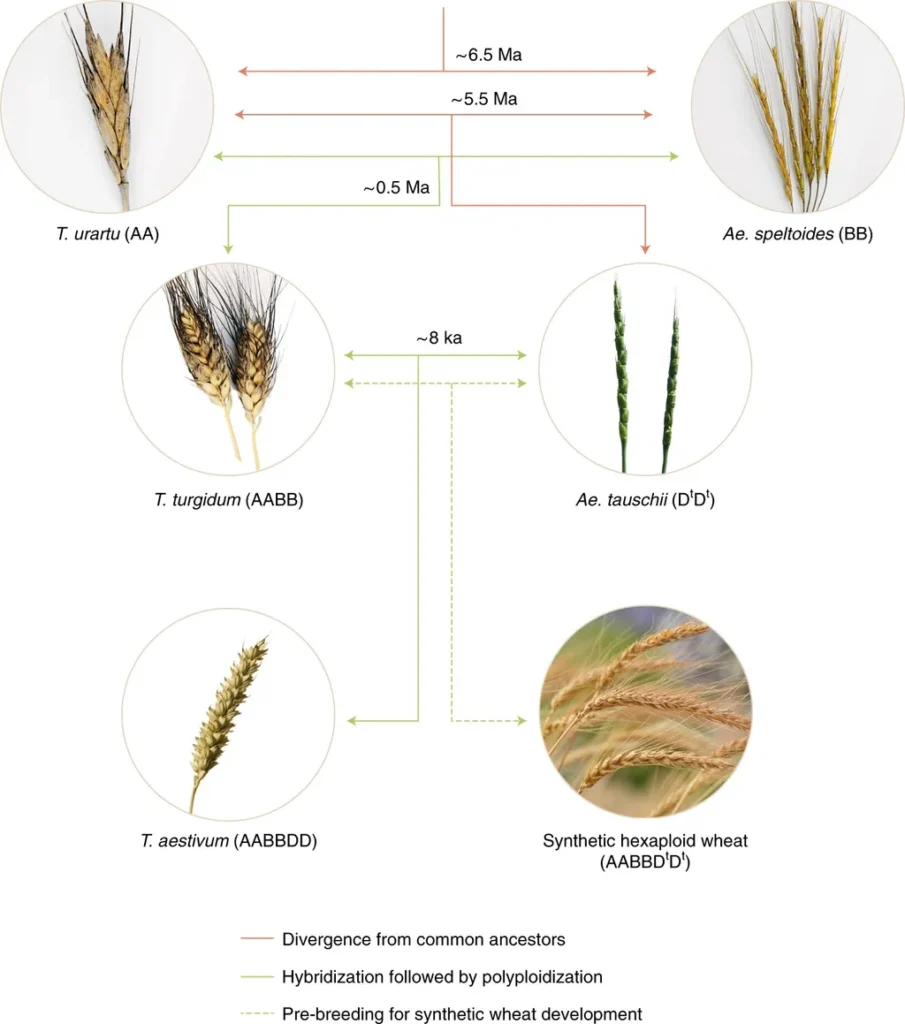
The study revealed that the Ub genome of *Ae. biuncialis* is less modified relative to its parental species compared to the Mb genome. The researchers suggested that *Ae. biuncialis* originated via multiple hybridization events, with the Ub and Mb genomes of groups A, B, and C contributed by different forms of *Ae. umbellulata* and *Ae. comosa*. Specifically, the Mb genome of groups A and C likely derived from *Ae. comosa* subsp. *comosa*, whereas in the B-group, it originated from subsp. *heldreichii*.
One of the most intriguing findings was the identification of structural chromosome rearrangements accompanying the divergence of chromosomal groups. “We observed a reciprocal translocation between chromosomes 1MbL and 7MbL followed by a pericentric inversion of the modified 1Mb in group A,” Badaeva noted. Such chromosomal rearrangements not only contribute to the genetic diversity of *Ae. biuncialis* but also present opportunities for targeted genetic manipulation.
The study also highlighted the role of repetitive DNA families in the intraspecific divergence of *Ae. biuncialis*. Amplification, elimination, and redistribution of these DNA sequences further complicate the genetic landscape but also offer insights into the evolutionary mechanisms driving speciation and adaptation.
The implications of this research for the agriculture sector are profound. By developing a comprehensive genetic nomenclature and understanding the chromosomal structure of *Ae. biuncialis*, breeders can more effectively introgress valuable traits into wheat. This could lead to the development of wheat varieties with enhanced resistance to diseases and environmental stresses, ultimately improving crop yields and food security.
As Badaeva and her team continue to unravel the complexities of *Ae. biuncialis*, their work paves the way for future advancements in plant genetics and breeding. The study, published in *BMC Plant Biology*, represents a significant step forward in our understanding of this important species and its potential to revolutionize agriculture.