
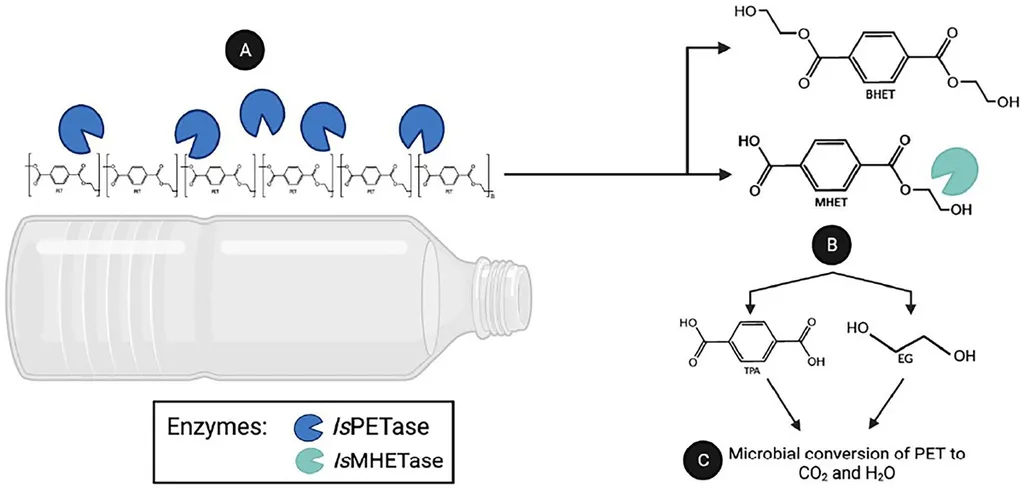
In a groundbreaking conceptual study published in *Frontiers in Bioengineering and Biotechnology*, researchers have proposed a novel enzyme-cell therapy model to tackle the emerging issue of microplastic accumulation in the eye’s vitreous humor (VH). This research, led by Peter R. Corridon from the Department of Biomedical Engineering and Biotechnology at Khalifa University of Science and Technology in Abu Dhabi, offers a promising avenue for addressing the potential role of microplastics in degenerative eye diseases.
Microplastics, ultrafine plastic particles, have been detected in various ocular compartments, raising concerns about their impact on eye health. The vitreous humor, a gel-like substance filling the eye, is particularly vulnerable due to its immune-privileged status and limited clearance capacity. “The vitreous humor’s unique properties, which normally protect the eye, can inadvertently trap microplastics, leading to potential tissue degradation,” explains Corridon.
The study outlines a dual approach to this challenge. First, it explores the mechanisms by which microplastics infiltrate and accumulate in the VH. Second, it introduces an injectable therapeutic model designed to break down these particles and restore ocular health. The proposed therapy uses postmortem-derived VH as a biomimetic vehicle, incorporating polyethylene terephthalate (PET)-degrading enzymes like mPETase. Additionally, genetically engineered hyalocytes—cells found in the VH—express enzymes that further degrade PET into harmless metabolites.
“This therapy not only aims to detoxify the vitreous humor but also supports the structural reconstitution of the ocular tissue,” says Corridon. The VH-based hydrogel scaffold provides a supportive matrix for the enzymes and cells, enhancing their integration and effectiveness.
The implications of this research extend beyond ophthalmology. The agricultural sector, which increasingly faces challenges related to microplastic contamination in soil and water, could benefit from similar enzyme-based detoxification strategies. As microplastics continue to permeate various environments, innovative solutions like this could pave the way for broader applications in environmental remediation and public health.
While this study presents a conceptual framework rather than experimental validation, it sets a foundation for future therapies aimed at combating ocular plastic toxicity. The proposed multimodal strategy could inform broader regenerative approaches to microplastic detoxification in immune-privileged tissues, offering hope for both medical and agricultural advancements.