
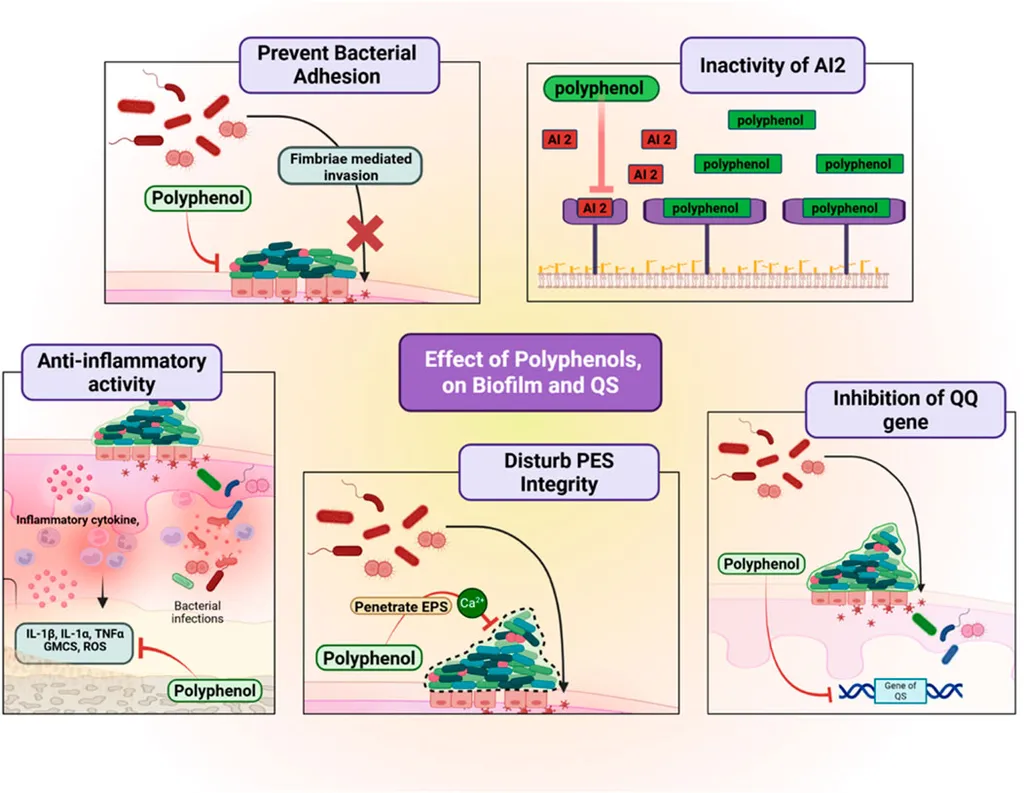
In the relentless battle against bacterial infections, a group of researchers has turned to an unexpected ally: polyphenols, the naturally occurring compounds found in plants. Their work, published in *Chaye kexue*, explores the potential of these compounds to revolutionize antibacterial treatments, offering a glimmer of hope in the face of rising antibiotic resistance.
The problem is a familiar one. Antibiotics, once the silver bullet against bacterial infections, are now losing their efficacy due to overuse and misuse. This has led to the emergence of drug-resistant bacteria, posing a significant threat to global health. Enter polyphenols, which have long been known for their antibacterial properties. However, their instability has limited their practical applications.
The researchers, led by XU Wei from Fuyang Normal University, have tackled this challenge head-on. They’ve explored the self-assembly of polyphenols with other substances to create novel nano-biomaterials. These biomaterials not only enhance the stability and bioavailability of polyphenols but also exhibit synergistic antibacterial activity.
The team has developed a variety of these biomaterials, including polyphenol-metal complexes, polyphenol-hydrogels, polyphenol-chitosan composites, polyphenol-protein complexes, and polyphenol-liposomes. Each of these has shown promise in different antibacterial applications.
The potential implications for the agriculture sector are substantial. “These biomaterials could be used to develop new antibacterial agents for crops, reducing the need for traditional antibiotics and helping to combat antibiotic resistance,” says XU Wei. This could lead to more sustainable farming practices, improved crop yields, and a reduction in food waste due to bacterial contamination.
Moreover, the self-assembly approach offers a versatile platform for designing and engineering biomaterials with tailored properties. This could open up new avenues for research and development in the field of antibacterial applications, shaping the future of agriculture and beyond.
As the world grapples with the challenges of antibiotic resistance, this research offers a promising path forward. By harnessing the power of nature’s own compounds, we may be able to turn the tide against bacterial infections, safeguarding human health and promoting sustainable agriculture.
The lead authors of this study are affiliated with the School of Biology and Food Engineering, Fuyang Normal University; the Tea Research Institute, Chinese Academy of Agricultural Sciences; the Tea Research Institute, Zhejiang University; and Hangzhou Yingshili Biotechnology Co., Ltd. Their work underscores the importance of interdisciplinary collaboration in driving innovation and addressing global health challenges.