
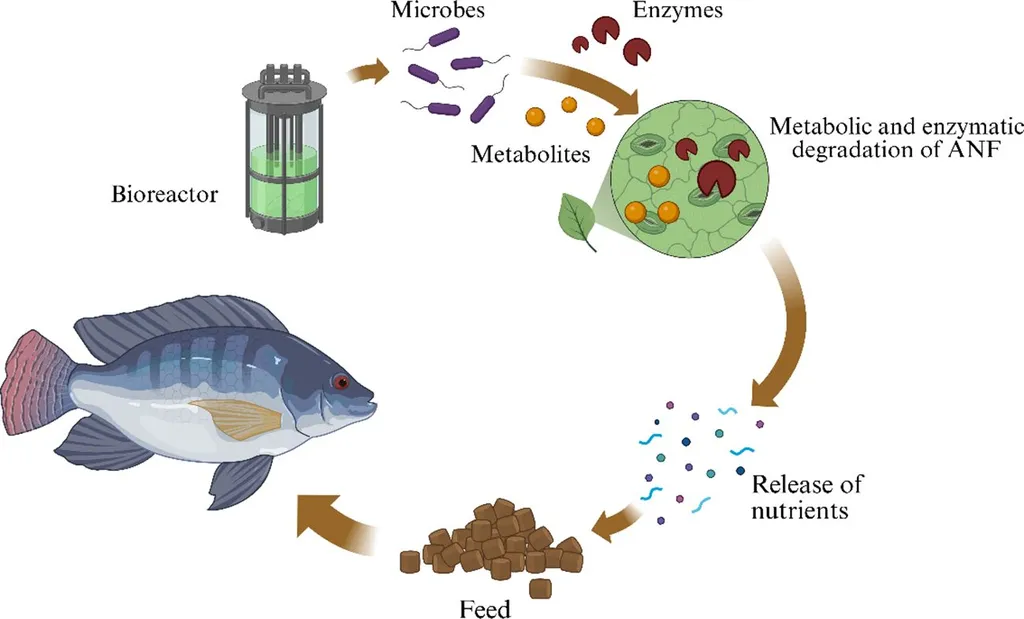
In the quest for sustainable aquaculture, researchers are turning to solid-state fermentation (SSF) as a promising strategy to enhance feed quality and improve the health of farmed fish and shrimp. A recent study published in *AIMS Microbiology* sheds light on how SSF can modulate the transcriptomics and proteomics profiles in these species, offering a pathway to more efficient and eco-friendly aquaculture practices.
The study, led by Shishir Kumar Nandi from the Department of Aquaculture at Sylhet Agricultural University in Bangladesh, explores the challenges of relying on traditional fish meal (FM) as a protein source. FM has been a staple in aquafeed due to its balanced amino acids and excellent digestibility, but concerns about availability, cost, and sustainability have spurred the search for alternatives. Plant and animal by-products present viable options, but they come with their own set of issues, including lower nutrient bioavailability and higher antinutritional factors.
“Solid-state fermentation offers a sustainable method to address these problems by improving aquafeed quality and introducing beneficial microbes,” Nandi explains. The process involves fermenting feed ingredients with microorganisms under controlled conditions, enhancing their nutritional value and digestibility. This not only boosts growth and feed utilization but also strengthens the immune system and disease resistance in farmed species.
The study highlights the use of molecular approaches like transcriptomics and proteomics to evaluate the impacts of SSF. These techniques provide insights into the gene expressions related to growth, immunity, and stress response, offering a deeper understanding of how SSF can benefit aquaculture. “Numerous studies have shown that SSF enhances growth, feed utilization, health status, immune system, and disease resistance in aquaculture species,” Nandi notes.
The commercial implications of this research are significant. As the aquaculture industry continues to grow, the demand for sustainable and cost-effective feed solutions is on the rise. SSF technology presents a viable alternative to traditional fish meal, reducing reliance on finite resources and mitigating environmental impacts. By improving the nutritional profile of aquafeed, SSF can enhance the overall productivity and profitability of aquaculture operations.
The study also underscores the importance of continued research in this area. As Nandi and his colleagues compile evidence supporting the benefits of SSF, they aim to encourage further development of fermented feed as a functional dietary option. This could pave the way for innovative solutions that promote sustainable aquaculture practices and meet the growing global demand for seafood.
In the broader context, the findings of this research could shape future developments in the agriculture sector. As the industry seeks to balance productivity with sustainability, SSF technology offers a promising avenue for innovation. By leveraging the power of microbial fermentation, researchers and industry stakeholders can work together to create more resilient and efficient aquaculture systems.
The study published in *AIMS Microbiology*, led by Shishir Kumar Nandi from the Department of Aquaculture at Sylhet Agricultural University, provides a comprehensive overview of the applications of solid-state fermented diets in aquaculture. The research highlights the potential of SSF to improve growth, organ health, immunity, and disease resistance in fish and shrimp, offering valuable insights for the future of sustainable aquaculture.