
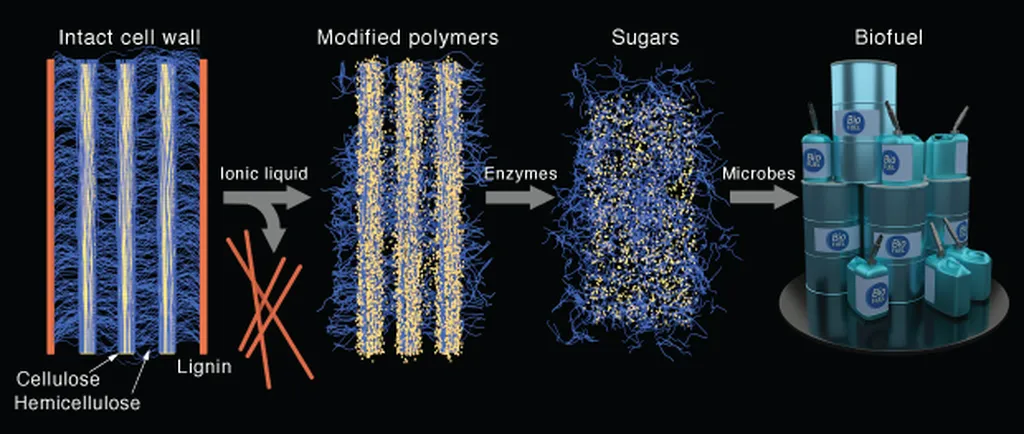
In the ever-evolving landscape of agricultural biotechnology, a recent study published in *ACS Omega* is making waves. Researchers have delved into the intricate world of metabolically engineered *Klebsiella oxytoca*, exploring its potential to produce 2,3-butanediol (BDO) using glucose and xylose as co-substrates. This work, led by Weeranat Sakunlikharetsima from the Metabolic Engineering Research Unit at Suranaree University of Technology in Thailand, could have significant implications for the agriculture sector, particularly in biofuel and bioplastic production.
The study focuses on systematic modeling and identifiability analysis, which are crucial for understanding and optimizing the metabolic pathways in *Klebsiella oxytoca*. By leveraging glucose and xylose, two abundant sugars derived from plant biomass, the researchers aim to enhance the efficiency and yield of BDO production. This approach not only maximizes the use of renewable resources but also aligns with the growing demand for sustainable and eco-friendly agricultural practices.
“We aimed to create a robust model that could predict the behavior of metabolically engineered *Klebsiella oxytoca* under various conditions,” Sakunlikharetsima explained. “This model allows us to identify key parameters that influence BDO production, ultimately paving the way for more efficient and cost-effective bioprocesses.”
The commercial impacts of this research are profound. BDO is a versatile chemical with applications ranging from biofuels to biodegradable plastics. By optimizing its production through metabolic engineering, the agriculture sector can tap into new revenue streams and reduce reliance on petroleum-based products. This shift towards bio-based materials not only supports environmental sustainability but also enhances the economic viability of agricultural enterprises.
Moreover, the study’s emphasis on identifiability analysis ensures that the model is both accurate and adaptable. This flexibility is crucial for scaling up production and adapting to different agricultural feedstocks. As Sakunlikharetsima noted, “Our model provides a framework that can be tailored to specific conditions, making it a valuable tool for researchers and industry professionals alike.”
The research published in *ACS Omega* by Sakunlikharetsima and his team at Suranaree University of Technology represents a significant step forward in the field of agricultural biotechnology. By harnessing the power of metabolic engineering and advanced modeling techniques, the study offers a glimpse into a future where sustainable and efficient bio-based production is the norm. As the agriculture sector continues to evolve, such innovations will be instrumental in shaping a more sustainable and prosperous future.