
In the relentless battle against viral evolution, scientists have long sought to optimize neutralizing monoclonal antibodies (NMAbs) to stay one step ahead of pathogens. A groundbreaking study published in *Frontiers in Cellular and Infection Microbiology* sheds new light on how structural stability in antibodies can significantly enhance their optimization potential, offering promising avenues for developing high-potency therapeutics. The research, led by Jing Li from the State Key Laboratory of Pathogen and Biosecurity at the Academy of Military Medical Sciences in Beijing, China, could have far-reaching implications for agriculture and beyond.
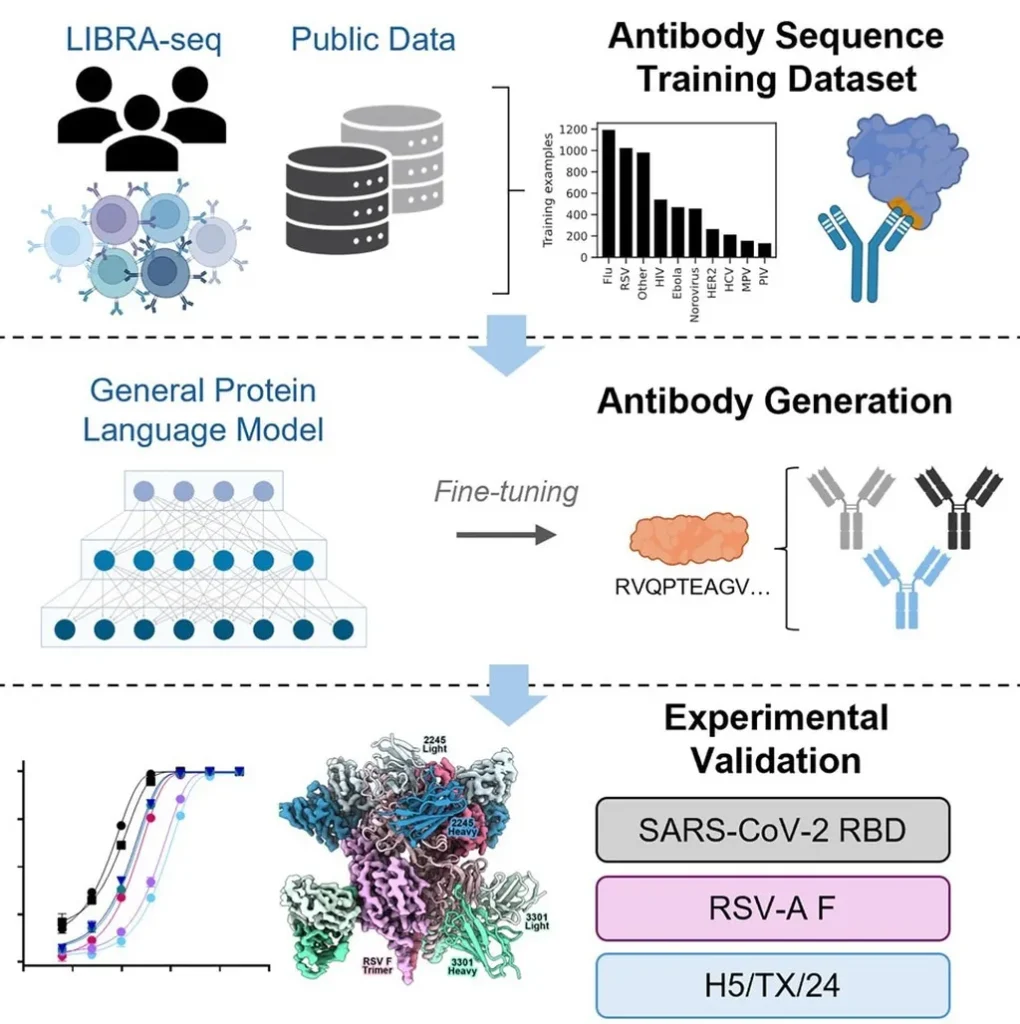
At the heart of this study lies the heavy-chain complementarity-determining region 3 (H3 CDR), a critical component of antibodies that plays a pivotal role in their ability to neutralize viruses. The researchers employed an artificial intelligence (AI) model to optimize two categories of SARS-CoV-2 NMAbs: one with a conformationally stabilized H3 CDR via a twin cysteine motif and another with flexible H3 CDR loops. The results were striking. “H3 CDR stabilization via twin cysteines markedly enhanced AI-driven optimization efficacy,” Li explained. “Optimized derivatives from the stabilized antibody category exhibited improved binding affinity and superior neutralization potency against both pseudotyped and authentic SARS-CoV-2 viruses.”
The study’s findings suggest that conformational stabilization of the H3 CDR is a critical determinant for successful AI-driven affinity maturation. This insight could revolutionize the way antibodies are developed, particularly for rapidly evolving viral pathogens. The implications for agriculture are profound. In a sector where viral diseases can decimate crops and livestock, the ability to rapidly develop high-potency antibodies could be a game-changer. Imagine a future where outbreaks of viral diseases in agriculture can be swiftly countered with optimized antibodies, minimizing economic losses and ensuring food security.
The researchers also conducted structural analyses to elucidate the interaction mechanisms with the angiotensin-converting enzyme 2 (ACE2) receptor. They found that optimized antibodies formed tighter interactions with the ACE2 receptor, including enhanced binding between key residues and ACE2, which correlated with biological efficacy. In contrast, antibodies lacking H3 CDR stabilization showed no affinity improvement after the same optimization process. This underscores the importance of structural stability in the H3 CDR for effective antibody optimization.
In vivo studies further validated the efficacy of the optimized antibodies. They effectively suppressed viral replication and reduced viral loads in infected mice. Mechanistically, the twin cysteine stabilization minimized structural perturbations caused by affinity-enhancing mutations, unlocking the optimization potential of the H3 CDR. “This study proposes a strategic framework for antibody development that prioritizes structurally stabilized H3 CDR regions,” Li noted. “It offers a robust approach to generating high-potency therapeutics against rapidly evolving viral pathogens.”
The research not only advances our understanding of antibody optimization but also paves the way for innovative solutions in agriculture. As viral diseases continue to pose significant threats to global food security, the ability to develop high-affinity, neutralizing antibodies quickly and efficiently could be a critical tool in the agricultural arsenal. The study’s findings could inspire new strategies for protecting crops and livestock, ultimately contributing to a more resilient and sustainable agricultural sector.
In summary, this research highlights the transformative potential of AI-driven antibody optimization, particularly when combined with structural stabilization techniques. As we continue to grapple with the challenges posed by viral evolution, the insights gained from this study could shape the future of therapeutic development, not just in human medicine but also in agriculture. The work of Jing Li and her team offers a beacon of hope, illustrating how cutting-edge science can be harnessed to address some of the most pressing challenges of our time.